Celtic Symbols for Brotherhood: Meanings and Interpretations

Introduction
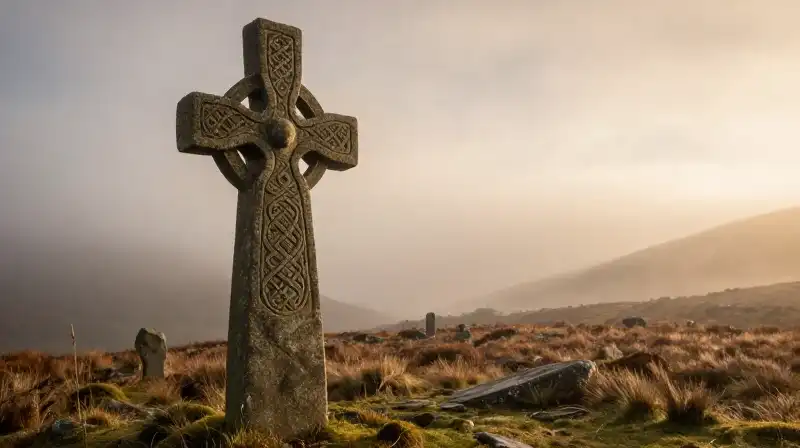
The search for a meaningful sign or emblem to represent deep bonds—especially the kinship between brothers—is a common journey for those seeking permanence and narrative significance in their lives. Within the Celtic tradition, symbols like knots, spirals, and interwoven trees represent profound concepts of interconnectedness, life cycles, and community. However, exploring these designs requires a careful distinction between modern spiritual interpretation and historical fact.
Because Celtic traditions were largely oral cultures without extensive written records, many scholarly sources caution that we cannot pin down a single, ancient symbol explicitly designed to denote “brotherhood” as a discrete concept 1. Instead, the connection must be understood through broader motifs that speak to the fundamental Celtic values of community and shared existence. The true value of using such a symbol lies not in its exact ancient manufacture, but in the contemporary meaning and shared narrative it embodies for the individuals involved.
The Philosophy of Interconnectedness in Celtic Culture
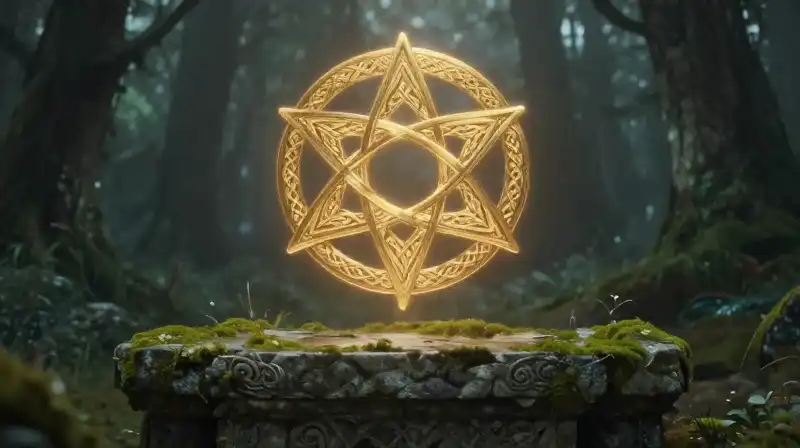
At its core, Celtic philosophy views individuals not in isolation, but as part of a larger, intricate web. This inherent focus on community and shared beliefs is reflected in many of the tradition’s most popular motifs. The community aspect is often best captured by the Triskelion—a spiral symbol that, while ancient, is widely interpreted by modern practitioners as representing an interconnected community bound by shared beliefs 1. This concept of belonging provides the foundational context for how one might apply these symbols to a bond like brotherhood.
Another powerful motif is the Celtic Tree of Life. This imagery transcends mere botany; it serves as a symbol of community and oneness, suggesting that individuals draw strength from shared roots and the connection to a larger whole 1. For brothers sharing a spiritual life, this tree represents the idea that their individual strength is reinforced by their shared origins and commitment to one another.
Symbols of Kinship: Interpretation and Application
When researchers look for specific applications for bonds, several symbols emerge, each carrying a nuanced meaning that allows for modern reinterpretation.
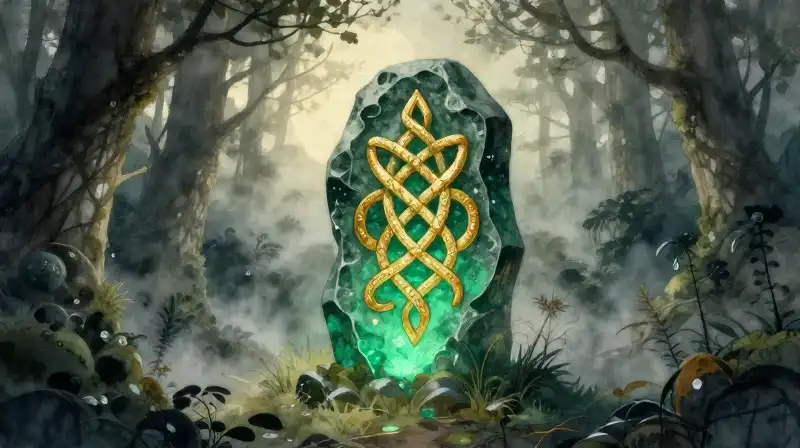
For symbolizing enduring connection, the Trinity Knot, or Triquetra, is often suggested 1. While its traditional ancient meanings revolve around the eternal cycles of life, death, and rebirth, this fluidity allows it to be adapted for contemporary spiritual interpretations of lasting commitment. Similarly, the Dara Knot, which visually echoes the roots of the Oak—the most revered tree in Celtic lore—is interpreted as representing profound unity and strength derived from the idea that all individuals are tied to a larger, powerful collective 1.
For a relationship defined by a merging of two souls, the Serch Bythol is specifically designed, constructed from two Trinity Knots. This unique arrangement symbolizes the eternal joining of two lives, making it a highly specific sign for a lifelong commitment between siblings or brothers 1. When considering these designs, the interpretation is key: they function less as “rules” for brotherhood and more as evocative signs representing strength, unity, and eternal connection.
The Importance of Origin: Skepticism and History
While the traditional meanings are compelling, it is essential for the reader to approach these symbols with critical awareness of their history. Scholarly scrutiny suggests that these designs are not always confined to a strictly ancient Celtic origin. For instance, some historical findings linked to these knot designs may not be exclusively Celtic, with theories positing connections dating back much further, perhaps even to India 1.
Furthermore, the evolution of these ancient symbols complicates their cultural attribution. The Triquetra, for example, has been noted to have been adopted and repurposed by the Celtic Christian church, demonstrating how powerful symbols are fluid and constantly evolving their spiritual weight over millennia 1. There is a prevailing skepticism regarding the claim that many modern designs hold specific, immutable ancient meanings, with some asserting that many are arbitrary interpretations created by modern seekers 1.
Differentiating Tradition from “New-Age” Interpretation
The fragmented nature of historical evidence means that researchers constantly caution that specific meanings are often subject to cultural drift and hazy interpretation 1. The distinction between a deeply held ancestral tradition and an arbitrary modern design is crucial when selecting a personalized sign.
If a reader seeks the most authentic and specific connection, scholars suggest that generalized ancient emblems may fall short. A more personal and culturally grounded approach, therefore, is to consider a custom design. For instance, creating a bind rune using shared initials can create a more immediate, authentic meaning based on the personal relationship, sidestepping the debate over whether a generalized ancient motif is actually ‘Celtic’ or a modern reconstruction 1.
Clarifying the Narrative of Connection
In summary, the journey of the Celtic symbols for brotherhood is not about finding a literal, historical translation, but about finding a resonant narrative. Whether one chooses the unifying strength of the Dara Knot, the eternal cycle of the Triskelion, or the personalized bond of a custom design, the tradition provides a rich vocabulary for articulating the depth of shared experience and commitment.
The living practice of these symbols today is a demonstration of how heritage adapts. It reminds us that culture is not a frozen artifact of the past, but a living tradition—one that is interpreted, embraced, and given new, personal meaning by the people who choose to hold it.
References
Footnotes
How to create a personalized symbol for a relationship
Identify a need for customization
If generalized ancient emblems do not meet the specific needs of the relationship, consider creating a custom design to sidestep historical debates.
Determine shared initials
Decide to incorporate the shared initials of the individuals into the new design to create an immediate and authentic meaning based on the personal relationship.
Construct the bind rune
Create the bind rune by weaving together the chosen shared initials.
Related Articles