What Does the Triple Spiral Symbol Mean Spiritually?

Introduction
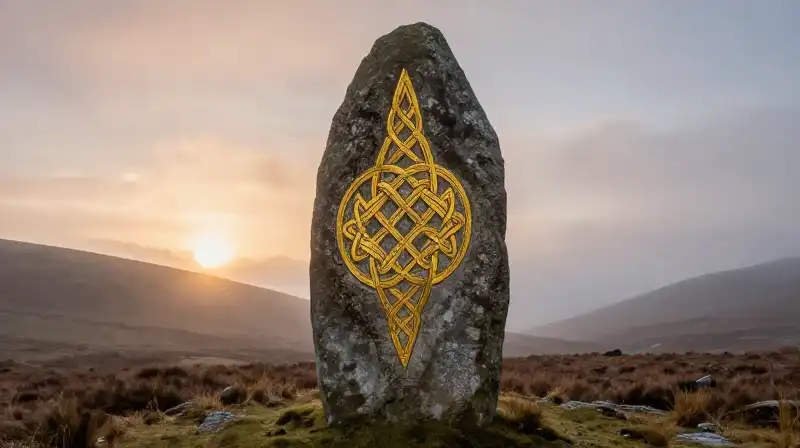
The triple spiral, known by various names including the triskelion or triskele, is more than just a geometric shape; it is an ancient visual shorthand for the complexity of existence. This motif, characterized by its rotational symmetry—whether appearing as an interlocking triple spiral or three curved human limbs—has permeated the art, folklore, and spiritual life of communities across several millennia. While a surface definition might simply label it as a three-fold pattern, to understand the triple spiral is to delve into a rich history of cyclical thinking, elemental forces, and the human quest to find balance between the internal and external worlds.
The search for its spiritual meaning often leads to a multitude of interpretations, which is precisely the point. Because the symbol has been adopted and adapted by countless cultures—from Classical Greeks to modern Celtic practitioners—its meaning is not monolithic. Instead, it functions as a versatile archetype: a universal symbol for triads and recurrence, prompting us to look at how different traditions have mapped their deepest concepts onto this powerful, spiraling form.
A Journey Through Deep Time
To grasp the depth of the triskelion’s resonance, one must recognize its immense antiquity. Archaeological evidence places its origins far back in the European Neolithic and Bronze Ages. Early examples have been unearthed in diverse regions, including Malta (dating back to 4400–3600 BCE), Mycenaean vessels, and the famous megalithic tomb of Newgrange in Ireland (c. 3200 BCE) (1, 2). This early presence suggests that the concept of balanced triadic movement or cyclical progression was deeply ingrained in pre-literate cultures.
During Classical Antiquity, the symbol flourished, particularly in Greece. Here, the form featuring three human legs became widely adopted on pottery, hoplite shields, and regional coinage 1. The Greek root of the term triskelḗs translates simply as ‘three-legged,’ derived from tri-* (three times) and skelos (leg) (1, 2). This widespread adoption in early empires testifies to the motif’s ability to communicate profound ideas of movement, action, and integrated being across different societies.
The Triad as an Archetype of Meaning
The most persistent spiritual meaning of the triple spiral revolves around the concept of the triad itself—the idea that significant truths or events often exist in sets of three. This has manifested in both ancient folklore and modern cosmology.
In the context of Celtic culture, which saw the symbol gain prominence from around 500 B.C. onward, the triskelion became a powerful representation of interconnected forces 1. The primary interpretive threads include:
- The Cycles of Life: Representing the eternal movement between birth, maturity, and death, or the continuous loop of growth and decay.
- Holistic Unity: Symbolizing the integration of the mental, physical, and spiritual aspects of the self into a cohesive whole.
- Cosmological Forces: In certain regional interpretations, the spiral is seen as a triad of primary natural elements, such as the land, the sea, and the sky 1.
Folklore often reinforces this triadic nature, suggesting that the idea of “3rd times the charm” reflects a deeper belief that outcomes occur in resonant batches of three 1.
The Triple Goddess and the Spiritual Self
A highly influential spiritual reading of the triskelion relates it to feminine power and divine multiplicity. It is widely interpreted to represent the Triple Goddess, encompassing the Maiden (representing potential and youth), the Mother (representing creation and nurturing), and the Wise Woman (representing wisdom and completion) 1. This interpretation speaks directly to the concept of female power and the stages of spiritual development.
Furthermore, within Celtic Christian traditions, the symbol was adapted to represent the Holy Trinity—Father, Son, and Holy Spirit—showing how spiritual symbols are frequently reinterpreted to fit evolving religious frameworks 1. Thus, the spiral operates as a dynamic vessel, capable of holding vastly different theological content based on the cultural lens through which it is viewed.
Regional Variations: From Sicilian Headlands to Manx Heraldry
The power of the triskelion lies in its adaptability, which allows it to carry hyper-local, specific meanings. The symbolism shifts based on the cultural tradition and geographic location:
Sicily and the Trinacria: In Sicilian culture, the triskelion is a central element of the modern Trinacria symbol. Here, the interpretation is less mystical and more geographical, symbolizing the island’s “three headlands” or natural prominence 1.
The Isle of Man: On the Isle of Man, the triskelion serves a distinct historical and heraldic purpose. Known in the Manx language as ny tree cassyn, meaning “the three legs,” it serves as a proud emblem of the community’s identity 1.
Addressing the Search for Definitive Meaning
The most common question asked of those encountering this symbol is, “What exactly does it mean?” It is important to acknowledge a crucial nuance: scholars and practitioners generally agree that a single, definitive meaning for many ancient Celtic symbols remains elusive 1. The interpretations vary so widely—ranging from concepts of motion and momentum to specific elemental triads or personal spiritual journeys—that the meaning is often found not in a single fixed definition, but in the intention of the person using the symbol.
Therefore, when approaching the triskelion as a personal or cultural marker, one must consider its usage within its specific context. For example, in the Republic of Ireland, it is utilized in the context of care centers to denote death and the essential cycle of life 1. For modern Celtic Reconstructionist Paganism, it remains a potent emblem of the triplicities 1. These modern uses illustrate how the ancient roots continue to provide a framework for contemporary spiritual and communal expression.
Beyond the Visual: The Meaning of Motion
One of the deepest understandings of the spiral form itself is its relationship to motion. A spiral does not merely sit still; it suggests an outward expansion, a perpetual unfolding, or a journey inward. This inherent dynamism is likely why it resonated so strongly across millennia. The spiral represents movement through time—the constant process of change and transformation that defines life. Whether this motion is viewed as the relentless march of the cosmos, the winding path of the soul toward enlightenment, or the biological cycle of birth and decay, the spiraling structure itself holds the concept of eternal flux.
Conclusion: The Living Tradition of Three
The triple spiral symbol is not a static piece of art; it is a living cultural language. It offers communities a way to articulate complex concepts—the unity of the physical and spiritual, the interconnectedness of nature, and the inevitability of cyclical time—through a single, powerful image. While the specific meaning may change depending on whether you are viewing it through a Neolithic archaeological lens, a classical Greek study, or a contemporary Celtic Pagan perspective, the core message remains consistent: profound truth often resides in the unity of three.
When encountering the triskelion today, the most respectful engagement is to recognize its versatility and its deep human history. Rather than seeking a single, definitive answer, we should appreciate it as a versatile symbol of harmony and perpetual change—a visual echo of the human experience.
References
Footnotes
Frequently Asked Questions
What does the triple spiral mean spiritually?
Spiritually, the triple spiral functions as a universal archetype symbolizing the integration of interconnected forces and the quest for balance between the internal and external worlds. Interpretations include the eternal Cycles of Life, holistic unity, or the feminine power of the Triple Goddess.
Related Articles