Exploring Mythical Dark Creatures from Around the World

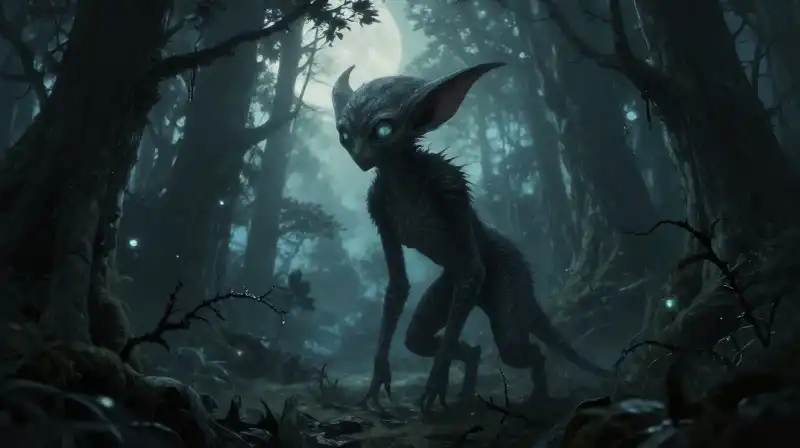
Introduction The concept of the “dark creature” in global mythology is often viewed through a singular lens of malice or danger, but to understand these beings is to glimpse the complex ways human communities grapple with the untamed forces of nature, mortality, and the spiritual unknown. These legendary figures—the shapeshifters, the herald of death, the primal beasts—are not merely decorative monsters; they are deep cultural reflections. They embody the powerful forces that exist outside of human control, whether those are the cyclical nature of life and death, the power of deception, or the mysteries held within a particular ecosystem. Examining these entities across traditions like Mesoamerican, East Asian, and Oceanic folklore allows us to see how humanity has mythologized its deepest fears and its most magnificent transformations.
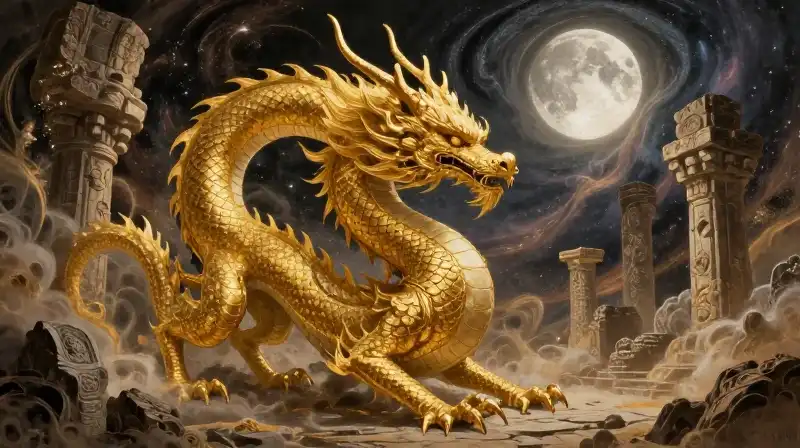
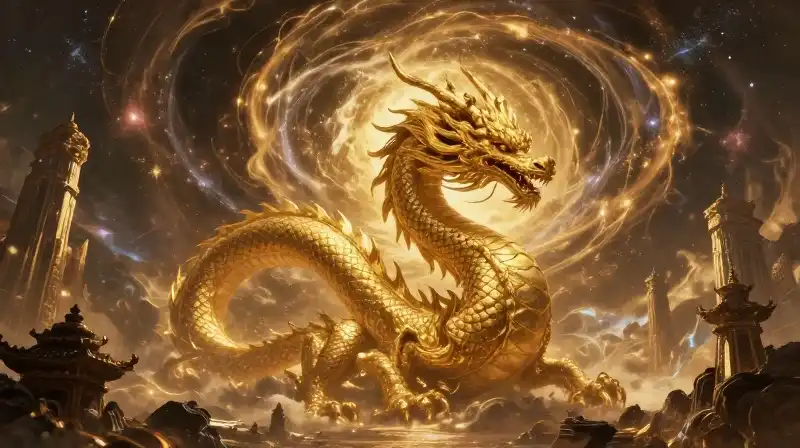
The Spirit of Transformation: Deception and Duality Perhaps the most common characteristic among these mythical dark creatures is the ability to adopt new forms, a power that usually signifies a profound duality within their culture. This capacity for transformation often serves as a powerful cautionary tale about appearances. In Ewe culture, the vampiric Adze is an example of this highly specific predatory mechanism; it employs the deceptive form of a firefly to draw victims into the dark for blood 1. This need for a deceitful lure highlights a cultural concern with vulnerability. Similarly, in Chinese lore, the Huli jing and Kitsune are revered as nine-tailed fox spirits akin to fairies, whose shifting nature and immense power are closely linked to mystical transformation 1. This theme of powerful beings taking ambiguous forms is echoed in the Tlingit tradition with the Kamaitachi, which is identified as a shapeshifting “land otter man” that embodies both human and animal forms 1. These beings challenge the rigid boundaries between civilization and the wild, reminding observers that power often lies in adaptability and ambiguity.
Guardians of the Veil: Death, Underworld, and Harbingery Beyond creatures defined by deceptive transformation, many mythical figures serve a crucial role as harbingers or servants of the final frontier: the realm of the dead. These beings act as vital links between the living and the spiritual landscape of a community. In the Aztec mythological framework, I’tzpāpālōtl is described as a powerful death goddess, characterized by a skeletal head and butterfly wings, signifying her direct role in managing the realm of the dead 1. This contrasts with the Mayan framework, which features Camazotz, a bat spirit specifically tasked with serving the lords of the underworld 1. Slavic tradition provides a chilling example of a creature whose primary purpose is to dictate human fate. The Sirin, an Avian Humanoid, is described as a bird with women’s heads whose inherent role was to lure men to their deaths 1. In both the Aztec and Slavic contexts, the dark creature is not necessarily a chaotic force, but a necessary, albeit terrifying, element of the cosmic order—a manifestation of unavoidable cycles, whether those cycles are natural or spiritual.
Primal Power: Mythic Beasts and Natural Forces Other mythical creatures fall into the category of primal, powerful beasts, representing the unchecked power of nature or the fusion of human and animal characteristics. These beings often appear when a culture seeks to explain overwhelming natural forces or incredible feats of strength. The ancient Greek myths are replete with such examples. We have Karkinos, a crab that engaged in combat with Heracles and was later immortalized as the constellation Cancer, representing a natural form elevated to myth 1. Conversely, the Minotaur is recorded as a creature that embodies a terrifying fusion of human and bovine elements 1. Regional folklore reveals how these powerful, hybrid creatures are unique to specific environments. Chinese culture features the nine-tailed fox, Huli jing, as an ancient, powerful spirit, while in the Philippines, the Turk provides examples of regional variation among powerful, supernatural animals, such as the depiction of the Sarangay—a powerful bull adorned with a jewel attached to its ears 1. Similarly, Japanese folklore includes the Basan, recognized as a type of fire-breathing chicken, a creature whose specific regional origin roots it firmly within the local tapestry of legend 1.
Understanding the Cultural Context of Dark Mythical Creatures If one seeks to understand the true meaning of these “dark mythical creatures,” the focus must shift away from simple categorization into “good” or “evil.” Instead, these creatures serve as metaphors for crucial human experiences: change, the inevitability of mortality, the inherent risks of interacting with the unknown, and the sheer power of the natural world. The predatory role of certain entities, such as the vampiric Adze that uses deceptive forms 1, suggests a cultural preoccupation with the necessary risks involved in life. The constant presence of creatures capable of transformation (Tlingit Kamaitachi, Chinese Kitsune) teaches a lesson in skepticism—that the surface reality is often an illusion. These figures are cultural devices that allow communities to process existential fears, acknowledge powerful forces beyond their grasp, and articulate the spiritual complexities of their world.
For those researching mythical dark creatures, whether seeking a list of names or a deeper understanding, it is vital to remember that their existence is tethered to the geography and cosmology of the people who tell them. They are anchors to heritage, telling stories not of absolute darkness, but of profound and often necessary power.
References
Footnotes
How to Understand the Cultural Context of Dark Mythical Creatures
Avoid Binary Categorization
Shift focus away from simple categorization of creatures into "good" or "evil".
Identify Metaphorical Meaning
Analyze how these figures serve as metaphors for crucial human experiences such as change, mortality, or the power of the natural world.
Examine Specific Archetypes
Investigate creatures based on their roles, such as deceptive transformation, harbingery of death, or representation of primal natural power.
Research Geographic and Cosmological Roots
Remember that the existence and meaning of the creatures are tethered to the specific geography and cosmology of the people who tell the stories.
Related Articles