Tefnut: Who Was the Egyptian Goddess of Moisture and Creation?

Introduction
The Ancient Egyptian pantheon is a vast tapestry of gods and goddesses who governed every facet of existence, from the flooding of the Nile to the subtle breath of the air. Among these foundational figures, Tefnut stands out as a deity deeply connected to the elemental processes of moisture and creation. She is primarily understood as the feminine counterpart to the air god Shu (1, 2). While often grouped with the forces of the sky and atmosphere, Tefnut’s significance extends beyond simple weather; she represents a fundamental, dynamic energy of life—the life-giving moisture that sustains the land. To understand Tefnut is to understand the intricate balance between air and water, and the complex narrative of how life emerged from the creative sparks of the primal cosmos.
The Cosmic Birth: The Spark of Creation
In the foundational creation myths of Egypt, the world began with a divine act of generation. Tefnut and her brother, the air god Shu, are central figures in these narratives, often emerging from the creative actions of the solar deity Ra or the primordial god Atum (1, 2). According to many of these early Heliopolitan tales, the couple was literally brought into being by the solar deity—sometimes described as being sneezed or spat out (1, 2). This highly visceral origin story suggests that their creation was not a slow unfolding but a sudden, potent discharge of divine energy. This primal genesis solidified their position as the starting point of the cosmic drama. Their emergence established the initial components of the world—Shu providing the breathable air, and Tefnut providing the crucial dampness, mist, and moisture necessary for life to take root. This placement makes her a maternal figure at the very beginning, as she later becomes the mother of the earth (Geb) and the sky (Nut), cementing her foundational role within the revered Ennead of Heliopolis (1, 2, 3).
Duality and Iconography: The Power of the Eye
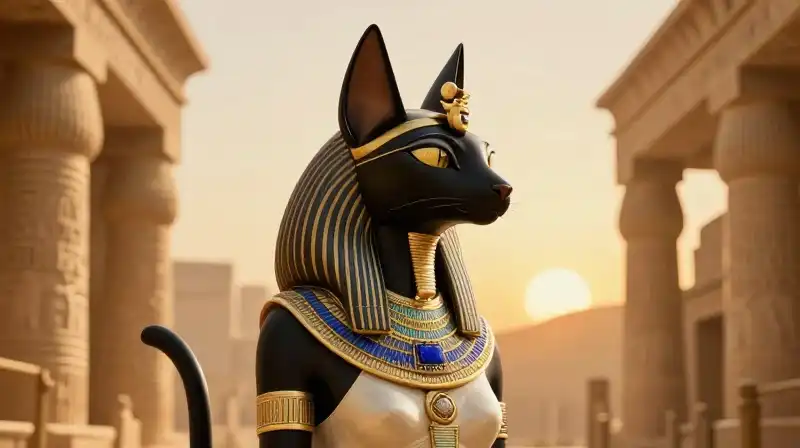
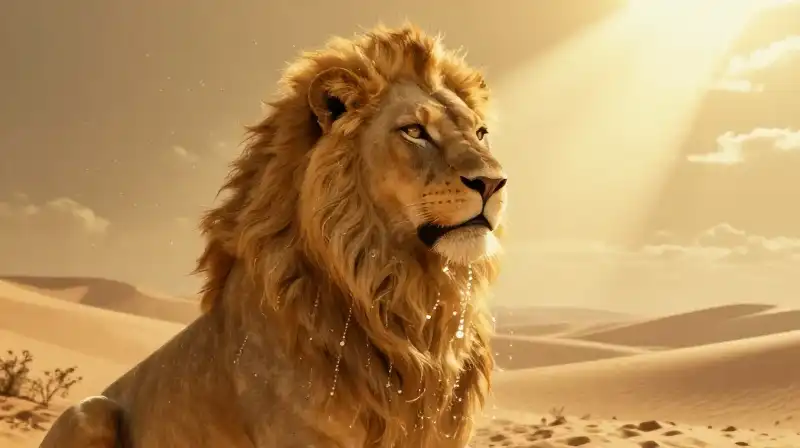
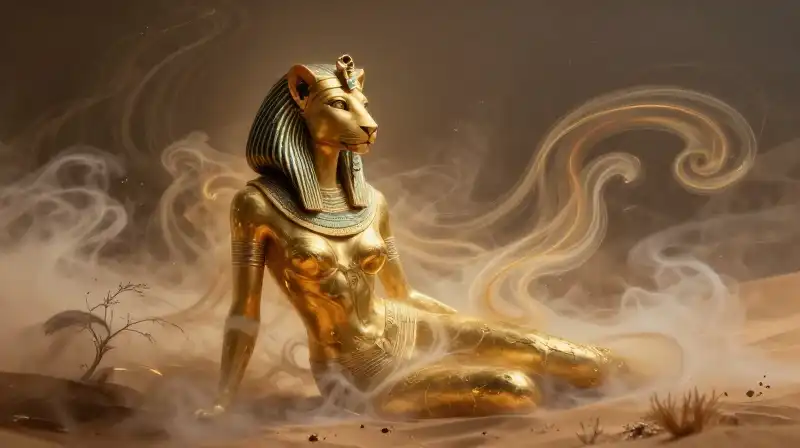
Tefnut held a powerful mythological function known as the “Eye of Ra.” This title reflects the intricate balance of her abilities, connecting her to both the cyclical nature of the sun and the more subtle, hidden aspects of life. She is linked to the lunar aspect, represented by dew, rain, and mist, while simultaneously possessing solar associations, representing protection and the divine power of the sun 1. This duality was reflected in her iconography. Iconographically, she is frequently depicted in powerful forms. She can appear as a regal human figure, often crowned with a solar disk and Uraeus—symbols of immense power and divine status (1, 2). Alternatively, and perhaps more dramatically, she is portrayed as a fierce lioness. Her association with lions, particularly in the cult centers of Leontopolis (now Ell El-Muqdam), highlights the raw, potent power she embodied, which was both protective and primal (1, 2).
The Living Tradition: From Cult Centers to Cultural Shifts
Tefnut’s presence in the religious life of the people was most pronounced in major centers like Heliopolis and Leontopolis. These were the sites where her cult was actively practiced, cementing her place in the community’s religious and agricultural cycles (1, 2). However, her identity was not static. Like many ancient traditions, Tefnut’s mythology showed complexity and evolution. Scholars have noted variants in her narrative; in some earlier texts, she was related to a god named Tefen, suggesting a long and complicated development of her identity 1. The story of her journey also reveals the challenges to her divine power. A dramatic narrative persists where Tefnut supposedly caused severe drought by taking all the water when she left Egypt for Nubia, necessitating her return to bring back the vital, life-giving inundation 1. This narrative underscores the importance of water as a force that could be both a blessing and a catastrophic absence. During the Amarna Period, which saw widespread cultural and religious transformation, her representation also shifted. Iconography sometimes showed her in a human form, adorned with headdresses featuring sprouting plants. This possible change suggests a cultural shift, a blending of her identity with other fertility goddesses, such as Tiye, reflecting the period’s focus on growth and earthly vitality 1.
Addressing the Tradition: Symbol, Power, and Presence
The complex history of Tefnut invites several key questions about her meaning.
Is Tefnut a Lion?
While she is often associated with the lionesses of Leontopolis, depicting her in fierce, regal form, the lion is primarily a symbol of her powerful, protective, and primal nature, rather than her definitive species. In her most common mythological form, she is seen as a divine female figure (1, 2).
What is the legend of Tefnut?
Her primary legend revolves around the cosmic necessity of her existence: the moment she is spat out of the creator, she brings the moisture to the world. This established the fundamental balance with Shu’s air. Beyond creation, the narrative of her drought and return reinforces her role in maintaining the essential cycle of the Nile and agriculture 1.
What were Tefnut’s powers?
Her powers centered on moisture, rain, and mist, making her a god of environmental balance. Furthermore, her role as “The Eye of Ra” means her power was intrinsically linked to the broader cycles of the solar and lunar forces, granting her a protective and foundational authority over the creation of the earth and sky 1.
Beyond Definition: The Meaning of Moisture
What distinguishes Tefnut from a simple “moisture goddess” is the profound theological meaning embedded in her role. In the Ancient Egyptian worldview, moisture was not merely a physical substance; it was a representation of generative life and cosmic stability. Tefnut embodies the necessary intersection of creation and sustenance. She represents the moment where the raw, powerful air (Shu) encounters the life-giving dampness, enabling the birth of stable existence (Geb and Nut). Even the occasional mention of a “wrathful aspect”—portraying her as a lioness of bloodthirsty rage—is not merely a dramatic detail but a reflection of the precarious nature of elemental forces. The life-giving rain is only valuable because its absence can lead to devastating drought. Tefnut’s ability to cause drought by leaving Egypt for Nubia is the mythological expression of this critical lesson: balance must be maintained, and the forces of nature are unpredictable and often demand a divine reckoning when their equilibrium is disturbed (1, 3).
Synthesis: A Goddess of Dynamic Balance
Tefnut’s story, therefore, is not a static definition of a deity but a living commentary on the Egyptian commitment to *Ma’at*—the principle of cosmic order and balance. She is the embodiment of the essential counterpoint to the wind and the dry sun; she is the promise of life emerging from the void. Whether appearing as a human-crowned solar protector or a fierce lioness, Tefnut remains a powerful symbol of the generative force that makes the cyclical life of the Nile basin possible, illustrating that creation requires not just the breath of air, but the vital, life-sustaining moisture of the earth itself.
References
Footnotes
Frequently Asked Questions
What is the legend of Tefnut?
Her primary legend centers on the cosmic necessity of her existence, as she is spat out of the creator and brings the life-giving moisture to the world, establishing a fundamental balance with the air god Shu. Beyond creation, a narrative details how she can cause severe drought by leaving Egypt and must return to restore the vital Nile inundation.
What did Tefnut look like?
Tefnut is iconographically depicted in powerful forms, appearing as either a regal human figure often crowned with a solar disk and Uraeus, or dramatically as a fierce lioness.
Is a Tefnut a lion?
While Tefnut is sometimes portrayed as a fierce lioness in iconography to represent her powerful and primal nature, the article clarifies that the lion is primarily a symbol rather than her definitive species. In her most common mythological form, she is seen as a divine female figure.
Related Articles