Freyja: Decoding the Norse Goddess of Love, Fertility, and Power

Introduction
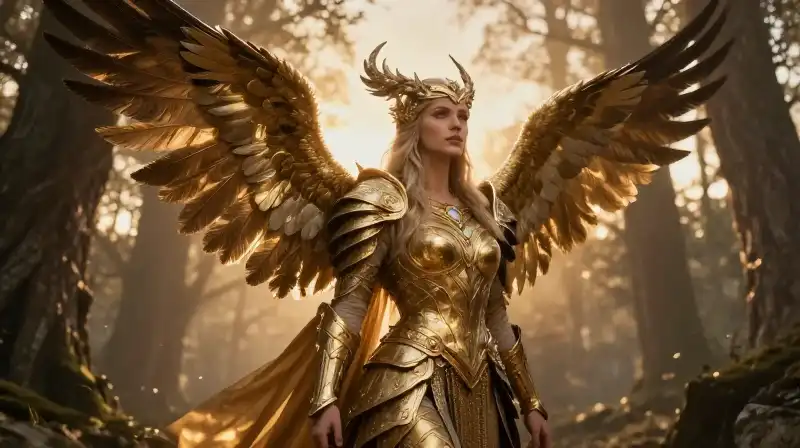
In the sprawling landscape of Norse mythology, the figure of Freyja often captures the imagination of modern readers as a simple goddess of love. However, to reduce her to a mere deity of romance is to miss the profound complexity of a heritage that integrated the sacred with the wild, and the personal with the existential. Freyja is a powerful figure, a deity whose influence stretches across the spectrum of existence, presiding over fertility, beauty, and magic (seiðr). Yet, her domain does not end at the intimate; her authority extends into the realm of war, the pursuit of wealth, and the mysteries of fate.
She represents a multifaceted power, a nexus where the sensual meets the sovereign. Understanding Freyja requires looking beyond the popularized character of the “goddess of love” to appreciate the interwoven threads of nature, status, and the enduring human quest for life and security. For those seeking to genuinely understand this tradition, one must grasp that she embodies the cyclical nature of life—its blossoming, its struggle, and its eternal transition.
The Multifaceted Domains of Power and Life
While Freyja is frequently associated with love, her portfolio is significantly broader, reflecting the nuanced ways ancient communities viewed power. She is not solely the consort of desire; she is also a force of profound influence. Her command over seiðr—a form of magic specifically for influencing future events—positions her as a divine seer and influencer (1, 2). This magic is closely tied to her connection with nature and the cycles of life and death.
Culturally, in the Old Norse worldview, wealth and abundance were inextricably linked to fertility and life. This connection is perhaps best represented by her possession of the golden necklace Brísingamen, a magnificent treasure often appearing in her mythology 1. This symbol serves as much as a mark of status and power as it does a depiction of material wealth. Furthermore, her intimate knowledge of life and procreation is not simply about the individual; it relates to the natural fertility of the land and the continuation of the people—a deeply communal and cyclical concept (3, 2).
Wealth, War, and the Myth of the Hunter and the Hunted
Freyja’s relationship with mortality and conflict is perhaps her most misunderstood attribute. She is a goddess who rules over a specific field, Fólkvangr, where she accepts half of the slain warriors, sharing this grim duty with Odin (1, 2). This connection to the battlefield highlights her powerful, active nature, contrasting sharply with depictions of more domestic or serene deities.
The narrative that often draws the modern eye—her association with eroticism—is a complex reflection of ancient myths. For example, the tale of how she acquired Brísingamen is described as a result of sharing a bed with three dwarves 1. In the *Lokásenna* poem, she is publicly challenged by Loki, a portrayal that contributes to the narrative of her sexual character 1. These myths, though sensationalized in modern retelling, serve to demonstrate her assertive power and her connection to the physical, powerful aspects of the natural world, which includes both creation and conflict. Her deep association with powerful feminine energy often connects to the archetypes of Indo-European “Great Goddesses,” such as Durga or Kybele, which share similar roles as powerful figures of love and fertility 1.
The Living Tradition and Shifting Identities
Freyja’s presence in Scandinavian life extended well into the 19th century, maintained by rural communities who acknowledged her as a powerful, supernatural figure. This continuity demonstrates how deeply intertwined her heritage was with the daily life and spiritual landscape of the people. However, this tradition, like many ancient ones, underwent transformation. During the Christianization of the region, some of her name and identity were subtly shifted or replaced in certain folklore and plant names, suggesting a process of cultural adaptation and continuity under religious pressure 1.
In contemporary study, the relationship between Freyja and Frigg—another prominent goddess of Norse tradition—remains a point of scholarly debate. Some scholars propose that they may have originally represented the same figure, while others argue for their distinct roles within the established Norse tradition (3, 2). These nuances highlight that “living culture” is rarely static; it evolves, shifts, and sometimes splits depending on the needs and perspectives of the communities who preserve it.
Deciphering Her Complexity: Beyond a Simple Label
For a reader seeking to truly understand the Norse divine, the importance of Freyja lies in her refusal to be pigeonholed. Her power is holistic. She governs the realm of raw, untamed nature, symbolized by her fierce reaction in the story *Þrymskviða*, where she exhibits intense fury when faced with a forced or difficult commitment 1. This fury is not merely temper; it is the power of the wild, uncontrollable force of nature and life itself.
When we ask, “Who is the Norse goddess of love?” the answer transcends a simple character trait. Freyja represents the dynamic, assertive, and profound power that allows life to flourish, whether that flourishing is physical, spiritual, or sensual. She embodies the vibrant energy required to navigate the uncertainties of existence, mirroring the cyclical nature of the seasons, war, and rebirth that defined the ancient Scandinavian worldview.
The Legacy of the Living Culture
The tradition of Freyja offers more than a mythological definition; it provides a lens into a complex and deeply resonant cultural history. It serves as a powerful reminder that deities in ancient communities were not merely stories, but reflections of the profound human relationship with the forces of nature—the wild, the abundant, and the dangerous.
To engage with this heritage is to recognize the layered meaning of her symbols: the golden necklace representing both the value of life and the power of the earth; the field Fólkvangr representing the natural cycle of life and death; and her connection to magic representing the ability of human endeavor and belief to influence fate. As we study these traditions, we appreciate that they are not static archives, but living narratives that continue to inform how people perceive their connection to the world and the enduring force of powerful, vital energies.
References
Footnotes
Frequently Asked Questions
Who is the Norse God goddess of love?
Freyja is the figure in Norse mythology who is often depicted as a simple goddess of love. However, the article explains that her portfolio is multifaceted, encompassing fertility, beauty, magic, war, wealth, and the mysteries of fate.
Related Articles