Ra and the Pharaoh: The Divine Origins of Egyptian Kingship

Introduction
In the heart of Ancient Egypt, the concepts of divinity, sovereignty, and cosmic order were not merely intertwined—they were identical. The solar deity Ra was far more than a powerful god; he was the fundamental engine of existence, the prime creator who brought forth the entire cosmos from the chaotic waters of the primeval ocean. To understand the Egyptian relationship with power, one must first understand Ra’s role as the architect of life itself (1, 2). The traditional narrative of Egyptian kingship, therefore, is not a story of politics, but a divine inheritance, a sacred contract rooted in the eternal journey of the sun god across the heavens.
The Daily Cycle and the Need for Order
Ra’s story is fundamentally a story of movement and renewal. Daily, he was seen traveling upon his solar barque, traversing the sky during the day, embodying the light and warmth that nurtured the Nile’s fertile banks (1, 2). Yet, the true drama of his existence occurred at night. As the sun descended, Ra embarked upon his perilous journey through the Duat, the underworld. This nocturnal voyage was not one of rest, but of transformation and regeneration, a necessary passage required to ensure the sun—and by extension, life itself—would rise again each dawn (1, 2). This constant cycle of death and rebirth was the core philosophical pillar of Egyptian existence, establishing the necessity of eternal order, known as *Ma’at*.
This absolute reliance on celestial continuity led to the deep cultural reverence for Iunu, the city dedicated to Ra, later known as Heliopolis—a monumental cultic center dedicated to his worship 1. The very structure of the Egyptian cosmos demanded a guarantor of this order. When the divine established the law of the sun, it logically followed that a human representative must embody and enforce that law on earth.
The Pharaoh as the Son of the Sun
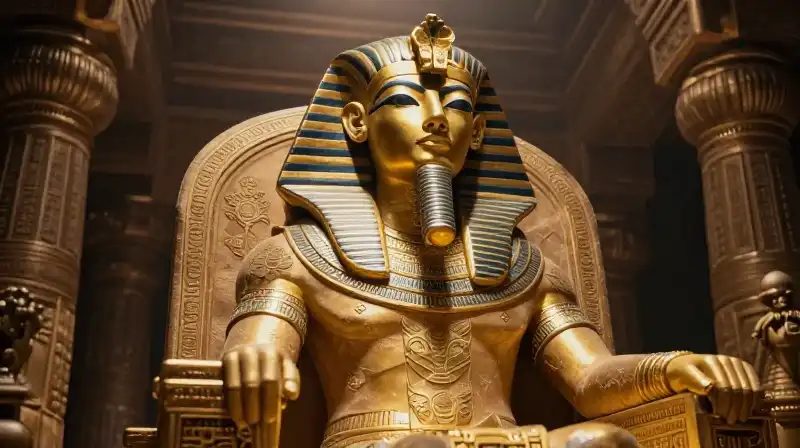
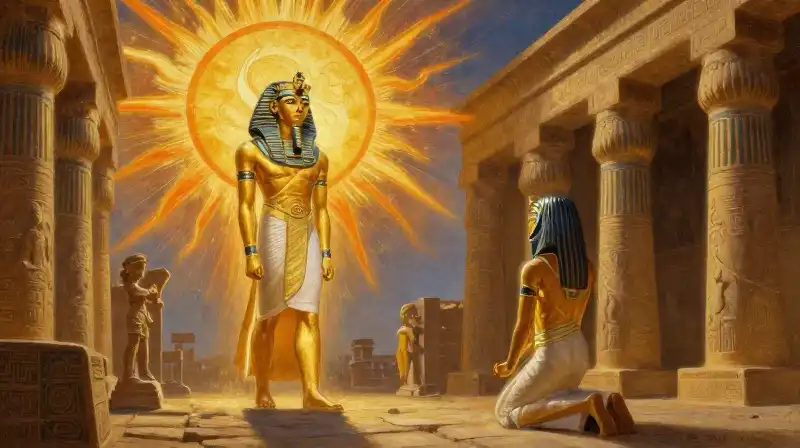
The most profound manifestation of this divine-terrestrial relationship is found in the belief that Ra was the progenitor of the pharaoh. According to sources detailing the early belief system, Ra was seen as ruling as the very first pharaoh of Ancient Egypt (1, 3). This idea evolved significantly during the Old Kingdom (c. 2800 BCE), when royal ideology began to rigorously define the king not just as a powerful ruler, but as the “Son of the Sun God” 1. This sacred lineage was an essential political tool, often inscribed upon the king’s cartouche to declare his divine birthright.
The relationship between Ra and the king was complex and dynamic. While the king was the Son of Ra, he simultaneously held the role of the earthly manifestation of the sky god Horus 1. Thus, the pharaoh existed in a state of powerful duality—simultaneously blessed by Ra’s creative might and charged with the earthly responsibilities of Horus. Lineage was symbolically communicated through specific royal epithets, such as *zꜣ-rꜥ*, which confirmed the king’s divine connection to the sun god 1. However, this was not a static definition; the religious identity of kings could shift based on the era or the specific deity being venerated.
Navigating the Duat: Symbols and Transformations
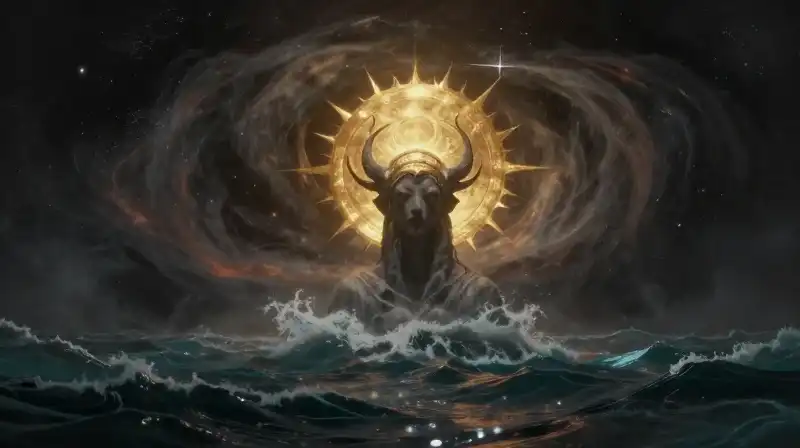
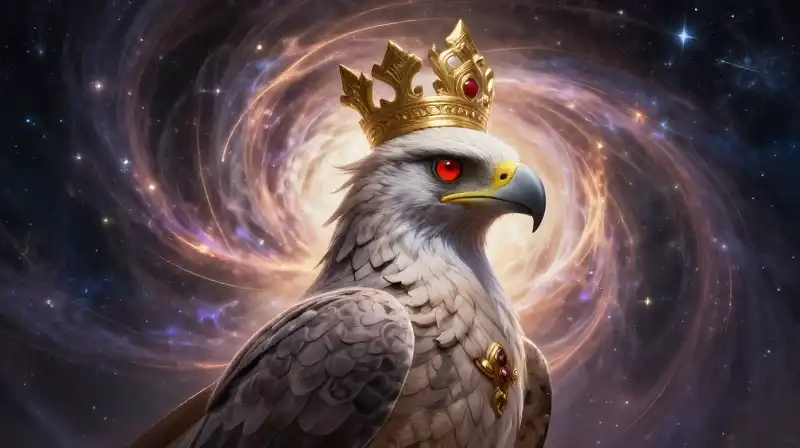
To grasp the full scope of Ra’s divine power, one must look at his iconography and mythological transformations. Ra was portrayed in multiple forms—from the noble falcon to a powerful ram, or as a man bearing a falcon’s head—each representation signifying a different phase or function of the god across the various celestial realms 1. His journey through the perilous Duat required specific, potent shifts in his physical form; notably, when traversing the subterranean Nile during the darkest hours, he would assume the form of a ram-headed deity 1. These transformations reflected the multifaceted nature of his power: creation, preservation, and necessary confrontation.
However, the divine order was not always unchallenged. Mythological narratives recount instances where humanity or the elements challenged the rigid structure of the cosmos. When this happened, Ra would deploy his most potent divine agents. One striking example is the manifestation of Sekhmet, Ra’s “eye,” a goddess sent to punish the populace for their transgression. Ra’s ultimate cessation of the massacre demonstrated his capacity for both severe justice and ultimate merciful control over the universe (1, 2). This narrative illustrates that the Pharaoh’s role as the mediator between the chaotic earthly forces and the perfect celestial order was critically important for the survival of the state.
The Evolution of Divinity: From Ra to Amun-Ra
The religious landscape of ancient Egypt was never static, and the dominance of Ra saw significant shifts over time. While his importance peaked during the early dynasties, the subsequent rise of powerful regional deities, such as Amun, led to profound religious synthesis. This transition resulted in the emergence of powerful dual deities, such as Amun-Ra. This merging of solar and chthonic power speaks to the Egyptian community’s ability to adapt and integrate new forms of authority into the existing theological framework (1, 2). The pharaoh’s role shifted, adapting his divine claims to reflect this new, combined identity.
The historical breadth of Ra’s divine associations is also visible in the different aspects of his power. For instance, some rulers aligned themselves with the blinding power of Aten, or the formidable fusion of Ra and Horus in Ra-Horakhty (2, 3). These variants show how the belief was not a single, fixed doctrine, but a living, mutable tradition that allowed kings and priests to define their unique relationship with the creator based on contemporary cultural and political needs.
Conclusion: The Meaning of Eternal Renewal
The tradition of Ra and the Pharaoh encapsulates the profound spiritual and political worldview of Ancient Egypt. It is a belief system where the daily rising of the sun is not a natural occurrence, but a guaranteed miracle that requires the active mediation of divinely sanctioned kings. Ra stood for the supreme law of continuity—the inescapable truth that creation necessitates order, and that order requires a constant journey through renewal. For the community that held these beliefs, the king was the earthly pillar ensuring that the solar barque would never fail, and that the cosmic balance (*Ma’at*) would hold against the ever-present forces of chaos in the Duat.
References
Footnotes
Frequently Asked Questions
Who is Ra and why is he important?
Ra is the solar deity and prime creator who brought forth the entire cosmos from the primeval ocean. He is important as he established the fundamental law of continuity and eternal order, Ma’at, and was viewed as the progenitor of the pharaoh.
What does Ra stand for in Egypt?
Ra was the prime creator and the fundamental engine of existence who brought forth the entire cosmos. He stood for the supreme law of continuity, representing the necessity of eternal order and the constant cycle of renewal.
Is Ra still worshipped today?
The provided article details the historical religious beliefs of Ancient Egypt regarding the solar deity Ra but does not mention whether he is still worshipped today.
Related Articles