
Ofrenda: What is the Day of the Dead Altar and its Symbolism

Introduction
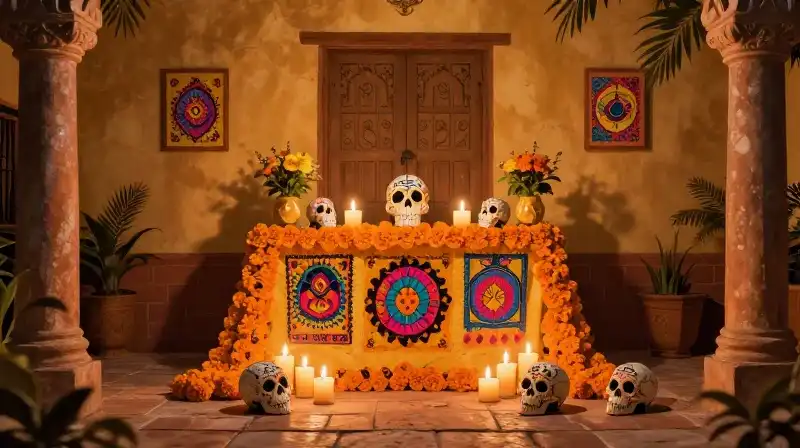
The *ofrenda*, commonly known as the Day of the Dead altar, is far more than a collection of decorative items; it is a sacred bridge between the living and the departed. This vibrant, deeply personal practice is rooted in ancient Mesoamerican traditions and transformed by the spiritual landscape of Mexico today. At its heart, the *ofrenda* serves as an invitation—an act of *la bienvenida*, or welcoming—to honor those who have passed and to allow their spirits a temporary, loving return to the home (S1, S2). It is a meticulous, multi-sensory narrative built from the ground up: it uses the scent of resins, the vibrancy of specific flora, and carefully constructed symbolic tiers to guide the spirits home, transform the mundane space, and provide them with sustenance for their journey (S1, S2).
The Geography of Spirit: Structure and Tiers
An *ofrenda* is a visual map of the spiritual realm. While the tradition allows for significant personal variation, traditional designs often follow symbolic structures that guide the soul. For instance, some altars are two-tiered, traditionally representing the transition between heaven and earth. More complex arrangements, such as seven-tiered structures, carry a deep theological weight (S1, S2). These levels are often interpreted as reflecting a journey: starting at the earthly plane, progressing through purification and addressing past sins, and ultimately ascending toward eternal peace. The structure is not merely aesthetic; it is a directional guide. The elements integrated into the altar act as markers along the spiritual path:
- The Elements: Water is placed to quench the spirits’ thirst, the scent of *cempasúchil* (marigolds) serves as a pathway to attract the souls, and *papel picado* (vibrant cut paper) symbolizes the movement of air and wind, a crucial part of the natural forces incorporated into the offering (S1, S2).
- Cosmic Representation: The integration of earth is typically represented through the food offerings provided on the altar (S1).
The altar thus becomes a physical manifestation of the world’s natural order, ensuring that all necessary provisions and guiding forces are present for the arrival of the deceased.
Guiding the Souls: Symbolism and Sensory Elements
The elements chosen for the *ofrenda* are highly intentional, designed to engage the senses and act as supernatural conductors. The power of *cempasúchil* is legendary; its bright color and potent scent are believed to be the primary attractant for the departed souls, helping them find their way back through the spiritual boundary (S1, S2). Complementary to this natural guide is *copal* incense, a light-yellow resin that burns on the altar. Beyond simply purifying the space, *copal* serves a metaphysical function: it transforms the physical environment into a supernatural one, acting as a conduit that calls the spirits (S1, S2). Sustenance and honor are further conveyed through specific offerings. The inclusion of *pan de muerto* (Bread of the Dead), along with the deceased’s favorite foods and beverages, is critical, providing the necessary energy for their temporary stay (S1, S2). The cultural importance of names and identity is addressed through *calaveras* (skulls), often decorative *calaveras de azúcar* (sugar skulls), where the living can inscribe the name of the deceased, honoring them personally (S1).
The Synthesis of Belief: Indigenous Roots and Modern Life
The *ofrenda* is a living practice, a beautiful blending of deep-rooted indigenous beliefs and later influences. For centuries, Mesoamerican traditions provided the framework for welcoming the ancestors. This ancient worldview has merged with Catholic symbols, evident in the practice of placing Christian crosses atop certain tiers or using sand crosses that reference the theological concept, “remember you are dust, and to dust you shall return” (S1, S2). This hybrid nature is mirrored in the traditions and folklore surrounding the day. Consider the profound significance of *La Catrina*, the skeletal female figure created by José Guadalupe Posada. While not an altar item itself, her creation transformed the cultural conversation about death, providing a satirical yet gentle commentary on social status and mortality, which is often reflected in the vibrancy of the altar’s decorations (S1). The tradition also connects to the natural cycles of life and death through specific fauna. The arrival of Monarch butterflies, which migrate through Mexico during this time, is culturally significant, as they are believed by many to be the literal carriers of the departed souls (S1). Furthermore, ancient ceramic depictions of the *Xoloitzcuintli* (a hairless dog) reflect the belief in spiritual guides who assist souls in their passage into the Underworld (S1).
Regional Heart: Personal Intention Over Universal Rules
When asking “What are the rules of an *ofrenda*?”, the answer lies in recognizing that while core elements are shared, regional traditions vary dramatically. The specific composition and artistic presentation of the *ofrenda* are dictated by geography, family, and individual intention (S1, S2). There is no single, rigid blueprint; rather, the construction is viewed as a personal act of love and profound respect. The goal is not adherence to a checklist but the genuine act of honoring the connection to one’s ancestry. The specific placement of items, the color palette chosen, and the selection of symbols may shift based on local customs within specific states across Mexico, reflecting the diverse tapestry of cultural heritage (S2, S1).
Navigating the Meaning: Key Terms Explained
To help a visitor or enthusiast truly understand the practice, these terms clarify the meaning behind the iconography:
- Ofrenda: The general Spanish term for the altar or offering itself.
- Cempasúchil: The Aztec word for marigold, which functions as a vital spiritual guide.
- La Catrina: The iconic skeleton figure, representing social commentary on life and death.
- Calvaras de Azúcar: Sugar skulls used to honor the departed by inscribing their names.
The Sustaining Tradition
Ultimately, the *ofrenda* exists to foster connection—to ensure that the line between the visible world and the spiritual one remains open, even for a short period. It is a celebration of memory and life, honoring the passage of time and the powerful enduring link to family. By creating this elaborate altar, communities are not just remembering the dead; they are affirming the continuity of their own history and the enduring strength of their shared heritage.
Frequently Asked Questions
What is a Day of the Dead altar called in Spanish?
The Spanish term for the Day of the Dead altar is ofrenda, which is the general term for the altar or offering itself.
What is the altar in Day of the Dead?
The ofrenda, or Day of the Dead altar, is a sacred bridge and a meticulous, multi-sensory narrative that serves as an invitation to welcome departed spirits home. It acts as a physical manifestation of the worlds natural order, providing the spirits with sustenance and guiding forces for their temporary return.
What are the rules of an ofrenda?
There is no single, rigid blueprint for an ofrenda, as the construction is viewed as a personal act of love and profound respect. While core elements are shared, the specific composition and artistic presentation are ultimately dictated by geography, family, and individual intention.
Related Articles