
Aten: History, Theology, and the Sun God of Ancient Egypt

Introduction
The worship of Aten, the radiant solar disc of ancient Egypt, represents a period of radical transformation and theological upheaval. Before this era, the Egyptian religious landscape was dominated by complex polytheistic systems where the sun god Ra held a foundational but shared position within the pantheon. However, during the Amarna Period (c. 1353–1336 BCE), this devotion evolved profoundly into Atenism, a revolutionary spiritual movement initiated by the pharaoh Akhenaten. This was not merely a change in name; it was a sweeping restructuring of the cosmos, placing the Aten—a supreme solar deity—at the absolute center of life and existence (1, 2). To understand Atenism is to explore a brief, intense moment in cultural history where the absolute power of the sun was translated into the absolute authority of a single, universal divine presence.
The Divine Image and the Aten’s Message
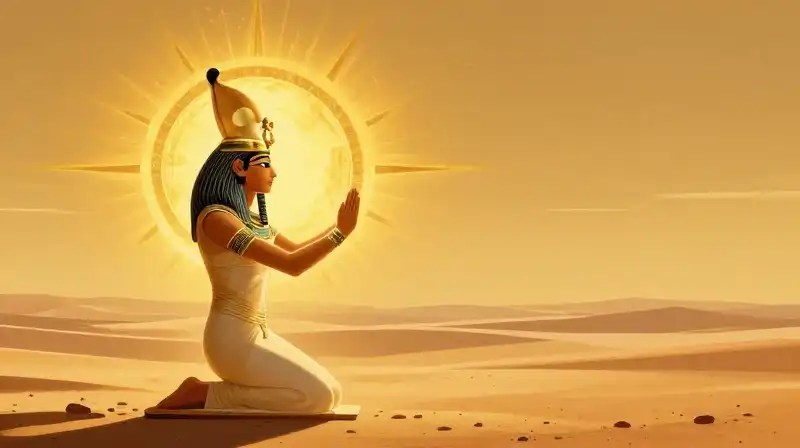
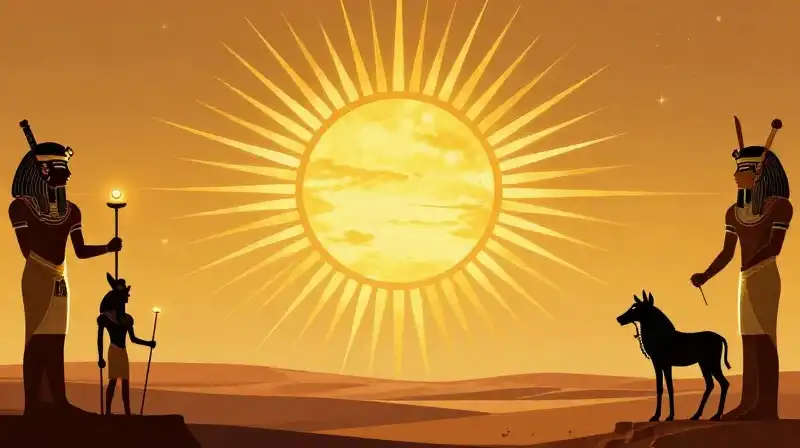
The Aten is conceptually understood as the ultimate source of life itself. Culturally, it is depicted not as a bearded god of many faces, but as a pure, radiant solar disc, from which emanate rays that culminate in human hands (1, 2). These rays are far more than mere light; they are symbolic conduits of life-giving power. The central text of this new faith, the Aton Hymn, elaborates on this fundamental philosophy, describing Aten’s beneficent power to create all things—from the earliest stages of human development to the smallest aquatic life and the life-sustaining cycle of rain and growth (1, 2). The message was one of complete dependence: the Aten provided sustenance and order, and the stability of the universe rested entirely upon his presence.
Was Aten a Sun God?
Yes, absolutely. As the name suggests, Aten is fundamentally a solar god 1. However, his representation was distinctly different from earlier iterations of the sun god Ra. While Ra was a complex figure who traveled across the sky and interacted with other deities, the Aten was viewed as a singular, transcendent force—the sole generator of all life (1, 2).
A Theology of the Royal Intermediary
One of the most critical, and often misunderstood, elements of Atenism is its structure. While it focused on the supreme power of the sun, it did not evolve into a fully monotheistic system in the modern sense. Instead, it operated through a unique form of royal mediation. The Aten was viewed as universal, caring for all creatures, yet his direct power was distributed to the royal family, specifically the pharaoh Akhenaten and his queen, Nefertiti 1. For the average citizen, receiving life from Aten was contingent upon maintaining loyalty to the royal family, who acted as the essential link between the people and the divine source 1.
Is Aten Male or Female?
The Aten is depicted as a sun disc and, as such, is non-gendered or universal in its expression as a source of power 1. The roles of divinity and humanity were instead expressed through the male pharaoh and the female queen, who served as the active conduits for the Aten’s blessing. This created a dual power structure that defined the Atenist community 1.
Cult Practice: The Radical Shift in Worship
The practical application of Atenism involved dramatic departures from the centuries-old practices of traditional Egyptian religion. To prevent any perceived form of idolatry, which the new theology seemed to discourage, the creation and display of statues of Aten were disallowed 1. Instead of traditional temple rites involving purification and anointment, the spiritual services centered on the open placement of food offerings—fruits, incense, and meats—upon open-air altars 1. Furthermore, the architecture of the new Aten temples, like Akhetaten, reflected the focus on the heavens. These were typically open-air structures, lacking the roofs and enclosed chambers of traditional temples. This design ensured that the intense rays of the sun could flood the sacred space, physically manifesting the god’s presence and power 1.
The Impact of Atenism: The Life and the Legacy
Atenism represents one of the most intense periods of cultural dedication in Egyptian history. The mandate to worship the sun required a total shift in community focus, establishing Akhetaten as the new religious and political capital. However, this intense focus proved fragile. The Egyptian elite and the wider populace, who were deeply rooted in established traditional practices, eventually resisted the radical change 1. Following the death of Akhenaten, the powerful priesthood and political opposition successfully rejected Atenism. The old gods were reestablished, the traditional temples were renovated, and the city of Akhetaten was eventually abandoned, illustrating the profound difficulty of enforcing such a swift and comprehensive theological change upon an established cultural tradition 1.
Ultimately, Aten’s history is a compelling study in the power of cultural transformation. While Atenism lasted only for a relatively brief period, it created a unique lens through which to view the absolute necessity of the sun and the divine nature of power. It reminds us that even within deeply entrenched religious systems, profound shifts can occur—but that such shifts require more than just decree; they require the willing embrace of a community. The legacy of the Aten lies not just in his brilliant rays, but in the evidence of how a single, powerful belief can radically reshape a civilization, and how resilient traditions often endure by adapting, rather than being replaced.
References
Footnotes
Frequently Asked Questions
Was Aten a sun god?
Yes, Aten was fundamentally a solar deity and a supreme solar god, though his representation was distinctly different from the earlier, more complex sun god Ra.
Is Aten male or female?
The Aten is depicted as a sun disc and is described as non-gendered or universal in its expression as a source of power. The roles of divinity and humanity were instead expressed through the male pharaoh and the female queen, who served as the active conduits for the Aten’s blessing.
Related Articles