Celtic Rebirth Symbols: Meaning Behind the Triskelion and Triquetra

Introduction
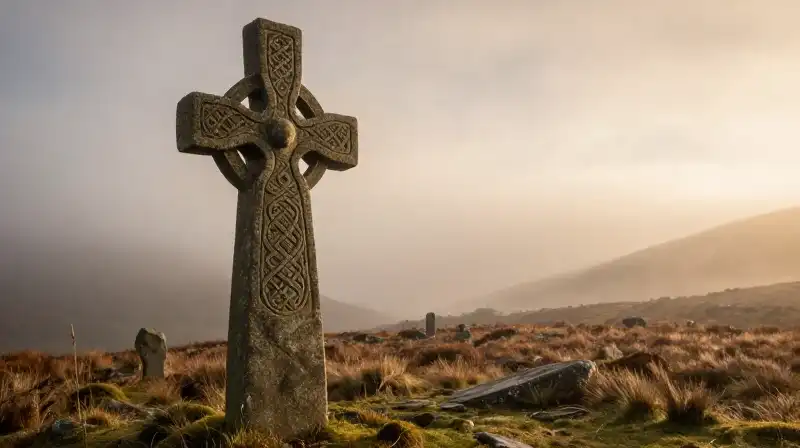
To understand the deep traditions of the Celts is to understand a worldview utterly intertwined with the natural world. For the ancient peoples of the Celts, the environment—the changing seasons, the flow of water, the strength of the oak—was not merely a backdrop to life, but the very language through which the divine spoke. Their beliefs were expressed through a sophisticated visual language: symbolic motifs that acted as a “window into its past” 1. When searching for a “Celtic rebirth symbol,” the reader is seeking more than just a decorative shape; they are looking for a conceptual map of existence.
The core of Celtic spiritual thought revolves around the concept of cycles—the constant return, the inherent balance between opposing forces, and the profound connection between life, death, and the eventual renewal of spirit. Symbols like the Triskelion and the Triquetra are not static images; they are dynamic representations of this spiritual flow, serving as a means for communities to express their relationship with nature and their journey through time.
The Geometry of Eternity: Triquetra and Triskelion
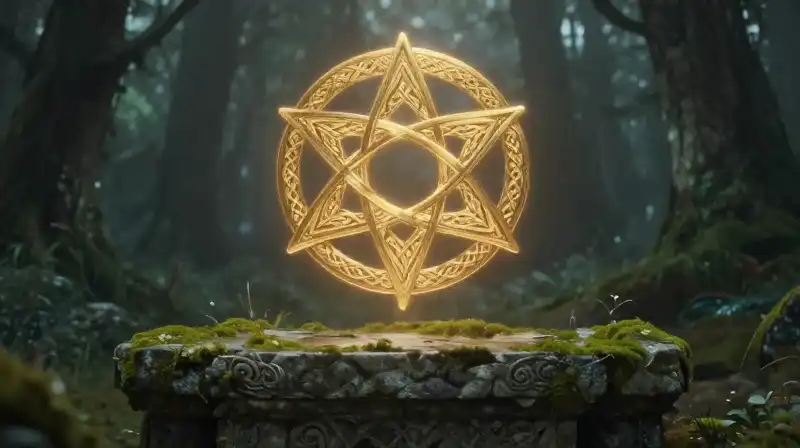
While many symbols exist in Celtic heritage, the Triquetra and the Triskelion serve as the clearest visual anchors for the concept of cyclical existence. Though distinct in their visual form, they share a deep reverence for the power of the triad—the notion that unity is found through three parts.
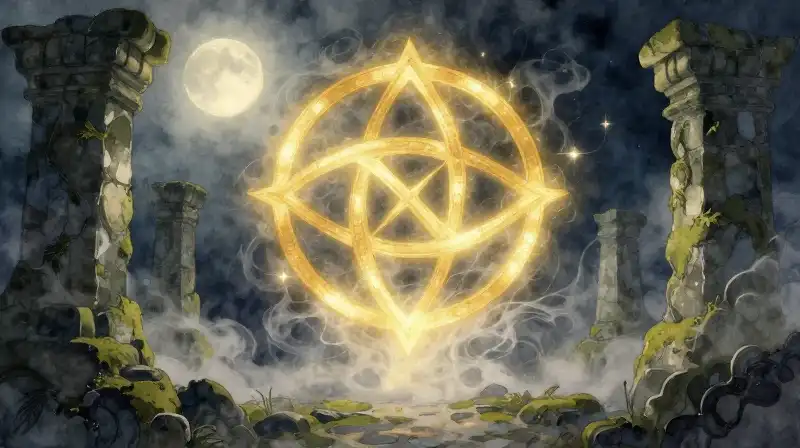
The Triquetra, characterized by its three overlapping, pointed loops forming a triangular shape, is often interpreted as a representation of eternity 1. Its primary power lies in symbolizing interconnectedness, particularly the great “triads” found in the natural world, such as the encompassing domains of Land, Sea, and Sky 1. Within Celtic cosmology, the Triquetra is specifically seen as signifying the “trinity of life, death, and rebirth” 1. This cyclical view reflects a spiritual bond with the natural processes that govern the world.
In contrast, the Triskelion, often referred to as the Celtic Spiral, focuses on motion and progression. It is composed of three interlocking spirals or legs, signifying the continuous, dynamic nature of the life cycle: birth, life, and death 1. One powerful interpretation views the Triskelion as representing the dynamic elements of the universe—water, air, and fire—with the stable Earth serving as its spiritual center 1. The Triskelion thus serves as a reminder that existence is not a linear march, but a continuous, spiraling journey.
The Living Tree and Cosmic Wheel
The reverence for natural structures is perhaps most evident in the Crann Bethadh, or Celtic Tree of Life 1. This symbol encapsulates resilience and strength, drawing spiritual power from the mighty oak tree—a species that was sacred and believed to house both the gods and ancestors 1. The Tree of Life embodies the three stages of human existence and the constant cycle of nature: birth, death, and rebirth, much like the seasonal cycle 1.
Other symbols further cement this view of cyclical time. The Wheel of Taranis, an ancient Druid symbol based on a chariot wheel with six or eight spokes, underscores this concept of eternal return. By focusing on a defined center, it represents the center of the universe and the ceaseless turning of existence 1.
Decoding the Trinity: The Power of Three
The pervasive presence of three across these symbols (Triskelion, Triquetra, Awen, Shamrock) is more than a stylistic preference; it reflects a foundational spiritual principle for the Celts. The number three held deep mystical power, suggesting that true understanding or completeness is reached through the synthesis of three disparate elements 1. Awen, a word used in Welsh, Cornish, and Breton, exemplifies this tripartite balance. Its three rays of light suggest various facets of the divine or the natural world, connecting the body, mind, and spirit 1.
Furthermore, the simple Shamrock (a three-leaved clover) exemplifies this principle. The Celts revered it, believing that the number three imparted mystical power to the plant and served as a potent means of warding off negative spirits 1. These smaller, everyday symbols show how the grand cosmic ideas of the Triquetra were woven into the fabric of daily life and protective rituals.
The Evolution of Meaning: From Pagan Roots to Modern Practice
It is crucial to approach these symbols with historical nuance. While they are deeply integrated into modern Druid and cultural practice, their meanings and origins are complex. For instance, while many modern groups use the Triskelion to symbolize personal life cycles, scholarship suggests the symbol predates the arrival of the Celts in Ireland by over 2,500 years 1. This implies that the symbolism of cyclical movement was present in the region long before the specific Celtic culture we often romanticize.
In the modern context, these ancient beliefs find expression in communities dedicated to preserving heritage. For modern spiritual practitioners, the symbols function as powerful talismans and guides. They are used to encourage self-reflection on one’s own cycles of growth and renewal. However, their original spiritual significance was intrinsically tied to the physical, sacred landscape, and their meaning remains deeply rooted in connection to the land.
Symbols of Connection and Eternal Love
Beyond the large, cosmic symbols, some forms articulate highly specific human experiences. The Serch Bythol, a unique Welsh symbol, is a beautiful example of how these ancient shapes were adapted to represent relationship. Crafted from two triskeles, it symbolizes “eternal love” and the perfect joining of two individuals forever—body, mind, and spirit 1. This demonstrates that the Triskelion, while representing cosmic cycles, was also a perfect visual language for understanding human connection and commitment.
Another fascinating intersection of tradition is the Carolingian Cross, or Cross of Triquetras. This is a complex blend of spiritual traditions. It fuses Christ’s sacrifice with the pagan concept of the Tree of Life, representing the passage of time through its focus on the past, present, and future 1. This symbol illustrates how belief and symbolism are not static, but evolve to accommodate new spiritual understandings while retaining ancient philosophical roots.
The Living Symbols in Contemporary Culture
Today, the desire to wear or incorporate these symbols (like a “Celtic rebirth symbol tattoo”) is a direct manifestation of a global interest in finding deeper meaning within heritage. For many who connect with Celtic traditions, these symbols are not merely aesthetic choices but intentional affirmations of their beliefs. They serve as a powerful visual mantra for embracing change and understanding the inevitability of the ebb and flow of life.
While modern interpretations may be diverse, the enduring cultural meaning remains consistent: the symbols of the Triskelion and Triquetra encourage the wearer and the observer to look beyond the linear view of time and see life as a magnificent, continuous cycle of transformation. They speak to a community that respects nature not as something separate from itself, but as a vibrant, sacred entity with which they are intrinsically linked.
Ultimately, a genuine understanding of these symbols requires acknowledging the profound spiritual connection to the land. They are the captured whispers of a culture that learned, long ago, that rebirth is not an accident, but a natural, inevitable part of the world’s most beautiful rhythm.
References
Footnotes
Frequently Asked Questions
What is the Celtic symbol for rebirth?
Within Celtic cosmology, the Triquetra is specifically seen as signifying the trinity of life, death, and rebirth, while the Crann Bethadh, or Celtic Tree of Life, encapsulates the constant cycle of nature encompassing birth, death, and renewal. Additionally, the Triskelion signifies the dynamic nature of the life cycle: birth, life, and death.
What is the pagan symbol of rebirth?
The Triquetra is specifically seen as signifying the trinity of life, death, and rebirth within Celtic cosmology. Additionally, the Crann Bethadh, or Celtic Tree of Life, embodies the constant cycle of nature through the stages of birth, death, and rebirth.
Who is the Celtic deity of rebirth?
The article discusses the concept of rebirth through various symbols, such as the Triquetra, Triskelion, and the Celtic Tree of Life, but it does not name a specific Celtic deity of rebirth.
Related Articles