Who Was Set? Defining the God of Chaos and Order

Introduction
The figure of Set, or Seth, holds a uniquely complex and vital place in the ancient Egyptian spiritual landscape. Unlike many deities who are purely benevolent or purely malevolent, Set exists at the fault line of the Egyptian world-view. He is understood not merely as a “god of chaos,” but as the embodiment of the necessary tension between structure and wilderness, between the controlled bounty of the Nile and the unpredictable power of the desert. To understand Set is to grapple with the fundamental conflict that shapes Egyptian civilization: the struggle between *Ma’at* (order) and *Isfet* (chaos).
The Tension Between the Black and Red Lands
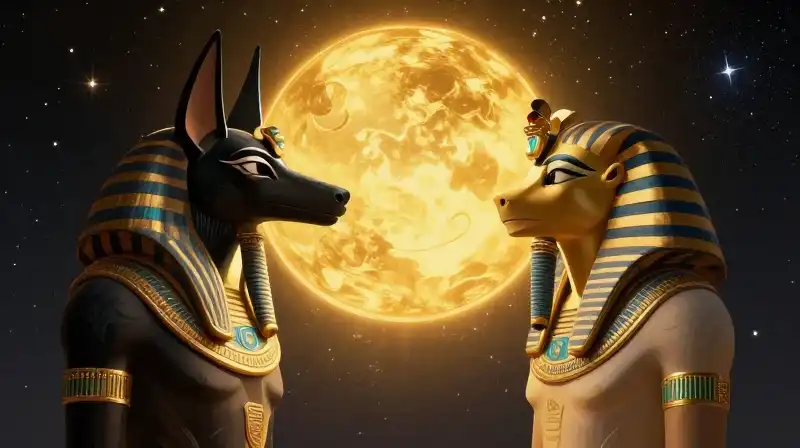
At the heart of the Egyptian cosmos lies a geographical and cosmological division embodied by two powerful forces. The fertile floodplains of the Nile, the “Black Land,” are the domain of Horus, representing civilization, order, and controlled fertility. In direct opposition lies the vast, rugged desert, the “Red Land,” which is the natural territory of Set. This dichotomy established a permanent cultural friction within the pantheon, positioning Set as a powerful, enigmatic force that challenged the established norms. Scholars note that Set’s identity is “dynamic and enigmatic” because his role evolved significantly across different periods and myths 1. He was historically viewed as a “god of foreigners” because his desert kingdom was the natural origin point from which peoples like the Nubians and the Hyksos would enter the lush, ordered valleys of Egypt 1. This initial association rooted him not just in geography, but in the experience of outsiders—those who operated outside the centralized, fertile order of the kingdom.
The Mythological Framework: Order, Usurpation, and Cosmic Combat
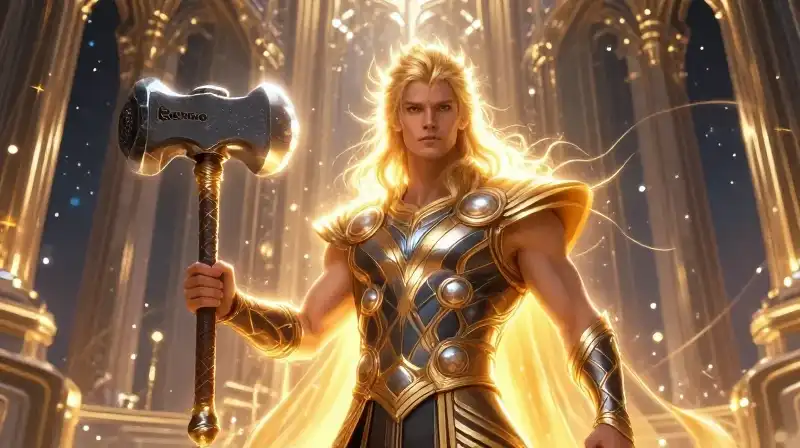
The primary narrative that defines Set’s cultural significance is found in the central Osiris myth. Here, Set transitions from a geographical force to a key agent of conflict. In this myth, Set acts as a violent usurper, murdering his brother, Osiris, the embodiment of agricultural renewal and civil order 1. This drama created a powerful mythological framework—a narrative that constantly reiterated the dangers of unchecked power and the fragility of the social order. Yet, Set’s role is far from purely negative. His profound mythological importance is anchored in his struggle with Horus. This rivalry is portrayed not merely as a succession of violent contests for the throne, but as a critical legal judgment before the assembled gods, the Ennead 1. Furthermore, Set occupies a paradoxical place in the pantheon; he is the harbinger of *Isfet* (chaos), but he is also a mighty defender of cosmic stability. According to 1, he fought and defeated the Chaos Serpent Apep while protecting the Sun God Ra, demonstrating that his chaotic nature was sometimes necessary to defend the very order the Nile represents.
Iconography and the Enigma of the Set-Animal
If you search for the visual representation of this god, you will find a figure whose iconography remains surprisingly obscure. While many traditional depictions show Set as a man with a distinct matted beard and perhaps a zoomorphic element, the specific “Set-animal” has been the subject of intense debate. It is generally depicted as a creature with a downward curving snout and squared-off ears, though modern Egyptologists have struggled to confidently identify it with any known species (1, 2). This ambiguity underscores his fluid nature—he is not bound to a single, rigid symbol, much like the complex roles he played in mythology.
The Human and the Sexual Dimension of Set
To understand Set fully requires looking beyond the battles for the throne. In the most intimate and visceral depictions of his nature, the tradition characterizes Set through force and potent sexuality. Mythological accounts detailing his rivalry with Horus frequently include elements of sexual degradation and mutilation 1. These themes reveal a cultural preoccupation with raw, untamed, and aggressive power, contrasting the “pure” order of the ruling divine lineage with a powerful, potent force that could not be wholly contained.
Set in the Historical Record: From Naqada to the Dynastic Shift
Set’s presence in the Egyptian cultural record is remarkably early, with the earliest evidence dating back to the Naqada culture. An image of him is found on the mace head of King Scorpion; however, archaeologists debate whether this specific depiction is actually meant to represent Seth or a similar fertility god like Min 1. The deity continued to influence human history, as evidenced by cultural shifts in devotion. A notable historical instance occurred in the Second Dynasty, when the pharaoh Seth-Peribsen began utilizing the desert god’s name as his own patron. This transition suggests a localized or temporary influence of the powerful “Seth kingdom” over the traditional monarchy aligned with Horus 1. This shift is a testament to Set’s ability to be adopted and utilized—not just as an antagonist, but as a legitimizing force for political power.
Synthesis: Understanding the Significance of Seth
Set is not merely the “god of chaos” in a reductive sense; he is the essential force of untamed energy, the representative of necessary friction, and the dynamic element required to prevent a stagnant, sterile existence. His life story—defined by violence, usurpation, and his dual role as both destroyer and defender of cosmic equilibrium—offers readers a profound insight into Egyptian thought. He teaches that order is not perfect or absolute; it is maintained through a perpetual, violent struggle against the unpredictable and the wild. To truly understand the tradition of Set is to accept that the most powerful forces in life are often the ones that defy easy definition or singular categorization.
References
Footnotes
Frequently Asked Questions
Who is Lord Seth?
Set is a complex figure in the ancient Egyptian spiritual landscape, embodying the necessary tension between structure and wilderness, or the struggle between Ma’at (order) and Isfet (chaos). He represents the rugged desert (Red Land) and serves as a powerful force that is both the harbinger of chaos and a defender of cosmic stability.
Related Articles