The Greek Warrior Goddess: Athenas Dual Role in Wisdom and War

Introduction
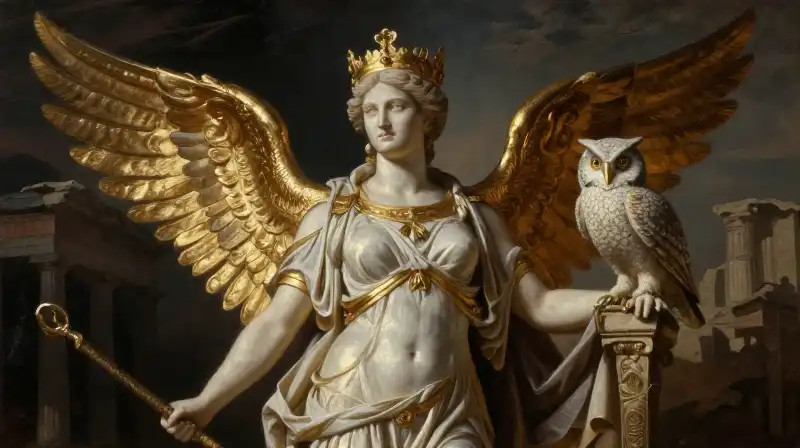
For readers seeking to understand the heart of ancient Greek tradition, the figure of Athena represents one of the most profound cultural juxtapositions in Western lore. Unlike other mythological portrayals of female divinity that might focus solely on domestic roles or nurturing aspects, Athena stands as the embodiment of strategic violence. She is the armed warrior goddess, a deity who skillfully synthesizes intellect, craft, and the brutal efficacy of combat. This combination of wisdom and war strategy (1, 2) presents a fascinating cultural paradox: how could a society known for its patriarchal structures elevate a female figure to the status of a fierce warrior? Examining Athena and her counterparts reveals not a simple myth, but a complex cultural dialogue about power, strategy, and the limits of gender within the Hellenic world.
The Birth of a Strategist: Intellect Meets the Battlefield
Athena’s unique place in the pantheon is cemented in her origin story. Unlike many gods who emerged through traditional means, she is often described as being born fully grown from the head of Zeus 1. This birth story is essential to understanding her role; she is not merely a participant in war, but a fully formed agent of intellect from the very beginning. Her primary function, as reflected in her iconography, is strategic warfare. While she is certainly an armed figure who engages in battle 1, her power lies in her mind—she represents the calculated tactics that lead to victory, rather than merely the raw, visceral fury of destruction.
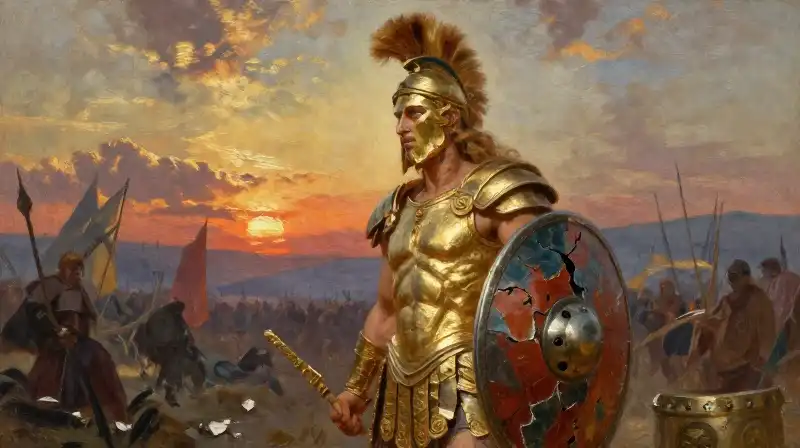
This emphasis on strategic thought sets Athena apart from deities who embody pure, mindless aggression. For instance, lesser deities like Enyo, who is associated with Ares, serve as the pure destructive force. Enyo is described as a war goddess who delights in the bloodshed and the ruin of towns (1, 2). Where Athena uses the sword with careful intent, Enyo embodies chaotic, bloody destruction, highlighting a crucial distinction between the calculated military power of Athena and the more primal, aggressive energy of other divine figures in the Greek tradition.
Beyond the Gods: The Pantheon of the Warrior Woman
The presence of female warrior concepts extends far beyond the divine domain of Athena. To truly understand the tradition, one must look at the mortal and semi-divine figures who reinforce the idea of female competence in combat. These figures, whether mythological or historical, help scholars piece together a richer tapestry of Greek culture that goes beyond simply citing the patriarchal roots of the 5th-century Athenian world 1.
Among the most famous mortal examples is Atalanta, a highly skilled huntress, archer, and wrestler who played a vital role on the Argonaut expedition 1. Another powerful example from the myth of the Trojan War is Penthesilea, an Amazonian queen. She is portrayed as a fierce and tragic figure whose bravery and beauty commanded respect, even from legendary figures like Achilles 1. These stories, such as the legends surrounding the Amazons, like Hippolyta (who was stated to be a daughter of Ares), suggest that the concept of women actively engaged in martial activities was known and integrated into the cultural narrative of ancient Greece 1. Even historical, though legendary, figures like the shield maiden Telesilla of Argos further indicate the longevity of the concept of women in combat within Greek lore 1.
Navigating the Cultural Paradox: Patriarchy and Power
A critical component of understanding this tradition is grappling with the cultural context of ancient Greece. Scholarly inquiry into Athena’s origins and role has raised questions about how such a powerful female deity coexisted with a highly patriarchal social structure 1. Some theories suggest that Athena might have absorbed elements from older traditions, including influences from ancient Near Eastern cultures where female warrior deities were more common 1. Other academic discussions propose a link between Athena and the concept of a prehistoric “Great Goddess.” However, academic consensus cautions against assuming a definitive matriarchal prehistory for the Greek world 1.
The existence of powerful females in Greek mythology does not, in itself, provide clear evidence for a systemic matriarchy in Athenian society. Instead, these figures can be viewed as representations of specific archetypes—power, intellect, cunning, and strategic defense—that were highly valued within the cultural framework of war and civic protection. The Greek tradition thus reflects a complex interplay between societal norms and the powerful, transformative forces of myth, allowing the archetype of the powerful female strategist to flourish even within a constrained cultural environment 1.
Athena and the Modern Cultural Legacy
The enduring appeal of the Greek warrior goddess lies in her complexity. She is not a “simple” warrior; she is a warrior who thinks. For the modern reader, the tradition offers a template for understanding how competence, whether in intellect or in conflict, can be synthesized and celebrated, regardless of traditional gender boundaries.
In seeking the answer to “Which Greek goddess was a warrior?” or exploring names related to a “Female Greek Warrior Goddess,” it is helpful to recognize that the tradition of the warrior woman is diverse. While Athena is the most famous embodiment of strategic might, figures like Penthesilea and the Amazons provide crucial cultural depth, showing that the concept spanned both the divine and the human spheres. These figures tell a story not of a purely matriarchal past, but of a rich mythological landscape where different facets of power—the tactical mind and the fierce heart—were all given a profound voice.
References
Footnotes
Frequently Asked Questions
Which Greek goddess was a warrior?
Athena is described as an armed warrior goddess who embodies strategic violence. Additionally, Enyo is mentioned as a war goddess who serves as a pure destructive force.
Related Articles