The 1,500+ Egyptian Gods: Roles, Myths, and Their Sacred Functions

Introduction
Ancient Egyptian mythology is not simply a collection of memorable names and stories; it is a sophisticated blueprint for understanding the world, a system of cultural belief woven into the fabric of daily life and cosmology. To the ancient Egyptians, the gods—a vast pantheon totaling over 1,500 known deities—were not abstract concepts, but powerful, active forces that governed every aspect of the environment, social structure, and human destiny (1, 2). Each god or goddess embodied a specific aspect, ranging from the unpredictable movement of the stars and the annual flooding of the Nile to complex social concepts and the profound human quest for immortality. Understanding this colossal religious tradition requires looking beyond a mere list of names. The Egyptian worldview was fundamentally predicated on the principle of Maat—a concept representing order, harmony, truth, and balance. The divine purpose of the pantheon was intrinsically linked to maintaining this balance; the gods were the caretakers of cosmic law, and their rituals and offerings were the tools the faithful used to ensure that life continued to unfold smoothly in both the social realm and the eternal cycle 1. This article explores how these sacred figures functioned within Egyptian society, how they evolved over millennia, and how their narratives explain the very forces that shaped life along the Nile.
The Architecture of the Divine: Order and Environment
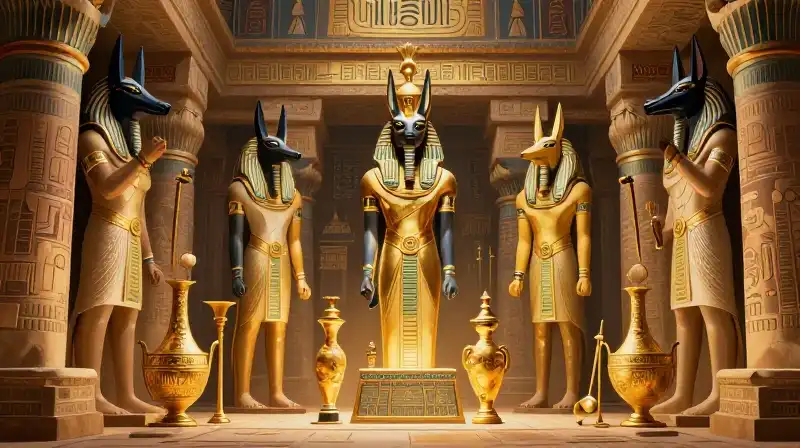
The sheer scale of the Egyptian pantheon suggests a profound dedication to categorization, allowing scholars to classify deities by their scope, such as Major, Minor, or Lesser-known gods, and by their physical presentation 1. However, the categorization was less an academic exercise and more a practical reflection of the community’s need to organize a chaotic world into a predictable one. The ancient Egyptians utilized their extensive mythology as an elaborate system of explanation for observable phenomena. The rising sun, the navigation of celestial bodies, and the life-giving cycles of the Nile’s flood were not random events; they were acts of divine will. By attributing these powerful occurrences to specific deities, the culture integrated the natural world directly into its spiritual framework (3, 2). These divine figures were often highly mutable. Many gods and goddesses were not static beings; they depicted themselves through transformative forms, shifting between human, animal, and hybrid physical characteristics. A god might appear as a falcon, a powerful bull, or a crocodile, or even a complex combination of these forms, signifying their multifaceted nature and the various domains they controlled 1. This fluid form gave the gods a powerful presence that was simultaneously familiar and monumental.
From Local Power to Universal Influence: Evolution and Scope
The Egyptian spiritual landscape was not uniform; it was a tapestry of local and universal influences. While there were powerful pan-Egyptian deities, there was also an extensive system of regional variation. Many communities fostered powerful local gods specific to individual towns, alongside minor deities focused on localized flora or fauna. This decentralized religious structure meant that a person’s worship often reflected their local geography as much as their general reverence for the divine 1. One of the most compelling examples of this evolution is the history of Amun. Initially known as ‘the hidden one,’ this deity gradually ascended in religious importance. He eventually gained prominence as the protector of the royal family before his influence expanded dramatically. In the New Kingdom, Amun merged with the sun god Ra, transforming into Amun-Ra—a potent, highly influential figure whose prominence reflects the shifting power structures and theological priorities of the era (3, 2). This blend of local roots and cosmic ascension illustrates the dynamic nature of Egyptian spirituality. The concept of a divine family, exemplified by the myth of the Ennead (a foundational group of nine gods), provides a narrative structure for this complexity, beginning with the creator Atum and tracing lineages through Shu, Tefnut, Osiris, Isis, and Seth 1.
The Divine in the Human Realm: Pharaoh and Accountability
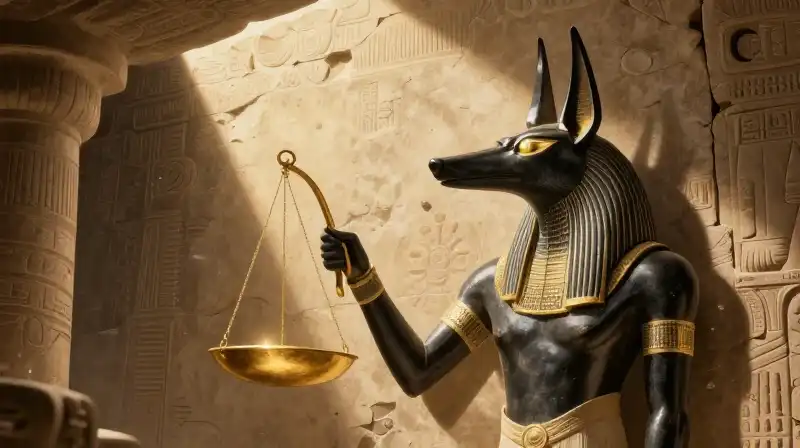
The relationship between the gods and the human community was intensely practical and deeply integrated into the political and social structure. The authority of the Pharaoh was inextricably linked to this divine hierarchy. The ruler was not merely a king; they functioned as a vital representative of the gods on earth. While this connection was profound, the sources also indicate that not every divine tie was unique or universal, reflecting the diverse nature of these relationships (1, 2). Worship and ritual were the primary methods by which the community maintained *Maat*. Offerings and structured rites were performed by priests and worshippers specifically to maintain cosmic balance, ensuring that the gods remained satisfied and that society functioned without chaos 1. The theological concerns of the pantheon also included the ultimate destination of life: the afterlife. In this final realm, powerful supernatural figures acted as judges. Among the most terrifying and crucial was Ammit, a creature described with the body of a lion and hippopotamus. Ammit played the terrifying role of the devour, consuming the hearts of those deemed unworthy during the judgment of the dead (2, 3).
Understanding Sacred Symbols: 𓆥
A common point of confusion for modern observers is the meaning of the symbols used in Egyptian art and writing. One frequent symbol encountered is the **𓆥**. This is the hieroglyph used to write the concept of truth, order, and justice. When it appears in a context relating to the judgment of the dead or the function of the gods, it refers directly to *Maat* itself—the central organizing principle of the entire Egyptian worldview. To a contemporary reader, recognizing this symbol is to recognize the foundational ethos of the culture: the striving for moral and cosmic balance.
The Scholarly View: Limits of Knowledge
Despite the wealth of artifacts and mythology, scholars acknowledge inherent limitations in fully assembling the historical record of the Egyptian gods. A key complexity arises because many ancient texts refer to specific divine roles or functions without explicitly naming the deity who fills that position 1. This means that a complete, definitive historical assembly of the 1,500+ deities is elusive, making the study of the pantheon a blend of archaeological evidence, textual interpretation, and continuous scholarly inquiry 1. This mystery reinforces the tradition’s richness. The Egyptian belief system was designed to be living and contextual, allowing new meanings and names to rise alongside the needs of a changing civilization.
Synthesis: The Enduring Meaning of Maat
The legacy of the Egyptian gods is not found in a comprehensive list of every single name, but in the cultural philosophy they embody. The tradition teaches that existence requires constant negotiation with the divine; one does not simply live, one upholds *Maat*. The vastness of the pantheon provided the necessary tools to address every possible aspect of life—from the daily cycle of the sun to the terror of eternal judgment—grounding the enormous power of the cosmos into relatable, manageable cultural roles. For those seeking to genuinely understand Egyptian heritage, the importance lies not in memorizing the characteristics of a dozen gods, but in comprehending the overarching system they maintained. They represent a civilization that meticulously mapped the unpredictable forces of nature and society, creating a highly ordered, sacred space where every element, divine or mundane, had a necessary place in the cosmic hierarchy.*
References
Footnotes
Frequently Asked Questions
What does 𓆥 mean?
The hieroglyph 𓆥 is the symbol used to represent the concepts of truth, order, and justice. When used in context, it refers directly to Maat, which was the central organizing principle of the entire Egyptian worldview.
Related Articles