Unique Fantasy Creatures: Discovering Rare Lore and Mythical Origins

Introduction
The world of mythical creatures—from the elegant, long-winged Harpy of classical verse to the ancient, maddened Nonmen of speculative history—serves as a mirror to humanity’s deepest fears, aspirations, and imaginative capacity. When exploring unique fantasy creatures, the interest often lies in a mere list of names, but the true value lies in understanding the cultural weight of these beings. They are not simply decorative monsters or fantastical side characters; they are narrative anchors that establish the laws of a world, define the boundaries of sanity, and shape the moral landscape for their audiences. Whether rooted in the enduring traditions of Irish folklore or emerging from the more complex structures of modern speculative fiction, these beings reveal much about the communities that have created and sustained them.
By exploring creatures often overlooked in the mainstream—those whose lore speaks to decay, longevity, and the strange intersection of the biological and the magical—we gain a clearer understanding of how different traditions interpret the limits of human experience, inviting a deeper engagement with cultural heritage and rare narrative archetypes.
The Weight of Folklore: Traditional Origins and Warnings
Many of the most potent figures in mythical lore are not inventions of the modern fantasy genre, but echoes of ancient, regional traditions. In the realm of Celtic folklore, the concept of the Banshee, for instance, functions as a powerful harbinger of change. Rather than a simple spectral figure, the Banshee is understood as a woman who emits a piercing scream to foretell an impending death. Her perpetual act of combing her windswept white hair is a crucial detail, grounding the supernatural in a deeply ritualistic and character-driven behavior, as noted in 1.
Alongside the supernatural warnings of the Banshee exists the concept of the Fair Folk. These are composite archetypes, often blending elements reminiscent of the brownies and hobgoblins. According to 1, the appearance of the Fair Folk is intrinsically tied to the passage of the sun; they are believed to appear in crowds after sundown. Their presence carries a demanding quality, sometimes requiring sacrifices or the imposing of spells upon households that have neglected traditional respect. This cultural dynamic suggests that even in myth, the balance between human society and the wild supernatural remains fragile and requires careful maintenance.
The Architecture of Madness and Speculative Forms
As the narrative expanded into more speculative and “high fantasy” realms, the focus shifted from regional warnings to deeper, more philosophical concepts of mortality and existence. This is where highly unusual creatures become essential to world-building. For instance, the concept of the Nonmen presents a unique speculative history. They are depicted as an ancient, pre-human civilization whose unique prolonged immortality comes at a steep price: a slow, inevitable deterioration into madness. Dwelling in forgotten mountain ruins, their existence serves as a tragic commentary on the limits of existence itself 2.
Similar explorations of the uncanny occur in the case of the Tallowmen. These figures are described as humanoid but are morbid in their composition, being made of rendered corpse fat. Their heads, which are often described as jar-like, contain a burning flame—a striking anatomical feature that serves as their entire source of animation 2. The Tallowmen, along with the Holothroid, showcase how narrative invention can push boundaries, creating beings whose very bodies and internal mechanics represent concepts far beyond simple beastly aggression.
The Holothroid itself stands out as an example of radical biological design. It is a giant kraken distinguished by the feature that each of its numerous arms possesses its own independent brain 2. This detail transcends mere monster design; it suggests a level of intelligence and independent agency within a traditionally monstrous form, challenging the simplistic view of a singular, monolithic entity.
Hybrid Dynamics: Antagonists, Hybrids, and Eternal Powers
The mythology of fantasy frequently relies on specific types of hybridity to create high narrative tension or to define cosmic archetypes. Harpies are one of the most consistently cited examples of this in literary traditions, particularly epic fantasy. They are powerfully winged entities, typically cast in the role of powerful antagonistic figures whose wings and predatory nature embody chaos and struggle 2.
The concept of hybrid existence also extends to benevolent forms. The Peryton, for example, is a winged stag, representing the recurring cultural motif of animal-based hybrids within fantasy narratives 2. These figures demonstrate that the fusion of different forms—be they parts or species—can be both threatening and deeply mystical.
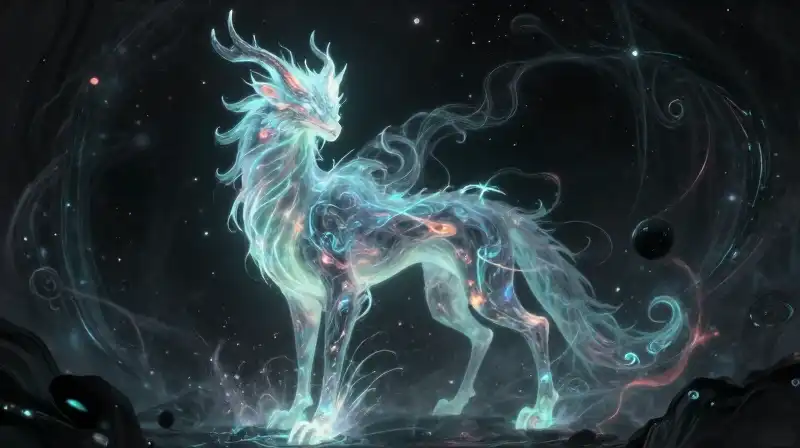
Another striking example of complex power scaling is found in the Kitsune. These are mythological fox maidens whose inherent power and longevity are traditionally correlated directly with the number of tails they possess 2. This mechanism of power based on external, quantifiable attributes adds a layer of specific, definable magical hierarchy that is both intriguing and visually striking.
The Shared Spectrum: Archetypes of Good and Foundation
When examining the broadest strokes of fantasy lore, it becomes evident that many powerful creatures share overlapping roles and attributes, blurring the lines between what might be considered “evil” and “divine.” The cultural motif of overlap is clear between Angels and Fairies. While belonging to different mythological systems, both types of mythical beings can be depicted with similar power sets, specifically the ability to heal 2. This suggests a common narrative thread across cultures: the immense power of creatures outside the human realm can often be channeled toward preservation and grace.
Furthermore, the foundational stability of many fantasy mythos often rests on recognizable, sturdy archetypes. Elves and Dwarves represent foundational concepts that frequently anchor the narratives of epic fantasy 2. They serve not merely as inhabitants, but as structural pillars—representing elements of grace, ancient history, and endurance—around which more unique or “rare” creatures can be defined and compared.
Understanding the Rarity: From Folklore to Fictional Necessity
The question of what constitutes the “rarest” mythical creature shifts depending on whether one defines rarity by its presence in historical folklore or its complexity in modern storytelling. In historical terms, creatures like the Banshee and the Fair Folk are deeply rooted in regional, traditional oral histories. In contemporary fictional contexts, a creature might be “rare” because its complexity—like the independent brains of the Holothroid or the specific madness of the Nonmen—is designed to serve a particular philosophical purpose within the world-building, rather than to be a simple variation.
Ultimately, these diverse entities—from the sorrowful Banshee to the maddened Nonmen—serve to enrich our understanding of storytelling itself. They are cultural tools: they reinforce the importance of heritage, challenge assumptions about life and death, and push the imaginative limits of what we accept as possible. Rather than simply looking for a list of uncommon monsters, we find a collection of deeply embedded cultural ideas given life.
References
Footnotes
Frequently Asked Questions
What is the rarest mythical creature?
The article indicates that defining the rarest mythical creature depends on whether one measures rarity by its presence in historical folklore or by its complexity in modern storytelling. Therefore, the rarest creature shifts based on whether it is defined by its traditional roots, such as the Banshee, or its unique design and purpose, such as the Holothroid.
Related Articles