Norse Mythology Giants: Understanding the Complex Power of the Jötunn

Introduction
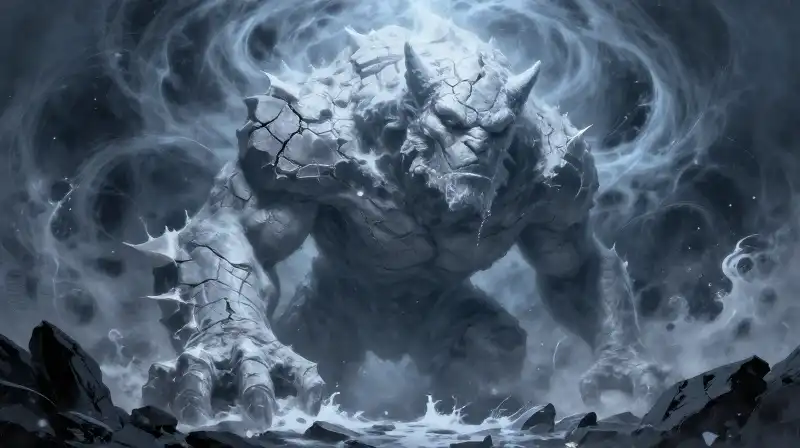
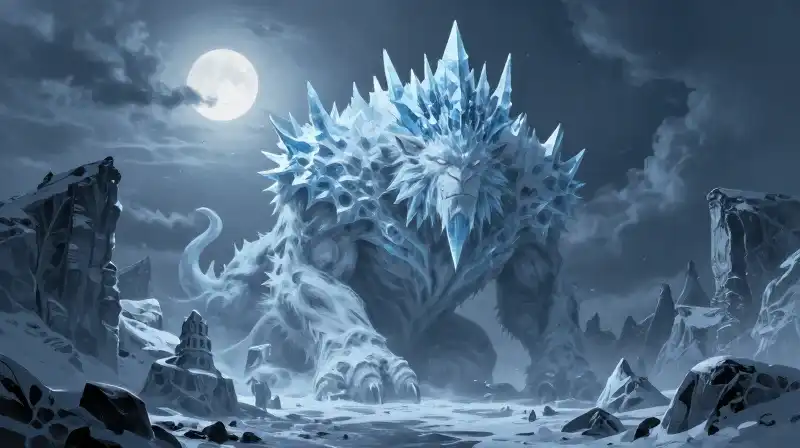
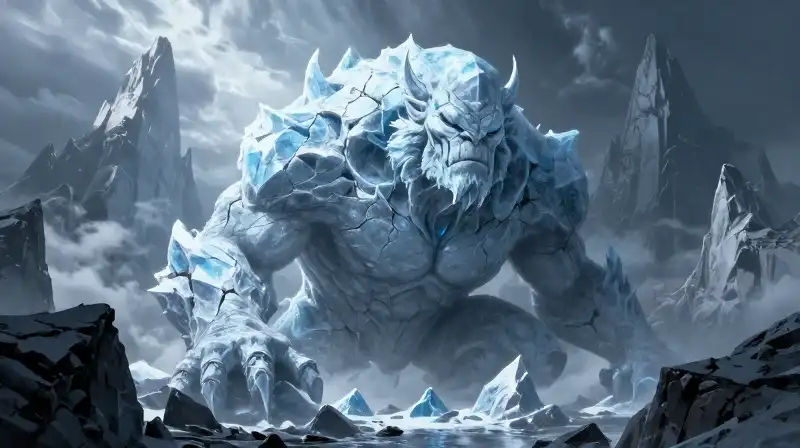
To understand the Jötunn is to look past the common visual trope of massive, hulking monsters. In the context of Norse heritage, the Jötunn—often simplistically translated as ‘giants’—represent far more than simply large figures in a story; they are fundamental cosmological forces. They embody the raw, external power and primal chaos that exists outside the structured order of the gods and humankind. Far from being simple villains, the Jötunn define the boundary of reality itself, serving as “anti-gods” whose existence is intrinsically linked to the perpetual cycle of creation and destruction within the Norse universe 1.
This tradition is not static. Its meaning evolves across regional dialects and shifts over time, particularly when viewed through the lens of later sagas and the rise of other beliefs. To truly appreciate the Jötunn, one must explore the rich linguistic and mythological depths that challenge the simple notion of brute size, revealing them instead as agents of nature, powerful forces, and sometimes, even the origin of the very world they inhabit.
Deconstructing the Image: Why They Aren’t Always “Giant”
One of the most persistent modern misinterpretations of the Jötunn is the assumption that they are universally immense. However, this common perception is largely a later cultural layering. The modern English term “giant” is itself an interpretation, influenced by the Latinized Old French word “geant,” which has roots tracing back to Greek references of Titans (2, 3). Etymologically, the Old Norse term jötunn stems from the Proto-Germanic root meaning “Devourer,” a far more primal and descriptive term than mere size. Similarly, terms like þurs or þursar suggest a being that is “powerful and injurious one,” or a “piercer,” focusing on their potency rather than their height (1, 3).
Culturally and narratively, size is not an inherent requirement for Jötunn. While primordial figures like Ymir are certainly depicted as immense, many others are described as being similar in stature to the gods themselves, demonstrating that their scale is mutable rather than fixed (1, 3). Furthermore, some lore suggests that specific Jötunn have the inherent ability to alter their size at will, making their physical form a reflection of their unpredictable power rather than a static trait (2, 3).
Cosmic Forces and the Cycle of Chaos
In the framework of Norse mythology, the Jötunn are not merely powerful individuals; they function as embodiments of the void and external energy. Their origins lie in the primordial chaos where the forces of fire and ice first met, leading them to be commonly referred to as frost giants or hrimþursar 1. This association with ice and the void places them at the absolute periphery of established order.
Their role as “anti-gods” is critical to understanding the Norse worldview. Unlike strict dualistic mythologies where good and evil are neatly separated, the Norse cosmos operated through opposing and competing forces that existed in a state of cosmic balance 1. The Jötunn, alongside the established gods, are viewed as necessary counterweights. The ultimate proof of this interdependency is found in the lineage itself: the gods and humankind are, in many ways, direct or indirect descendants of this original, chaotic giant race, suggesting a shared, complex ancestry 1.
The Boundaries of Reality: Jötunn, Trolls, and the Other
In the narrative tradition, the Jötunn frequently function as “The Other.” They inhabit the boundary between the structured, human world (“Midgard”) and realms of raw, external power. Heroes and gods often find themselves compelled to interact with them, whether through conflict, seeking forbidden knowledge, or through familial connections. These interactions—such as marriages or close associations—blur the line between the chaotic Jötunn and the human lineage (1, 3).
It is essential to distinguish the Jötunn from related supernatural figures, specifically the concept of the troll. In Old Norse literature, the term troll possesses a much broader semantic scope than simply meaning a giant. It can encompass witches, ghostly figures, or individuals who possess abnormally strong or supernatural traits. Thus, while Jötunn represent a massive, cosmic force of nature, trolls can refer to a wider range of supernatural entities, illustrating the complexity of the Norse supernatural taxonomy 1.
Regional Variations and Modern Interpretation
The tradition of giants and powerful beings shows significant regional diversity in the Norse cultural sphere. In Danish linguistic traditions, for instance, there is the term Jætter, alongside concepts like kæmpe, which refers to a creature of immense size 1. These variations show that the cultural understanding of the concept is flexible and tied to local language and environment.
Furthermore, the way the Jötunn were perceived has shifted dramatically over time. Early depictions often portrayed them as necessary counterparts to the gods. However, with the influx of Christianity and the evolution of later sagas, the portrayal often shifted toward demonization. They became figures depicted as less intelligent and more purely monstrous than they were in their original mythological context 1. This transition highlights the way community-wide cultural shifts—religious or political—can fundamentally alter how even the most ancient traditions are understood and told.
Living Culture: The Continuing Significance of the Jötunn
The Jötunn endures not merely as a collection of monsters in ancient texts, but as a living metaphor for unpredictable power, necessary disruption, and the persistence of nature’s chaos against human systems of order. Whether one is discussing specific famous figures or simply the concept of the Jötunn, the story remains one of balance. They remind us that stability requires opposition; that the forces of creation and destruction are interwoven, and that the boundaries we draw between “civilized” and “wild” are often far more porous than we realize.
References
Footnotes
Frequently Asked Questions
What are some famous Nordic giants?
Primordial figures like Ymir are mentioned as examples of immense Jötunn.
Related Articles