Día de Muertos: Dates, Traditions, and Where to Experience the Festival

Introduction
The Day of the Dead, or *Día de Muertos*, is far more than a single date on the calendar; it is a deeply rooted cultural manifestation where life and death are not seen as opposites, but as two integral parts of a single, ongoing cycle. While officially observed around November 1 and 2, the holiday’s spirit permeates communities from the valleys of Mexico to international diasporas. At its core, the observance is an intimate act of familial remembrance—a festive gathering designed to welcome and honor the spirits of loved ones who have passed away. It is a tradition characterized by its vibrant mix of solemn tribute, celebratory reverence, and profound social connection, encouraging communities to visibly share their collective heritage.
The Heart of the Observance: Ofrendas and Sensory Remembrance
The cornerstone of the *Día de Muertos* is the creation of the *ofrenda* (altar). This elaborate, personalized space is not merely a memorial, but a sensory portal built to guide the spirits back home. Each altar tells a story, reflecting the specific relationship the living have with the departed. The practice is deeply personal, often involving the meticulous preparation of the deceased’s favorite foods and beverages.
These altars are meticulously decorated to evoke the spiritual and earthly senses:
- The Scent: Large quantities of *cempazúchil*, or vibrant marigold flowers, are used not only for their striking orange hue but because their powerful aroma is believed to guide the souls back to the earth.
- The Taste: Traditional items, such as *pan de muerto* (a sweet, circular bread often dusted with sugar), and the beloved foods of the deceased, ensure the spirits arrive with their senses appeased.
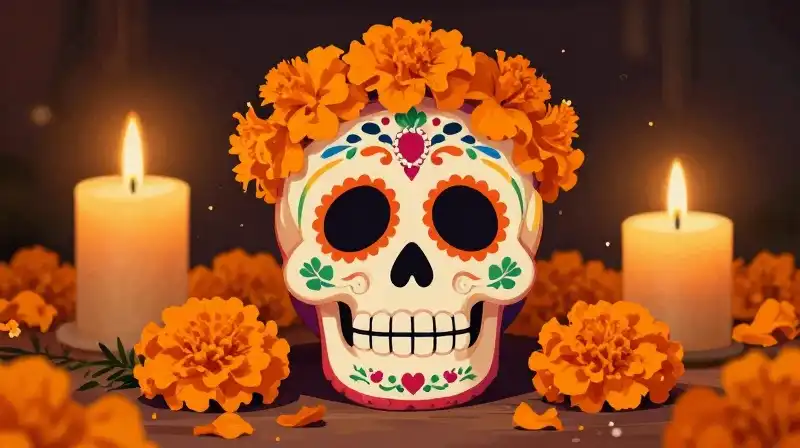
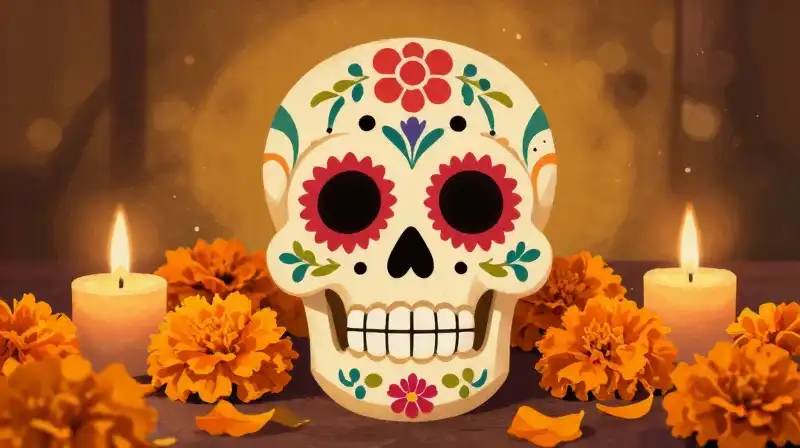
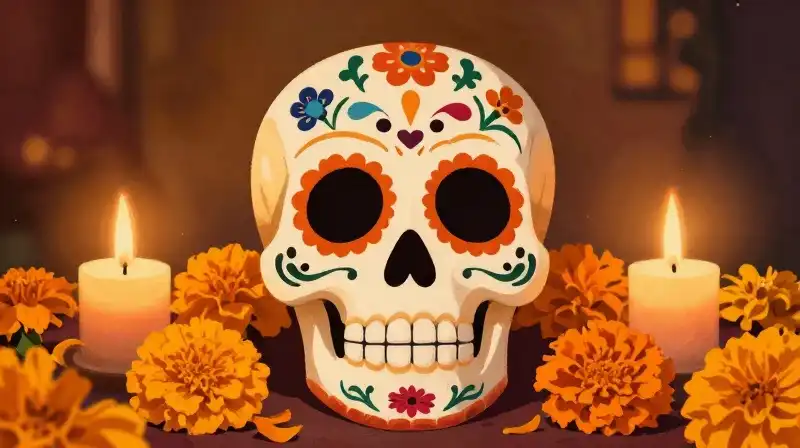
- The Form: The inclusion of *calaveras* (skulls, either sugar-crafted or artistic representations) reminds participants that death is a natural, inevitable, and even humorous part of the human experience.
This process of creating and sharing *ofrendas* with family and friends transforms the observance into a powerful vehicle for cultural preservation, particularly within diasporic communities 1.
A Language of Merriment: *Calaveras* and Celebration
The Day of the Dead is distinctly not a mournful holiday; it is a communal party honoring the full spectrum of life, including its inevitable end. This “joy in death” is most evident in the tradition of *calaveras*. These are light-hearted, satirical verses or poems—mock epitaphs—written in the name of living individuals, playfully suggesting that Death has come to collect them.
This tradition serves a crucial function: to integrate the departed into the community’s ongoing narrative in a way that is respectful but irreverent. Similarly, the tradition of sharing sugar skulls with friends and family reinforces the celebratory tone, moving the tradition beyond mere remembrance into an act of communal sharing and cultural exchange 1.
Tracing the Roots: A Complex History and Scholarly Debate
The origins of *Día de Muertos* are woven from a complex historical tapestry. Scholars observe that the observance demonstrates a dynamic cultural blend. While some perspectives identify strong Indigenous Mesoamerican influences, others connect its modern visual elements to European traditions, such as the *Danse macabre* 1.
Historical shifts have also redefined the holiday. Critics note that the current widespread celebration gained significant momentum during the 20th-century Mexican government, particularly under figures like President Lázaro Cárdenas. This modernization effort aimed to forge a distinct national identity by shifting public focus away from strictly Catholic practices 1. This blend—of pre-Hispanic beliefs, colonial influences, and modern nation-building—is why the celebration is viewed by many as a “dynamic cultural manifestation” that reflects a continuous social and historical dialogue 1. The evolution also reflects structural changes, such as the 19th-century Reform Laws that led to the relocation of family pantheons from churches into civil cemeteries 1.
The Global Manifestation: Living the Tradition in Diaspora
In modern communities, *Día de Muertos* acts as a vital bridge for cultural continuity. For communities in the United States, for example, the festival has evolved from smaller, local volunteer efforts into large, established annual events. Institutions and community organizations provide crucial financial and artistic support to help local creators build altars and organize workshops to share traditions (1, 2).
Venues like Seattle Center’s Festál or Mesa Arts Center’s festival offer platforms for this living culture, allowing diasporic communities to practice and share their heritage with a wider, often non-Mexican, audience. This communal effort emphasizes that the celebration is not solely about memory, but about visibly sharing and sustaining a collective cultural identity in a diverse environment (1, 2).
Where and When to Experience the Festival
For those seeking to participate in the tradition, the timing and location depend on the desired level of cultural immersion and scale of the event:
To find where the festival is celebrated in the United States, search for major cultural centers in cities that have robust community organizations hosting the observance. Specific events, such as those at Seattle Center or Mesa Arts Center, have established annual schedules (1, 2). While the official dates are November 1 and 2, many regional festivals extend these dates.
When planning an experience, consider the type of venue:
- Large Community Festivals: Ideal for experiencing the scale, public performance, and communal sharing aspect.
- Local Home Altars: If possible, observing a local *ofrenda* (with permission) provides the most intimate look into the tradition’s meaning.
The Enduring Significance of Día de Muertos
Ultimately, the *Día de Muertos* is a profound meditation on the life-and-death continuum. It teaches that while physical lives end, cultural memory and familial bonds endure through vibrant acts of love and remembrance. It is a practice that honors the past not with passive mourning, but with active, joyous participation. By engaging with the tradition, participants move beyond a simple definition, entering a living narrative where the ancestors remain integral, colorful, and essential members of the community.
References
Footnotes
Frequently Asked Questions
¿Dónde se hace el festival de Día de Muertos?
Se hace en comunidades desde los valles de México hasta la diáspora internacional. En los Estados Unidos, por ejemplo, el festival se celebra en centros culturales importantes como Seattle Center y Mesa Arts Center.
¿Dónde se celebra el Día de Muertos más grande de Estados Unidos?
Major Day of Muertos celebrations in the United States occur at major cultural centers in cities that have robust community organizations hosting the observance. Specific events providing platforms for this culture include Seattle Centers Festál and the Mesa Arts Centers festival.
¿Cuándo es el festival del Día de los Muertos?
The Day of the Dead is officially observed around November 1 and 2, although many regional festivals extend these dates.
¿Dónde y cuándo se celebra el día de los muertos?
The Day of the Dead is officially observed around November 1 and 2 and is celebrated in communities from the valleys of Mexico to international diasporas. In the United States, festivals are held at major cultural centers, such as the Seattle Center or Mesa Arts Center, with some regional events extending the official dates.
How to Experience the Día de Muertos Festival
Identify Local Events
To find where the festival is celebrated, search for major cultural centers in cities that have robust community organizations hosting the observance.
Determine Scheduling and Scale
Check established annual schedules for specific venues, noting that many regional festivals extend beyond the official dates of November 1 and 2.
Select the Ideal Venue Type
Decide between experiencing a "Large Community Festival" for public performances and communal sharing, or observing a "Local Home Altar" for the most intimate view of the tradition.
Related Articles