Global Origins of Fire-Breathing Dragons: From Myth to Modern Fantasy

Introduction
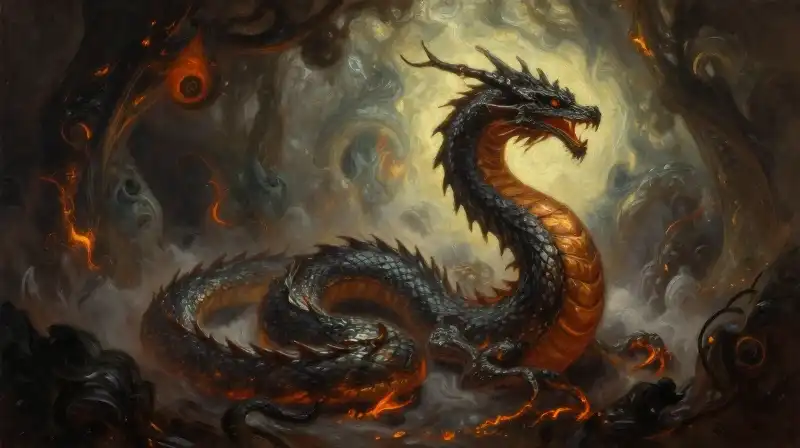
The fire-breathing monster is far more than a figure of terror in the pages of modern fantasy; it is a persistent, ancient motif that serves as a potent symbol of untamed primordial power across disparate cultures. This fiery breath, whether scorching the landscape or igniting divine conflict, represents the destructive, chaotic, and utterly overwhelming forces of nature. From the serpentine monsters of the Mediterranean to the scaled beasts of East Asian folklore, the imagery of a creature exhaling lethal flame is a testament to humanity’s long-standing attempt to contextualize the volatile forces of the natural world. Understanding this tradition requires looking beyond the spectacle of fire to explore the complex roles these creatures play—as divine antagonists, guardians, and metaphors for the forces of chaos.
The Ancient Roots of Fiery Chaos
In the classical traditions of Greco-Roman mythology, the concept of a creature wielding lethal exhalations was deeply integrated into the cosmology of gods and heroes. The Chimera, a composite creature part lion, goat, and serpent, famously served as a devastating threat to the hero Bellerophon because of its ability to snort raging fire 1. This wasn’t just random destruction; it embodied a specific, dangerous complexity. The most profound use of this fiery motif, however, is found in figures like Typhon. Typhon’s fierce, fiery exhalations were used to embody destructive primordial power. He is presented as the force of chaos, actively challenging the Olympian gods with his untamed power 1. This established a foundational narrative: fire was the visible manifestation of a chaotic power that ancient civilizations sought to harness or defeat. A similar, though distinct, precedent for the fiery serpentine monster exists in Jewish mythology with Leviathan. Unlike the fire of the sun, Leviathan is a sea serpent whose breath is described in ancient accounts as kindling coals and emitting intense flames 1. This established an enduring archetype: the powerful, dangerous, and often subterranean or aquatic serpent whose mere presence is marked by a deadly, fiery element.
Variations and Nuances Across Global Traditions
While fire-breathing figures are prominent in European lore, the specific manifestations and elements of the “dangerous breath” vary significantly across the globe, showing how different cultures interpreted primal threat. In many traditions, the element of fire is replaced by other dangerous, less visible forces. This is seen in certain regional accounts where a dragon discharges a dark vapor of poison rather than a traditional flame 1. The fiery dragon’s narrative solidified in Western folklore through works like *Beowulf*, but it often draws from the Leviathan archetype 1. Across East Asian cultures, fire also takes on highly specialized forms. The Japanese Yōkai sea serpent Ikuchi is known for its ability to breathe fire through its nostrils and emit smoke 1. Conversely, the Basan bird displays a “cold ghost-fire,” demonstrating that the element can also be a supernatural, non-physical force rather than a literal combustion 1. This theme of elemental power extends to indigenous mythologies. The concept of the fiery or dangerous serpent is central to various traditions, such as the Mapuche giant snake god Ten Ten-Vilu, the West African Ninki Nanka, and the Philippine Bakunawa 1. In these contexts, the serpentine power often relates less to simple destruction and more to the deep cyclical forces of nature and the earth.
From Mythic Beasts to Narrative Devices in Fantasy
The tradition of the fiery dragon transitioned from ancient mythological narrative to the bedrock of modern fantasy literature, yet the nature of its breath has been refined and sometimes stereotyped. In modern storytelling, the fire-breathing dragon has become a powerful, defining stereotype. It is a central narrative device, most visibly utilized to establish a monster’s ancient authority and to actively repel other inhabitants from their dwelling, as seen in the portrayal of Smaug in Tolkien’s *The Hobbit* 1. However, the scope of the “lethal breath” in modern fantasy has expanded dramatically. Contemporary creators have moved beyond simple fire, utilizing alternative attacks such as toxic poison, diverse elemental breaths, or even advanced energy beams 1. This evolution allows the dragon to represent a more complex range of destructive or protective powers within a story.
Clarifying the Myth: The Limits of Flame
It is important to note that the fiery breath is not a universal characteristic of every serpentine or draconic entity in myth, which often leads to common misinterpretations. In the Mediterranean region, scholarly inquiries indicate a significant mythological ambiguity regarding the Greek serpentine entities. While the fire-breathing dragon is a staple, some historical analyses suggest that certain creatures, particularly the Colchian Dragon, may have utilized poison or other types of dangerous breath rather than actual flame 1. Furthermore, definitive scholarship has corrected certain popular assumptions. Initial scholarly discussions regarding the Golden Fleece focused on the idea that the protecting dragons were fire-breathing beasts; however, further research clarifies that the beasts guarding the Fleece were specifically the Khalkotauroi, also known as brazen-hooved bulls, not dragons (1, 2). These nuanced differences emphasize that the myth is a living, evolving narrative, and the elemental breath must be understood through its specific cultural context rather than as a universal constant.
Synthesis: The Enduring Symbol of Power
The enduring power of the fire-breathing monster lies not in its ability to burn, but in its ability to represent absolute power—the untamed power of the world, whether that force is primal chaos (Typhon), natural danger (poisonous breath), or ancient sovereignty (the guardian of a hoard). Across cultures, whether a beast exhales flame, smoke, or a dark vapor, the creature remains a powerful mirror for humanity’s relationship with danger. It invites us to understand how diverse communities have chosen to translate the sublime and terrifying forces of nature into characters that reflect their own deepest fears and most enduring archetypes.
References
Footnotes
Related Articles