The Meaning of Egyptian Sphinx Mythology: Symbolism and Function

Introduction
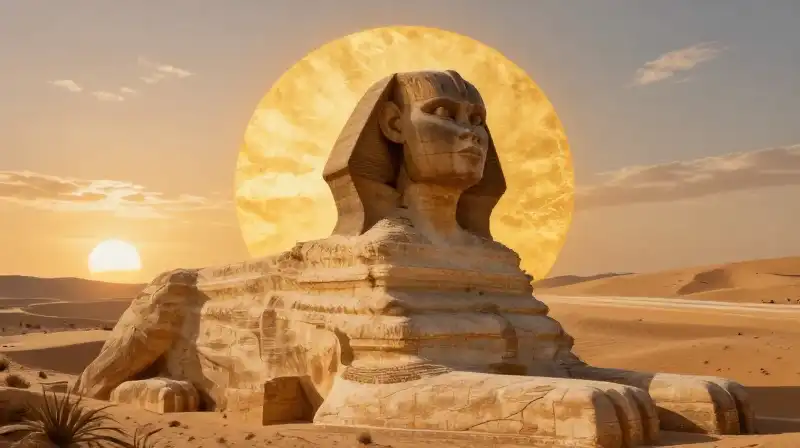
When we speak of the sphinx, the image that often springs to mind is that of a winged, riddle-posing creature—a formidable puzzle from Western mythology. However, to truly understand the sphinx is to journey to the sands of the Nile, where this magnificent form was less a riddle and more a silent, monumental declaration of divine strength. In the vibrant tapestry of Egyptian mythology, the sphinx is an androsphinx: a powerful composite figure typically depicted with the body of a lion and the head of a man. It is a living embodiment of protective ferocity and benevolent strength, often serving as a powerful, visible representation of the pharaoh himself 1.
For those seeking to grasp the core meaning of Egyptian sphinx mythology, the tradition is not found in philosophical riddles but in architecture and the cosmos. These figures are architectural anchors, guardian motifs meant to hold back chaos and anchor the presence of the gods or the divinely sanctioned ruler within the landscape. The name of the sphinx itself carries profound meaning; rather than a Greek invention, it may have evolved from the Egyptian term shesepankh, which translates beautifully to “living image,” referring to the statue’s permanence carved from the very “living rock” of the earth 1.
The Anatomy of the Guardian: Defining the Form
A primary distinction between the various cultures is the physical composition of the sphinx, but at its heart, the Egyptian guardian consists of a fusion of two mighty creatures: the man and the lion. This union represents a perfect synthesis of human intelligence and the raw, unstoppable power of the beast. The lion—a creature universally associated with the sun, kingship, and overwhelming might—is married to the human form, which adds the layer of wisdom and divinity 1.
Crucially, the Egyptian sphinx differs markedly from its winged counterparts in other regions. Unlike the classic Greek sphinx, the Egyptian guardian was generally unwinged. This grounded, solid form served a very specific, vital function: it was a sentinel. These were not mythological enigmas to be solved; they were potent wards meant to protect the sacred spaces they flanked (1, 2).
Function Over Fantasy: The Protective Role of the Sphinx
In the context of Egyptian community and spiritual life, the sphinx was primarily a protective deity in stone. While the Greek sphinx was famous for presenting a lethal riddle, forcing interaction and often leading to tragedy, the Egyptian sphinx served a purely defensive purpose. Its power was directed outward, acting as a spiritual barrier designed to hold back forces of evil and maintain the cosmic order (1, 2).
These guardian figures were almost invariably placed in the most sacred or royal locales. You might see them flanking the entrances to grand temples, guarding the inner sanctums, or standing vigil alongside the monumental entrances to royal tombs 1. The statue served as a powerful symbol of the pharaoh’s divine mandate to protect the kingdom. Furthermore, these motifs expanded beyond massive outdoor architecture; smaller versions of the sphinx and its related forms, such as the Criosphinx, were used as decorative details at the top of flights of stairs within major royal complexes 1.
Pharaoh and Divinity: Specific Forms of Power
The sphinx was rarely just an abstract symbol; it was intimately tied to the reigning powers of Egypt. Many sphinx statues functioned effectively as royal portrait types, allowing viewers to see the likeness of the pharaoh integrated with the power of the beast (2, 1). A notable example is the Great Sphinx of Giza, which was carved to reflect the specific features of the pharaoh Khafre (2, 1). This connection reinforced the idea that the king’s authority was literally underpinned by immense, formidable power.
The concept also reached the level of the highest divine beings. In Thebes, for instance, there existed nine hundred sphinx statues known as Criosphinxes, which were believed to represent the solar deity Amon. These creatures were often installed in pairs alongside full-length statues of the living pharaoh, a physical manifestation of the unity between the state and the divine 1. Though the consensus places the Great Sphinx’s construction between 2600 and 2500 BC, intriguing geological hypotheses suggest that the tradition of these magnificent guardians may predate the reign of Khafre by millennia, hinting at a deep, ancient cultural roots 1.
A Tale of Regional Evolution and Iconography
The story of the sphinx is one of cultural exchange, which led to significant regional variations in its appearance and purpose. When the concept of the sphinx moved beyond its Egyptian home, it underwent a subtle, yet profound transformation 1. Most notably, as it was imported into Asian or Mediterranean contexts, it frequently began to incorporate the addition of wings, and there was an emerging preference for the female form 1.
This contrast highlights the regional evolution of the tradition. While the Egyptian tradition centered on the powerful, protective androsphinx, the Greco-Roman version largely favored the female sphinx. This latter form is typically characterized by a woman’s head, a lion’s haunches, and the essential addition of bird wings. These variations show how a single potent symbol of power could be adapted to fit the specific spiritual and artistic language of different communities 1.
Beyond the Great Sphinx, Egyptian iconography continued to diversify, creating variations such as sphinx forms bearing the head of Hatshepsut, and the distinct Alabaster Sphinx of Memphis, demonstrating that the sphinx was a flexible, potent symbol adaptable to the changing faces of pharaonic rule 1.
Synthesis: The Enduring Living Image
The Egyptian sphinx remains a powerful reminder that symbols are not merely decorative; they are functional. It was a “living image,” a colossal piece of cultural memory and spiritual defense. To understand its significance is to see a tradition where form—the combination of man and lion—was used to express a profound cultural value: the idea that order, guided by wisdom (the man), must possess overwhelming, unyielding power (the lion) to protect the community and its divine systems from chaos. The Egyptian sphinx stands as a testament to a powerful tradition of architectural symbolism and spiritual vigilance.
References
Footnotes
Frequently Asked Questions
What two creatures make up a sphinx?
The Egyptian sphinx is typically a powerful composite figure made up of a lions body and the head of a man. This union represents a synthesis of human intelligence and the raw power of the beast.
Related Articles