Celtic Triangle Meaning: Understanding the Triquetras Symbolism

Introduction
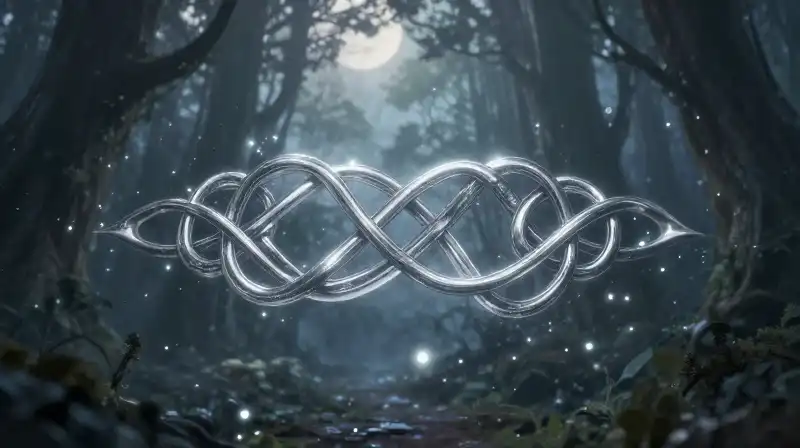
The Triquetra, often simply referred to as the Celtic triangle, is more than just a symmetrical knot; it is a visual shorthand for complex cosmological truths embedded deep within the traditions of Celtic heritage. Composed of three interlocking arcs, this trefoil design embodies a fundamental concept of continuity and seamless flow (1, 2). For those seeking to understand a Celtic knot, the key to its meaning lies not in a single definition, but in its ability to weave together diverse spiritual and physical realms. The triquetra is a powerful motif—a representation of the interconnectedness of the body, mind, and spirit, suggesting a path toward transformative power and the magic of creation 3.
The Language of the Three: Cosmic Triplicities
To grasp the significance of the triquetra is to understand the concept of triplicity—the power of three. In traditional Celtic lore, this number serves as a framework for viewing the universe. The symbol often reflects the rhythm of life itself, representing the perpetual flow of time through the interconnected passage of the past, present, and future 3. Beyond temporal flow, the triquetra serves as a map of the spiritual and material worlds. According to 1, within the context of Celtic mythology, the motif reflects a worldview encompassing distinct material domains—Earth, Sea, and Sky—alongside the realms of the unseen, such as Heaven and the Underworld. This comprehensive scope allows the symbol to be seen not merely as decoration, but as a foundational pillar of regional cosmology.
From Ancient Origins to Insular Art
While the triquetra is inextricably linked with Celtic culture, its history is far broader and older than many outsiders might assume. Archaeological evidence suggests the motif predates its common appearance in later Celtic contexts, tracing its ornate use back to Anatolia and Persia as early as the 4th century BC 3. This demonstrates that the concept of interlocking geometric harmony has roots in a history of global exchange, far preceding the rise of Insular traditions. Its deep integration into the spiritual fabric of the region solidified during the medieval period. The triquetra served as a significant ornamental design throughout Insular art and meticulously hand-illustrated illuminated manuscripts, most famously in the Book of Kells 3. This transition from ancient decorative motif to high art illustrates how the symbol evolved to hold even greater cultural and sacred weight, making it a central element in the visual language of medieval faith and folklore.
The Sacred and the Feminine: Mythology and Modern Practice
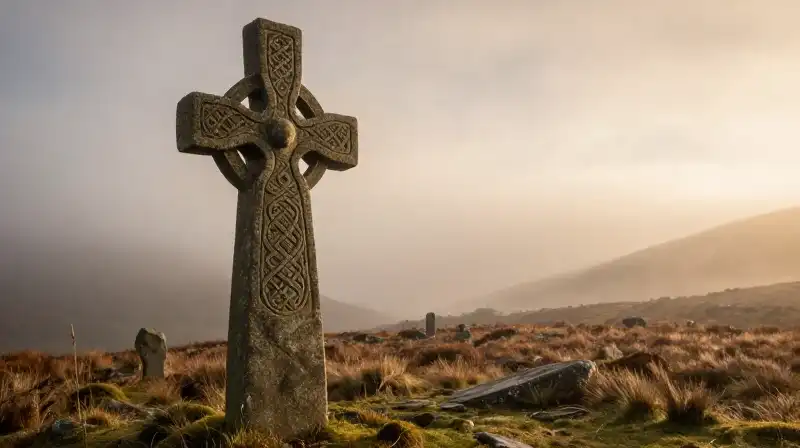
One of the most widely recognized interpretations of the triquetra within spiritual and modern community practices is its association with the divine feminine. Within traditional lore, the symbol is linked to the concept of “triple goddesses,” who embody the interconnected roles of Maiden, Mother, and Crone (1, 2). This grouping speaks to the life cycle, growth, and transformation inherent in the feminine spirit. In contemporary practice, modern interpreters such as Celtic Reconstructionists utilize the symbol to represent various divisions of the physical world, specifically the tripartite division of Land, Sea, and Sky 3. Furthermore, the triquetra has been found integrated into the sacred geography of the tradition. Physically, the motif adorns historical sacred spaces, such as ancient Celtic Crosses found at Iona Abbey, and intricate carvings visible at Melrose Abbey in Scotland 3.
Navigating Meaning: Symbolism, Syncretism, and Caution
As a powerful and ancient symbol, the triquetra is often interpreted through multiple lenses, and it is vital to approach its meaning with nuance and respect for its historical context. The symbol’s interpretation as a representation of the Christian Holy Trinity gained prominence following its adoption by Irish and Scottish monks (3, 2). This highlights the inherent capacity for cultural syncretism—the blending of different belief systems. Furthermore, some community discussions suggest that the Triquetra may represent a broader cultural synthesis, incorporating elements from both established Celtic and elements of Germanic or Norse traditions 3. For the reader looking for a singular, definitive answer, it is important to understand that a single “truth” may not exist. According to 3, the original intent of early medieval artists remains largely unknown, leading scholars and practitioners to advise caution against the over-interpretation of its meaning. The triquetra thrives because it allows for, and embraces, a multiplicity of meanings rather than enforcing a rigid dogma. The triquetra serves as a testament to the enduring power of symbols to capture the complexities of life—time, nature, spirit, and history. Its legacy lives on in the traditional arts and in the modern search for meaning, reminding us that the deepest cultural traditions are not static definitions, but living narratives of connection and continuity.
References
Footnotes
Frequently Asked Questions
What is the meaning of a Celtic triangle?
The Triquetra is a visual shorthand for complex cosmological truths, embodying a fundamental concept of continuity and the interconnectedness of the body, mind, and spirit. In traditional Celtic lore, it also represents the perpetual flow of time through the interconnected passage of the past, present, and future.
Related Articles