Discover the Unique Narratives of Interesting Greek Gods

Introduction
To study the Greek gods is not merely to memorize names or a sequence of myths; it is to uncover the enduring cultural anxieties, foundational ethics, and deep-seated beliefs of one of history’s most influential civilizations. The narratives surrounding these divine figures function not as static stories, but as reflections of how ancient communities understood human existence—the necessities of daily life, the precarious balance of fortune, the origins of knowledge, and the perpetual conflict between order and untamed passion.
In the context of “Living Culture,” we see these figures as symbols of core human experiences. They are archetypes that allow a community to process profound concepts like loss, innovation, and social justice. Rather than viewing them as mere characters in an ancient drama, we explore the functional roles they occupied—the goddess who ensures survival, the god who embodies strategic wisdom, and the primordial forces that preceded human civilization itself.
The Essentials: Hearth, Knowledge, and Primordial Existence
Among the divine tapestry, certain deities hold their ground through profound necessity rather than excessive dramatic action. Hestia, for instance, is a figure of cultural constancy. She represents the hearth fire, the absolute center of the home, and the divine means by which the pantheon receives sacrifice 1. Her significance is not found in grandiose battles, but in her role as the guardian of communal safety and the anchor of domestic life, illustrating how culture often roots its highest values in quiet, necessary rituals.
This theme of divine necessity extends to Prometheus. Unlike figures who are defined by their destructive power, Prometheus is presented in mythology as one of the few gods attempting to benefit humanity rather than being inherently malevolent 1. His act of giving humanity fire and knowledge represents a pivotal shift in the Greek narrative—the granting of the means for human self-sufficiency and progress.
Beyond the recognizable Olympian, there is the deep, often overlooked lore of the primordial figures. Chaos, Gaia, Nyx, and Erebus are the silent, powerful origins of the mythos 1. Though sometimes viewed as background concepts, these figures represent the raw, untamed forces that shaped the landscape and the psyche of the early world, offering a glimpse into how cultures attempt to trace existence back to its fundamental, unformed state.
The Dual Pillars of Justice and Strategic Thought
The Greek tradition is remarkably clear about the difference between the forceful imposition of order and the natural correction of imbalance. Nemesis, for example, functions as a winged figure representing a divine equivalent of cosmic karma 1. She is the celestial arbiter, possessing tools such as the scale, the lash, and the sword to ensure that no individual receives undue or undeserved favor. Her presence is a cultural mechanism designed to reinforce the notion that fortune is not absolute, offering moral boundaries to human success.
Contrast this with Athena. Where Nemesis acts as an external correction of bad luck, Athena embodies the internal creation of good society. She is the patron of wisdom, political strategy, and invention 1. Her focus on the civil and strategic aspects of conflict—the planning, the governance, and the law—highlights a deep cultural value placed on intellect and calculated action over brute force. She represents the protection of civilization itself 1.
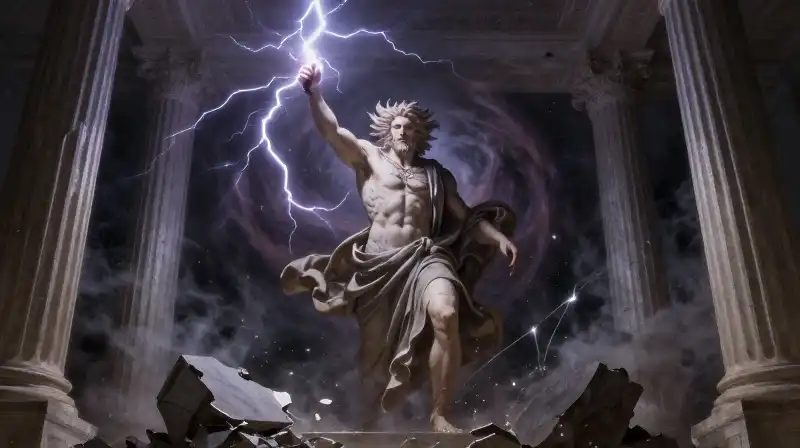
The tragic beauty of human interaction with these forces is seen in the dynamic between the divine figures. The ongoing conflicts, such as Zeus’ infidelity resulting in Hera’s vengeful reactions, are not just stories of scandal; they are mythological representations of the inescapable conflicts between human passions and the need for systemic order 1. These internal struggles define the divine world as a landscape of both sublime beauty and profound instability.
The Fluid and Fractured Worlds: Passion, Madness, and Change
If some gods represent order, others represent the chaotic, potent energies that drive human experience. Dionysus, the god of wine and grapes, is far more complex than a simple celebratory figure. He represents a complex transition—a shift from social structure into madness, ecstasy, and intense cult practices (1, 2). This multifaceted nature reflects the human capacity for both joyous abandon and the psychological depths of uncontrolled emotion.
Similarly, the depiction of war presents a profound cultural contrast. Ares, the god of war, embodies the visceral, bloody bloodlust of the battlefield 1. He is noted for this intense, primal aggression. However, a more nuanced look suggests he may have possessed a more restrained interaction with women compared to other aggressive male Olympians 1, hinting at the limits of even the most violent divine principle. This contrast is further amplified by the difference between Ares’ raw violence and Athena’s strategic intellect.
In addition to the gods, there are figures like the Erinyes. Operating outside the traditional divine hierarchy, they served specific, necessary roles in ancient narratives 1. This structural placement suggests that certain forces of retribution or fate were perceived as existing outside the polite social contract of the main pantheon, serving as a necessary ethical check upon the gods themselves.
The Narrative of Sustenance and the Cycle of Grief
The relationship between humanity and the natural world is perhaps best articulated through the narrative of Demeter and Persephone. Demeter’s sorrow—the result of her daughter’s abduction by Hades—is not merely a tragic tale. Culturally, her grief is the foundational explanation for how humanity was taught to cultivate crops and survive the harsh transitions of winter 1. This cycle of sorrow and mourning transformed into the promise of rebirth through the agricultural cycle, establishing a profound link between grief, human survival, and the rhythms of the earth.
The role of Hermes in the ancient world was equally vital, acting as the divine intermediary. He is the psychopomp—the critical guide who bridges the living and the dead, guiding souls to the underworld 1. Yet, he also functions as a trickster and a facilitator of travel and commerce. This dual nature—the guide of the dead and the merchant of the living—shows how the Greek tradition encompassed both the solemnity of finality and the vibrancy of daily, earthly movement.
Cultural Context and the Living Tradition
The significance of these gods lies not in their biological lineage but in their function as cultural concepts. From the pragmatic necessity embodied by Hestia to the ethical warning delivered by Nemesis, they provide a framework through which ancient communities made sense of a chaotic world. Understanding the stories of these figures allows us to appreciate the sophistication of a culture that encoded complex societal rules and existential questions into the very fabric of its folklore.
The journey through these narratives—comparing the fierce strategy of Athena to the frenzy of Dionysus, or the quiet constancy of Hestia against the dynamic change of the primordial forces—reveals a tradition that embraces complexity. It is a culture that does not present clear-cut definitions but rather explores the nuances of human behavior, reminding us that life itself is a mixture of foundational necessity, strategic planning, and inevitable, beautiful conflict.
References
Footnotes
Related Articles