Celtic Symbols of Female Power: Meaning of the Triple Motif

Introduction
In the rich tapestry of Celtic heritage, certain symbols do not merely represent an idea; they embody a complete worldview—a cosmological map of power, life, and death. Chief among these is the triple motif, a pervasive and complex visual language centered on the concept of the trinity. Often found as the Triskelion or the Triquetra, this motif functions as a potent signifier of feminine sovereignty, creative force, and the cyclical nature of existence. For those who study or participate in Living Culture, these symbols are more than elegant designs; they are visual echoes of ancient narratives regarding the full scope of the female experience and the interconnected forces that shape the land and the spirit.
The Sacred Architecture of the Three
The deep attachment to the number three within Celtic lore suggests a belief in holistic completeness and eternal rhythm. This concept is often translated into the profound narrative structure of the maiden, the mother, and the crone 1. This progression is not merely a life timeline, but a sacred progression, representing the stages of wisdom, creation, and renewal. Within reconstructed traditions, such as those described in “Wisdom of the Oaks,” the Triple Goddess structure is made tangible through specific figures, including Danu, the Goddess of Primordial Waters, and Tlachtga, the Sun/Fire Goddess 1. These figures collectively represent the various elemental and spiritual forces through which feminine power manifests.
The philosophy embedded in the triple motif is fundamentally about unity. It speaks to the idea that all elements—be it the body, the spirit, or the seasons—are part of a continuous, self-sustaining flow. The Celtic Tree of Life, or *Crann Bethadh*, serves as a grounding symbol of this unified existence, bridging the underworld, the earth, and the heavenly realms into one harmonious structure 1.
Triskelion and the Eternal Spiral: The Flow of Being
The Triskelion, or triple spiral, stands as perhaps the most universally recognized representation of this cyclical energy. Its spiraling design conveys the eternal flow of energy and the interconnection of the fundamental realms: earth, water, and sky 1. This motif has been found on ancient sites like Newgrange, where it is interpreted as symbolizing the Great Goddess and her threefold manifestations—virgin, mother, and crone—as well as the eternal cycle of Life, Death, and Rebirth 1.
While the Triskelion is often broadly associated with sacred feminine power, it is important to note the nuances of interpretation. In specific reconstructionist contexts, 1 notes that the symbol is also stated to represent the sacred masculine, suggesting that the triple spiral functions as a comprehensive symbol of all primal, unending forces, transcending gender.
The Triquetra: Unity and the Interwoven Existence
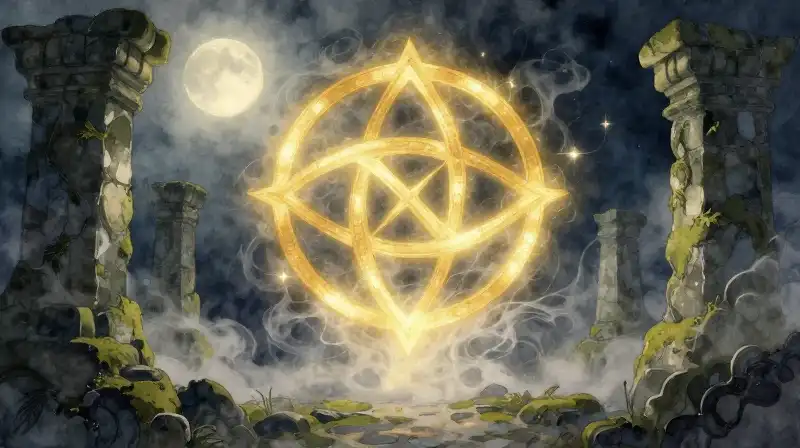
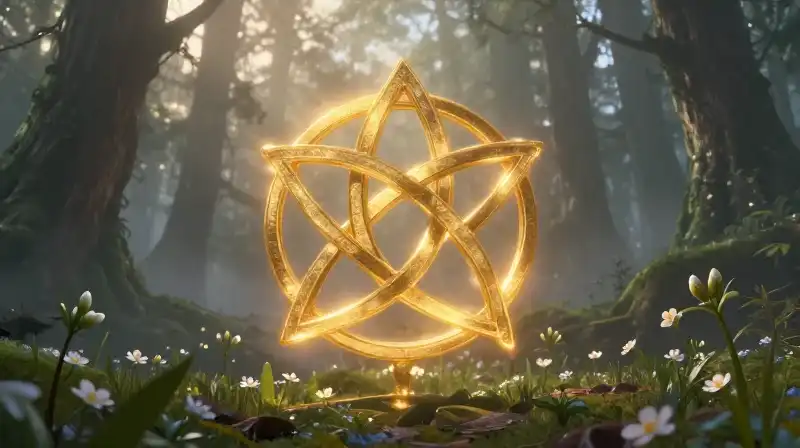
The Triquetra offers a distinct visual metaphor for continuity. Composed of three interlocked, unbroken arcs, it is understood to signify equality, eternity, and the unity of existence 1. Unlike the Triskelion, which suggests movement and flow, the Triquetra suggests a constant state of connection and interdependence. It is a visual anchor for the belief that all things are bound together in a perpetual cycle.
In modern spiritual practices, the Triquetra serves as a powerful reminder that the various components of life—the past, present, and future; mind, body, and spirit—are inseparable parts of a single, unbroken whole 1.
Voices of Female Authority: Deities and Power in Practice
The concept of feminine power in Celtic culture is multifaceted, extending far beyond the gentle associations. It encompasses creativity, healing, prophecy, and even the destructive, necessary forces of nature. Brigid, for example, functions as a central focal point of female authority within Celtic mythology, embodying attributes like poetry, healing, and childbirth 1.
However, the concept of power also includes its wild and untamed edges. Figures such as The Morrígan and the Cailleach represent the warrior aspects of feminine strength. They are tied to powerful, prophetic, and landscape-shaping forces, embodying both destructive power and the deep wisdom of the changing environment 1. This broad spectrum—from the nurturing flow of Danu to the fierce prophecy of the Morrígan—demonstrates that female power, in this tradition, is complete, encompassing both creation and necessary decay 1.
Living the Symbols: Tradition in the Community
For the contemporary practitioner and community member, these ancient symbols are not merely academic relics. They are incorporated into localized customs that help mark transitions and celebrate shared values. The St. Brigid’s Cross, tied to the beginning of Spring, serves as a tangible cultural artifact associated with seasonal transition and the return of life 1. Similarly, the Claddagh, while representing human connection, uses the symbols of heart and hands to articulate the core community values of loyalty and love 1.
These modern practices show that the underlying cultural weight of the triple motif—unity, cycle, and profound connection—remains a vibrant part of community identity, even as the symbols evolve from ancient religious practice into recognizable cultural markers 1.
A Note on Historical Context and Interpretation
It is necessary for any serious exploration of these symbols to maintain a grounded perspective on their history. Scholars caution that determining the precise origin of symbols like the triskele is complex. While modern spiritual movements often attempt to link the motif exclusively to the Central European Celts, archaeological and historical evidence suggests that the spiral motif may predate the arrival of these specific cultures in the region 1.
Therefore, when engaging with the Celtic symbol of female power, it is helpful to view the traditions as living interpretations built upon much older universal themes of nature and cyclical time, rather than strictly historical blueprints. The meaning is found in the ongoing conversation between the ancient form and the contemporary community.
Synthesis of the Cycle
To understand the Celtic triple motif is to understand a powerful narrative of wholeness. It is a tradition that does not seek simple definitions but provides a cosmology: a framework where the maiden, mother, and crone are integrated, where the spiritual and material worlds flow endlessly into one another, and where feminine power is seen in its entirety—from the nurturing flow of primordial waters to the fierce wisdom of the warrior.
By studying the Triskelion, the Triquetra, and the figures they embody, we gain insight not just into old symbols, but into a deeply respectful way of viewing the continuous, powerful, and sacred nature of life itself.
References
Footnotes
Related Articles