How Samhain Shaped Halloween: The History of All Hallows Eve

Introduction
The customs celebrated on October 31st—the carving of pumpkins, the gathering in costumes, and the pursuit of treats—are modern expressions of a much older, profound seasonal transition. To understand Halloween today, one must look beyond the playful facade to its roots in Samhain, a significant pagan festival. Samhain marked the end of the harvest and the beginning of the dark winter, a time when the boundary between the living world and the realm of the dead was considered at its most fragile. The subsequent historical shift to “All Hallows’ Eve” created a unique cultural fusion, grafting these ancient beliefs onto the framework of early Christian observances, ultimately shaping the tradition we recognize across the globe.
The Veil Between Worlds: Understanding Samhain
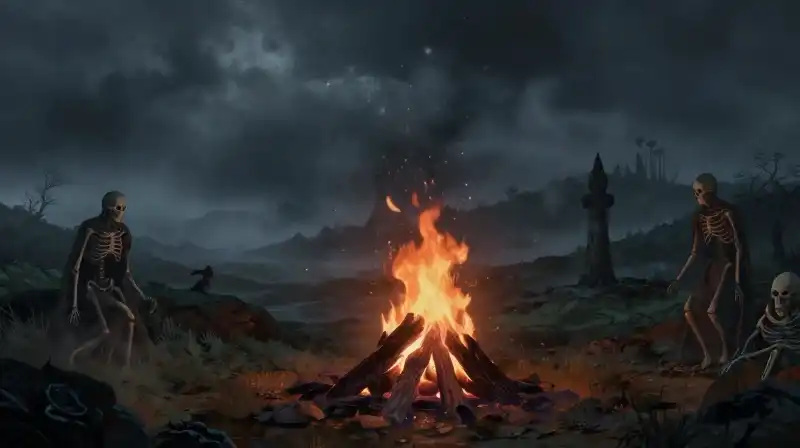
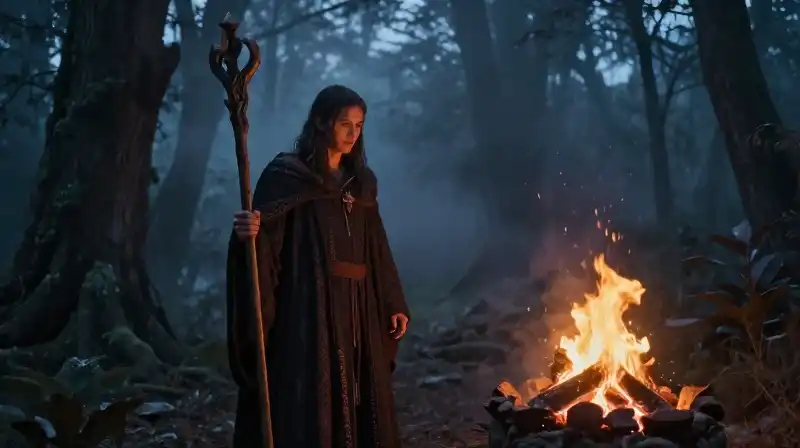
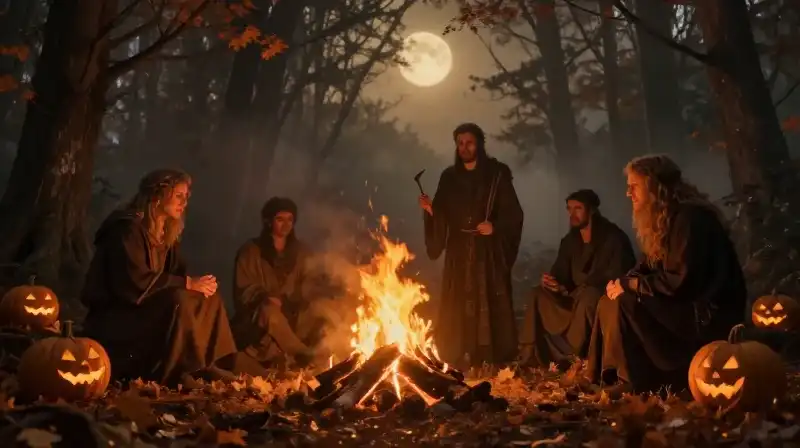
For the communities that originated the festival, Samhain was far more than a celebration; it was a recognition of the cyclical nature of life, death, and the changing seasons 1. The ancient Celtic practice involved honoring the ancestors and acknowledging the ebb of summer. At this juncture, black symbolized the death of the growing season, while the bright orange of the harvest represented the bounty gathered before the cold grip of winter 1. A central element of the Samhain tradition was the belief that, for one night, the veil separating the mortal plane from the spirit world grew thin 1. This allowed spirits, both benevolent and restless, to walk among the living. To appease these wandering ghosts and to protect oneself from potential harm, people engaged in practices of disguise. Wearing disguises served the dual purpose of confusing the spirits and allowing the living to maintain a degree of personal safety against those who might be vengeful or unwelcome (1, 2).
The Christian Syncretism of All Hallows’ Eve
As Christianity expanded, local churches often adopted existing pagan dates and festivals, a process known as syncretism. While the cultural significance of Samhain persisted in Ireland and Northumbria—where both Celtic and Germanic ideas about honoring the dead existed—the Church established formal Christian observances to mark these periods. All Hallows’ Day, now known as All Saints’ Day, was formally set for November 1st (2, 1). This dedication to the saints was formalized by Pope Gregory III, who established the tradition of commemorating all saints and martyrs 1. The term “All Hallows’ Eve” arose naturally from this calendar shift, referring to the evening before this holy day. The name itself is an echo of the Middle English word *halowen*, derived from the Old English *hālig*, meaning holy (1, 3). However, the period of remembrance extended further. All Souls’ Day, dedicated to all deceased Christians, was established in the 12th century on November 2nd 1. This later inclusion broadened the observance of the dead, extending the communal time of remembrance beyond just the favored saints.
From Souling to Modern Practices
The medieval traditions that predate modern trick-or-treating were rooted in acts of spiritual exchange and community care. One such custom was “souling.” In this practice, groups would go door-to-door asking for baked goods, often referred to as “soul cakes.” In return, these individuals would pray for the departed members of their community (1, 2). The ritual of disguises, which began as a means of avoiding vengeful ghosts or because local churches lacked the means to display relics, evolved into the joyous tradition of “guising” in places like Scotland, where people dress up. This cultural performance, combined with local traditions like the German-American practice of “belsnickeling,” suggests multiple pathways for the evolution of the modern treat-or-trick custom. Because of this, scholars continue to debate which precise cultural threads most heavily influenced the widespread adoption of the “trick-or-treat” format 1.
Samhain and Christianity: The Interwoven Relationship
The question of how Samhain and Christianity relate is best understood as an evolution of meaning, rather than a replacement of belief. Early Christianity did not attempt to erase Samhain; instead, it sought to repurpose its energy. The practice of holding a vigil on the eve of a major feast, a practice common to the ancient observance of All Hallows’ Day, allowed for the continuity of the evening’s activities, albeit with a shift in spiritual focus. The core cultural ritual—the marking of the transition from a dying year to a new, darker one—remained, while the ultimate purpose changed from appeasing ambiguous spirits to honoring the saints and the soul. The incorporation of these ancient regional traditions provided a culturally familiar scaffolding upon which the Church could build its formal observances regarding the passage of the year and the remembrance of the dead.
The Living Culture of All Hallows’ Eve Today
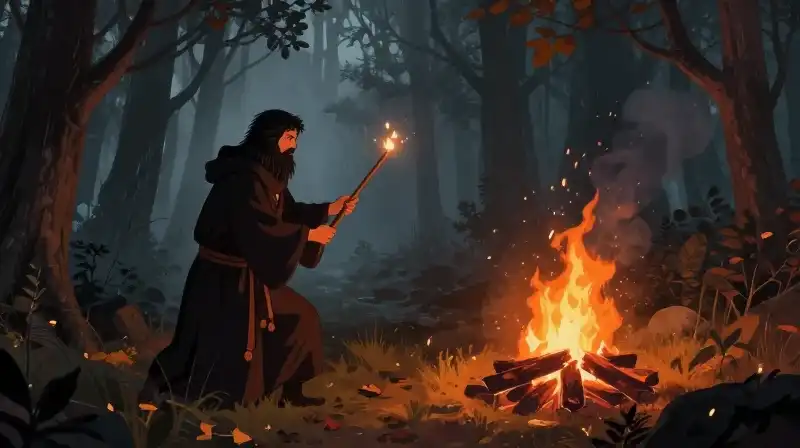
While the specific rituals of Samhain—such as burning bonfires or wearing traditional Samhain-based colors—are often less prominent today, the deep cultural memory of the tradition remains powerful. The celebration functions as a vital communal pause: a time for families to gather, for communities to recognize the passage of time, and for individuals to engage in a “controlled chaos” where the boundary between real and fantastical worlds seems temporarily permeable. Halloween is not merely a night of consumption or costumes; it is an enduring cultural narrative. It honors the hard harvest, acknowledges the inevitable presence of death and winter, and, through the lens of All Hallows’ Eve, provides a structured time for communities to connect their past—the memory of ancestors and the cycles of the year—with the present. It is a living tradition that continues to reflect the human need to both fear and celebrate the great forces of nature and mortality.
References
Footnotes
Frequently Asked Questions
How is Samhain related to Christianity?
The relationship between Samhain and Christianity is an evolution of meaning where early Christianity repurposed the festivals energy instead of erasing it. The Church incorporated Samhains familiar cultural scaffolding—specifically the ritual of marking the transition of the year—while shifting the ultimate purpose from appeasing spirits to honoring the saints and the soul.
Related Articles