Unpopular Greek Gods: Myths and Meanings of Obscure Deities

Introduction
The popular image of the ancient Greek pantheon often centers on the towering figures of Zeus, Hera, Poseidon, and Hades. Yet, beneath this grand Olympian ceiling lies a vast, intricate tapestry of lesser-known, regional, and highly specialized deities. In the tradition of ancient Greek religion, the concept of divinity was not monolithic. Gods could emerge from local geography, cater to specific community needs, or embody extremely niche aspects of life, such as the god of mice and flies. Understanding these unpopular Greek gods allows us to move beyond simple storytelling and glimpse how communities truly perceived the chaos, sustenance, and profound complexities of existence.
The Local and the Niche: Gods of Specific Places and Tasks
The sheer variety of minor deities underscores the decentralized nature of ancient religious practice. While the major Olympians held sway across the Aegean, many localized gods were specific to a certain region or function. This granularity is perhaps the most telling feature of the tradition. For instance, in certain parts of Arcadia, the deity Despoina was particularly significant. According to 1, she is identified as a daughter of Demeter and Poseidon, and a half-sister to Persephone. Her function, however, is often localized and contested; some accounts specify her as the goddess of frost and winter. This creates a fascinating contrast with Persephone, who typically symbolizes the return of spring. Some narratives suggest this regional variation may stem from a perceived envy when Demeter focused more attention on her daughter, showing how myth was often shaped by localized narrative and drama 1. Other deities reflect incredibly narrow preoccupations. Myiagros, for example, holds a unique place in the pantheon as the specific god of flies and mice 1. Similarly, Kyamites is mentioned solely in connection with the myth of Persephone’s abduction, appearing as a god of beans 1. These figures prove that no corner of life—from vermin to harvest—was without a divine observer or patron.
The Nuance of Mortality: Death, Creation, and Change
The Greek worldview presented not a single, unified concept of death, but a spectrum of experiences. The obscure deities often served to define the different ways humans faced the inevitable end, or the sudden beginning. The Keres represent a particularly striking cultural distinction in how Greeks viewed mortality. They are not simply agents of death, but spirits associated with violent deaths. They stand as a counter-force to Thanatos, who embodies non-violent death 1. This dichotomy suggests that the ancient Greeks conceptualized and ritualized the difference between a sudden, violent end and a natural passing, giving shape to the community’s fears and acceptance of death. In contrast to the agents of ending, there are gods of new life. Protogonos, who is also known by the epithet Phanes, is an exceptionally obscure figure originating from the cosmic egg 1. He is associated with creation, procreation, and the generation of new life, offering a primordial counterpoint to the destructive aspects of the underworld.
The Everyday Divine: Natural Forces and Daily Life
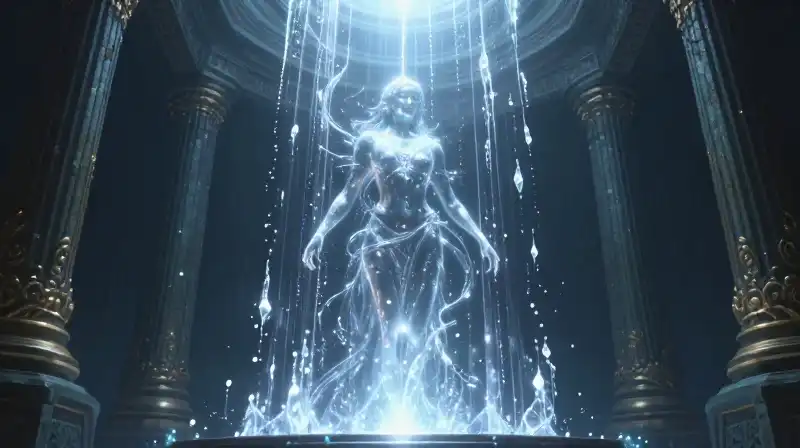
Many of the lesser-known gods are the ones most fundamentally tied to the human experience of daily life—the weather, the tides, and the essential mechanics of the day. Selene, the goddess of the moon, exemplifies this practical divinity. Her act of driving a chariot into the night sky and casting light upon the earth made her a vital figure for sailors, serving as a critical guide for navigation 1. For a seafaring community, the worship of Selene was an essential survival practice. Similarly, Aura, the goddess of the breeze, demonstrates the personification of atmospheric change. Her myth is complex; she is said to have incited the wrath of Artemis by claiming virginity, leading to a complicated relationship with Dionysus and their son, Iacchus 1. Iacchus, known as the god of ritual cries, is tied to a myth of his mother consuming his twin, a powerful image that links the divine to the very sounds of ceremony and grief 1. Beyond the classical elements, some gods were tied to specific human pleasures. Hedypotes, a very niche deity, is associated with liqueur and is noted as appearing within the retinue of Dionysos 1. Galeos, appearing in an Antiochian mosaic, was recognized as a shark deity 1, linking the divine directly to the marine life and sustenance of the coastal communities.
The Enduring Threads: Context and Interpretation
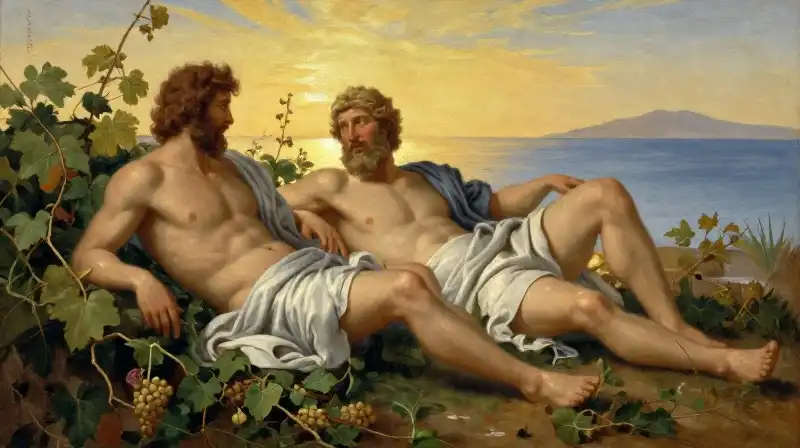
The presence of numerous minor deities whose identities are often delineated only by an epithet 1 reveals a culture incredibly rich in localized narrative. These gods are not simply footnotes; they represent the detailed, lived reality of the ancient Greek world. For instance, the relationship between Nereus and his partner, Nerites, offers a rare look at divine connection, noted as a stable romantic relationship between Nereus and Poseidon 1. This relationship is even described as having a rival dynamic with Aphrodite, suggesting that even among the divine, human-like relationships—and the drama that accompanies them—played a key role in cultural understanding 1. When searching for answers to the question of which gods were the most popular, the answer quickly becomes complex. While Helios is clearly a massive figure—the quintessential personification of midday, whose reckless son, Phaethon, nearly destroyed the world, requiring intervention from Zeus 1—the truly “unpopular” deities are those who existed in the shadows, filling the gaps left by the major gods. They provided the vocabulary for specific experiences: the cold, the scent of flies, the whisper of the breeze, or the particular sorrow of a lost twin.
A Deeper Understanding of the Obscure Pantheon
To study these unpopular Greek gods is not merely to catalog mythological names, but to observe how a civilization organized its relationship with its environment and its own life cycle. These niche deities demonstrate that for the Greeks, divinity was not a static, centralized power, but a vast, sprawling system of localized energies, specific fears, and personalized relationships. By recognizing the stories of Myiagros or the role of Despina, we gain a genuine cultural understanding of how a community sought to give meaning to the most granular and often overlooked aspects of life. They remind us that even in the grand sweep of history, the most profound truths often reside in the smallest, most specific details.
References
Footnotes
Related Articles