Odin and Father Christmas: Separating Mythology from Modern Lore

Introduction
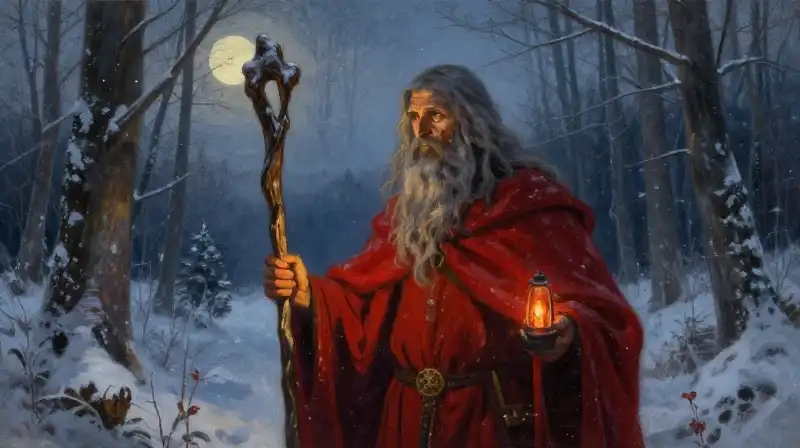
The pairing of Odin and Father Christmas is one of those cultural touchstones where shared iconography often overshadow historical reality. For many, the bearded, robed figure of St. Nicholas, the benevolent jolly Santa, and the ancient Norse All-Father are viewed as a direct lineage—one evolving into the other. While the resemblance is clear—both figures occupy a grand place in northern winter folklore—research suggests that any definitive connection between the two is rarely a simple, linear one. Instead, the relationship is complex, functioning more as a fascinating overlap of thematic ideas rather than a clear case of mythological lineage. To genuinely understand this tradition, one must look past the visual similarity and explore the rich, layered history of gift-giving and the way cultures reinterpret ancient customs in the modern era.
The Thematic Overlap: Why the Comparison Persists
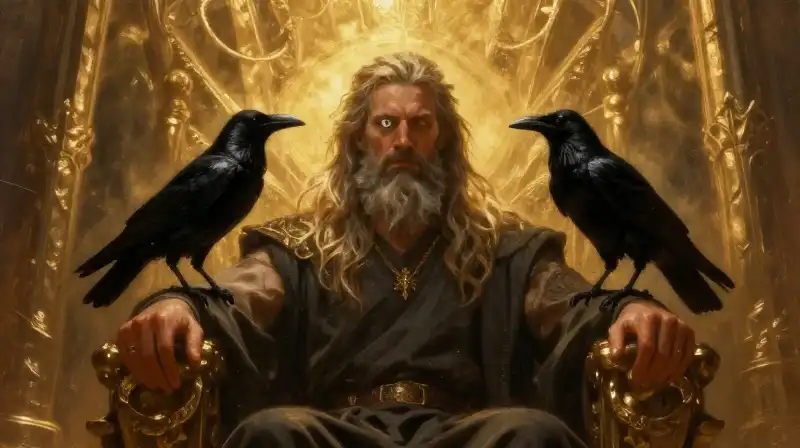
The narrative that Odin inspired Santa often gains traction because the two figures share surface-level characteristics that are easily comparable. Both Odin and the general archetype of Father Christmas are depicted with beards and often appear in heavy robes associated with the winter solstice. Furthermore, according to 1, both figures can be collectively referred to as “Father Christmas,” suggesting a structural similarity in how they function within a festive landscape. This resemblance has led some popular interpretations to link the two, suggesting that Odin’s lore somehow influenced the eventual development of the modern Santa 2.
However, critics caution that focusing only on these structural similarities is reductive. Skeptics argue that equating the two overlooks the deeper, divergent motivations behind the figures. Odin is primarily known as a deity of war, power, and wisdom, and his lore often involves trickery and sacrifice. This fundamentally contrasts with Santa’s traditional role as a figure dedicated to rewarding good behavior and spreading boundless cheer 2.
Differentiating Mythology and Benevolence
To properly separate the myth from the modern lore, it is essential to look at the specific roles the characters play. While 1 suggests a popular perspective that Odin’s presence in the cultural tapestry contributed to the evolution of the December festive traditions, the historical roles diverge sharply. Odin’s divine involvement in Norse culture often involved rituals—such as blessing goblets in his name for victory—indicating a cultural continuity of powerful deities within feasting and community life 2.
In contrast, the traditional roots of Santa are far more closely tied to Saint Nicholas of Myra. 2 points out that St. Nicholas’s original mission was humanitarian: distributing gifts to the poor. This benevolent intent laid the groundwork for the spirit of giving, which later transformed into the modern tradition of rewarding “well-behaved children”—a significant shift from St. Nicholas’s original philanthropic purpose 2.
Ancient Roots of Yuletide and Gift-Giving
The modern Santa and the Norse figures both exist within a long history of ancient festive practices. Historians confirm that ancient peoples—including the Celts, Germanic groups, and Vikings—celebrated the Yuletide (the winter solstice) long before the advent of formalized Christian holidays. This era was characterized by deep, localized traditions of feasting, community gathering, and gift-giving 2.
During the winter solstice, some Viking traditions included the description of a figure leading the “Wild Hunt” through the sky. This figure was meant to bring gifts to those who were deemed worthy or deserving 2. This localized, specific tradition of celestial gift-giving is a powerful reminder that the cultural tradition of the generous provider was already deeply embedded in the northern landscape long before any single, definitive figure was assigned to it. This ancient, broad practice forms the foundational layer of the modern holiday we celebrate.
The Crystallization of the Modern Icon
It is crucial to understand that the figure of Santa Claus, as we know him, did not emerge as an ancient, uniform myth but was a product of modern storytelling and cultural shifts. While the 19th-century tradition drew heavily upon the European Saint Nicholas, the “Santa” archetype was solidified into its iconic form in the 20th century. Artists like Haddon Sundblom, through their work, solidified the contemporary Santa image in the 1930s, drawing direct inspiration from popular literary sources like “A Visit from St. Nicholas” 2.
In short, the jump from localized, ancient Yule myths (including elements of powerful, gift-giving figures) to the Coca-Cola-esque Santa we see today is not a single step from Odin to Santa. It is a thousand-year process of complex cultural synthesis, where disparate traditions are constantly being reinterpreted, distilled, and commercialized 2. This process of evolution means that many stories are subject to distortion over time, preventing definitive or singular claims about their origin 2.
Navigating the Debates: Santa, Odin, and the Timeline
Given the complexity, the question of “Who came first, Santa or Odin?” is difficult to answer definitively. Odin, as a cornerstone of Norse mythology, exists in an era predating formalized Western holidays. Conversely, Santa Claus is a modern synthesis, though its core elements trace back to ancient gift-giving rituals and the 4th-century life of a Christian saint. Therefore, rather than looking for a chronological victory, it is more useful to view them as two distinct expressions of the same cultural impulse: the honoring of the winter solstice and the celebration of communal prosperity.
The critical caution here is to avoid the temptation to “project back in time.” According to 3, modern customs are often interpreted as being a continuation of ancient beliefs, but this ignores the profound shifts in culture, religion, and societal structure that occurred over the centuries. The figure of the “father” in northern winter lore is a rich tapestry woven from many threads, not a thread that links directly to one specific deity 2.
In conclusion, while the visual echo between the bearded All-Father of the Norse pantheon and the jolly Father Christmas is undeniable, the real cultural story is one of adaptation. The “Odin as Santa” theory, often embraced by modern media, is a compelling but simplistic narrative. A deeper understanding reveals a tradition that began with the powerful, transformative magic of the ancient Yuletide and was later molded by the benevolence of European saints and the narrative power of modern literature, resulting in a figure that means very different things to the communities that celebrate it today.
References
Footnotes
Frequently Asked Questions
Who is the Father Christmas in Norse mythology?
The article indicates that the figure of the father in northern winter lore is a complex tapestry woven from many threads rather than being linked directly to one specific deity. While Odin is a cornerstone of Norse mythology, the text views the connection between him and Father Christmas as a thematic overlap rather than a clear case of mythological lineage.
Who came first, Santa or Odin?
Odin, as a cornerstone of Norse mythology, exists in an era predating formalized Western holidays. Conversely, Santa Claus is a modern synthesis, though its core elements trace back to ancient gift-giving rituals and the 4th-century life of a Christian saint.
Related Articles