
Dia de los Muertos: The Cultural Tradition of Cemeteries and Ancestors

Introduction
Día de Los Muertos, or the Day of the Dead, is far more than a holiday commemorating loss; it is a mystical and deeply rooted tradition centered on the belief that the barrier separating the living from the ancestral world temporarily disappears. For communities observing this tradition, the observance is not a somber period of mourning, but a vibrant celebration of life that continues through the presence of the deceased. At its core, the observance is predicated on the conviction that the souls of ancestors return to visit their living relatives, making the practice an active, joyful reunion rather than a passive remembrance.
This living culture places profound significance on the connection between generations. It is a ritual designed to welcome visiting spirits, a practice that transforms common spaces—especially cemeteries—into sacred environments of memory and community. The tradition emphasizes the belief that by actively honoring the dead through specific rituals and the placement of heartfelt tributes, the bonds of family and ancestry are reaffirmed, continuing a narrative of life that persists even after physical death.
The Sacred Art of the Altar and Offerings
The most defining ritual of Día de Los Muertos is the construction of the altar. This complex centerpiece is designed to act as a bridge—a physical welcoming platform for the visiting souls. It is a curated narrative that tells the story of the departed while providing sustenance for their journey back to the earthly plane. These altars are not simply decorations; they are essential components of a sacred observance 1.
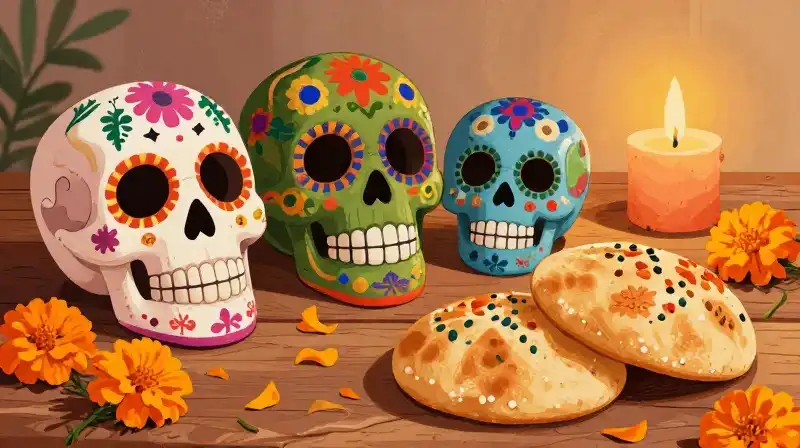
The offerings placed upon these altars are highly symbolic. They typically feature photographs of the deceased, personal mementos, seasonal fruit, and specific breads. These elements are chosen not just for their aesthetic appeal, but because they represent the beloved’s tastes and the needs of a visiting spirit 1. The act of gathering these items is itself a meditative process, demanding intention and respect. The intention is to offer a comforting presence for those who are temporarily “back” with their living family, reinforcing the cultural narrative of the dead returning home.
Cemeteries as a Living Sanctuary
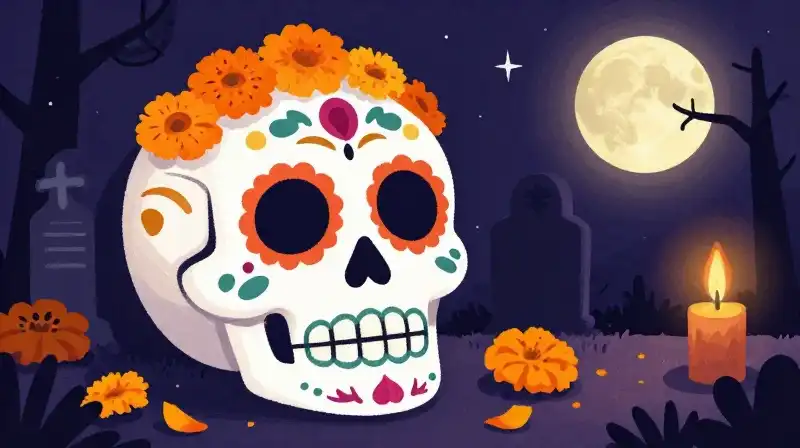
While altars can be placed in homes, the cemetery often serves as the most powerful and historically authentic setting for this observance. In the tradition celebrated at various historical sites, the act of placing altars within a cemetery is directly tied to the belief that the deceased are returning to their final resting places to meet their relatives 1. This setting—often historic and deeply rooted in community memory—provides a profound backdrop for the entire experience.
The historical significance of certain cemeteries cannot be overstated. For example, Hollywood Forever, which hosts a prominent celebration, is situated on a cemetery dating back to 1899. This makes it one of the oldest memorial parks in Hollywood and positions it as a venue for some of the largest community observances in the United States (1, 2). The presence of the observance in these places highlights how the community integrates the spiritual practice with the physical history of its resting places. Other communities, such as those at Oakland Cemetery, also host Day of the Dead events, though logistics and participation vary by location 1.
The Vibrant Spectrum of Community Expression
The celebration of the dead is characterized by a profound emphasis on vibrancy and communal joy, contrasting sharply with traditional Western notions of somber remembrance. The observance is a multifaceted event involving both deeply personal acts of devotion and large-scale communal celebration. The cultural narrative focuses on a celebratory process of death and dying, affirming that life is interconnected with the cycle of ancestry 1.
Large-scale observances often incorporate dramatic and culturally rich performances. At the Hollywood Forever event, for instance, the observance includes a vibrant procession featuring hundreds of Aztec ritual dancers moving through the cemetery grounds, lending a powerful visual and spiritual dimension to the gathering 1. Beyond the processions and dances, the community also participates in the creation of the altars, with many major events hosting competitions where over 100 altars are created and subsequently judged by community figures 1. These elements showcase how the tradition fosters not just memory, but active community engagement and artistic creation.
Understanding the Practice: A Cultural Lens
The nature of the Day of the Dead invites several questions regarding its local practice. To clarify, the practice of observing this holiday in cemeteries is deeply rooted in the tradition itself; the sacred space of the grave is seen as a point of connection 1. When people ask what things are in the cemetery during the Day of the Dead, the answer is the array of ritual offerings and altars (of which many are placed at the gravesites) that serve to welcome the visiting souls 1. The duration of the stay for families in these sacred spaces is variable, dictated by the community and the specific length of the annual observance, where the focus is on the period of spiritual visitation 1.
The Tradition’s Evolution and Global Reach
While the tradition holds deep roots in Mexican culture, the observance has grown into a significant cross-cultural phenomenon, gaining widespread recognition outside of its native Mexico. These events highlight the enduring appeal of the concept of honoring ancestors through joyful ritual. For instance, the celebration at Hollywood Forever has garnered attention for being the largest Dia de Los Muertos event held outside of Mexico since the year 2000 1.
This global spread is evident not only in large, public festivals but also in the specific cultural elements utilized. The cultural depth is often expanded through educational exhibits and art displays, such as those found within The Cathedral Mausoleum, which showcase original community artworks related to the tradition 1. These displays allow the living culture to share its stories, transforming the cemetery from merely a place of rest into a site of active cultural education and artistic expression.
Honoring the Ancestors: A Synthesis of Meaning
Día de Los Muertos is not a performance of grief; it is a practice of affirmation. By creating the altars, participating in the processions, and sharing the history and artistry within the cemetery grounds, the community actively affirms the enduring presence of those who came before. It is a testament to the belief that the cycle of life is continuous, and that the memory of loved ones is a living force. It invites outsiders not merely to observe, but to genuinely understand the significance of treating death as an integral, celebrated chapter in the human story.
The practice of these gatherings in historical cemeteries serves as a powerful reminder that cultural traditions thrive where history and memory intersect. For those looking to engage with this tradition, approaching it with a spirit of respect for the sacred nature of the observance, and an openness to understanding the blend of reverence, joy, and history, is essential to truly understanding the living culture it represents.
References
Footnotes
Frequently Asked Questions
Is the Day de los Muertos celebrated in cemeteries?
Yes, the cemetery often serves as the most powerful and historically authentic setting for the observance of Día de Los Muertos. The sacred space of the grave is seen as a point of connection, where participants place ritual altars and host large-scale communal celebrations.
What things are in the cemetery during the Day of the Dead?
The cemetery hosts an array of ritual offerings and altars placed at gravesites to welcome visiting souls. These offerings typically include photographs of the deceased, personal mementos, seasonal fruit, and specific breads.
How long do families stay in the cemetery on Day of the Dead?
The duration of the stay for families in these sacred spaces is variable, dictated by the community and the specific length of the annual observance. The primary focus of the visit is on the period of spiritual visitation.
How to Observe Día de Los Muertos and Honor Ancestors
Choose the Observance Location
Select either a private space in a home or a historical cemetery, which is considered the most authentic setting for the tradition, as it serves as a point of spiritual connection.
Gather Symbolic Offerings
Collect necessary items including photographs of the deceased, personal mementos, seasonal fruit, and specific breads to represent the beloved's tastes and spiritual needs.
Construct the Altar
Build the altar, which functions as a physical and curated narrative bridge designed to welcome the visiting souls of the ancestors back to the earthly plane.
Place the Tributes
Carefully place the gathered items upon the altar, ensuring they provide a comforting and meaningful presence for the returning spirits.
Participate in Community Expression
If attending a large-scale observance, participate in communal activities such as vibrant processions or altar competitions to affirm community engagement.
Approach the Tradition with Respect
Observe the entire ritual with respect for its sacred nature, embracing the culture's focus on affirming the enduring presence of loved ones through joy and remembrance.
Related Articles