Indonesian Mythical Creatures: From Barong to Genderuwo

Introduction
Indonesia’s vast archipelago is a tapestry woven from over 1,300 ethnic groups, and nowhere is this diversity more visible than in its mythology. While outside observers often see a collection of monsters, the Indonesian mythical creatures are, in reality, sophisticated cultural mirrors. They reflect a spiritual ecosystem where ancestral beliefs, imported epics, and unique local wisdom coexist, shaping communal ethics, defining the relationship between humans and nature, and illustrating the constant negotiation between order and chaos 1.
These narratives are not mere stories; they are living texts—they dictate how certain rivers should be treated, what kinds of rituals must be observed during harvest, and how one should behave in the community. To truly understand Indonesian culture is to understand this dynamic spiritual landscape.
The Spectrum of Cosmic Balance: Order and Discord
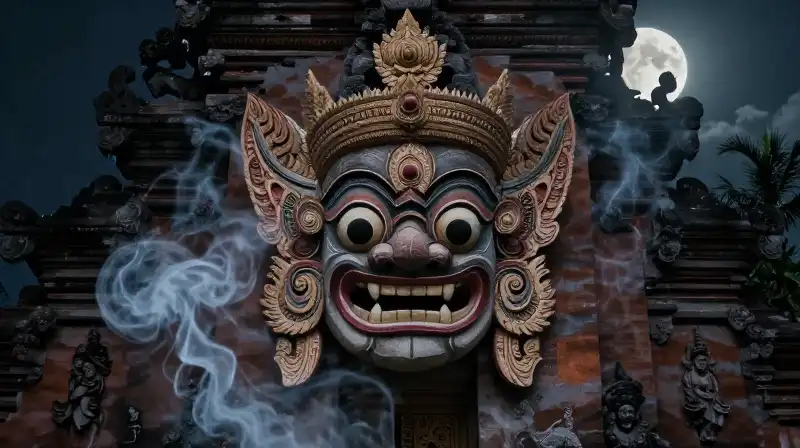
A core theme in many major island traditions is the struggle for balance, or the tension between cosmic forces. In Balinese mythology, this tension is vividly personified by the eternal confrontation between Barong and Rangda 1. Barong, often depicted as a panther-like spiritual protector, represents the benign, protective forces of good, while Rangda embodies the formidable queen of the cannibalistic, dark spirits. Their conflict is not a definitive victory for good over evil, but rather an eternal, cyclical struggle that ensures the cosmic equilibrium of life and death 1.
This focus on duality is also mirrored in the creation narratives of the Dayak people of Kalimantan. According to cultural descriptions, the world emerged from a primal, procreative conflict between a male and female bird or dragon. This act of creation is not seen as a singular, perfect event, but as a continuous process of balance, a theme that resonates deeply within the natural cycles and the social structure of the community 1.
Beyond the Beast: Supernatural Threats and Social Ethics
While cosmic myths deal with the grand forces of the universe, modern and localized folklore often addresses the moral failings and social anxieties of communities. Many of the most common mythical creatures in Indonesian lore represent not just supernatural entities, but specific vices or social transgressions.
The concept of Babi Ngepet serves as a powerful example. This “boar demon” is a creature associated with black magic, believed to transform into a boar to steal the wealth of others 1. Unlike a mere monster, the Babi Ngepet is a supernatural manifestation of greed and transgression, acting as a cautionary tale against social injustice and theft. It embodies a cultural dimension of supernatural crime, where spiritual beliefs reinforce community ethics 1.
Similarly, Genderuwo, described as a “perverted bigfoot,” represents a different facet of danger. This creature is capable of shifting into a highly attractive human form and disappearing at will 1. It serves as a narrative to explore the fear of the unrecognized threat and the deceptive nature of appearances.
The Architecture of Existence: Creation and Origin Myths
Creation myths across the archipelago reveal the profound regional isolation and unique intellectual traditions of its different cultures. While Javanese, Balinese, and Sundanese traditions often show signs of syncretism—incorporating major Hindu-Buddhist epics like the Ramayana and Mahabharata into local forms—many isolated groups maintain distinct, ancient worldviews 1.
- The Dayak Kaharingan: Their creation is rooted in the primal conflict of a pair of bird/dragon figures, establishing a framework of balance that guides their social and natural cycles 1.
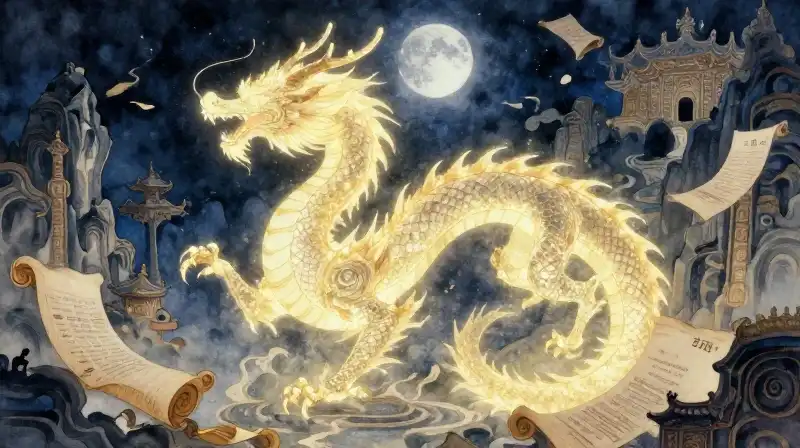
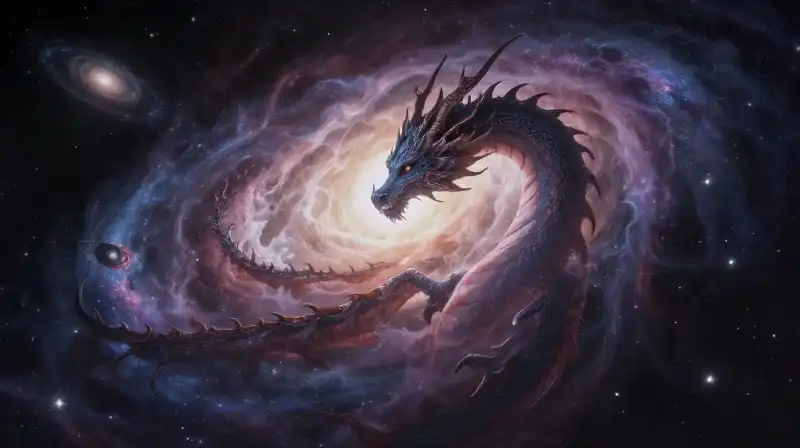
- The Batak Traditions: Central to the Batak narrative are figures like Mula Jadi Na Bolon, the ‘beginning of becoming,’ and the underworld dragon Naga Padoha. The dragon’s movements beneath the weight of the earth are essential to how the world was formed 1.
- Sulawesi Myths: These traditions offer fascinating examples of localized imaginative biology. Some groups depict the earth resting upon a gigantic babirusa, a myth which scholars have linked to the structure of the Hindu myth of the boar avatar, Varaha 1.
Navigating the Spiritual World: Spirits and Guidance
Beyond the large, terrifying creatures, much of Indonesian folklore revolves around the mediation between the living and the spiritual world, emphasizing the vital role of spiritual interaction in life and death 1.
The practice of the dukun, a spiritual healer and mediator, is a widespread element of this culture. A dukun is not simply a doctor, but a practitioner who bridges the mundane and spiritual realms, often utilizing local traditions to interact with spirits, both benevolent and malevolent. This role is deeply tied to localized animistic beliefs where local spirits—such as forest guardians or the tormented souls of the deceased—retain immense power and influence, often being spiritually associated with entities like the jinn 1.
The figure of Nyi Roro Kidul, the deity ruling the Southern Sea off Jogjakarta, is a significant figure in local maritime lore 1. Local folklore utilizes such figures to serve practical community purposes, such as tales meant to discourage children from playing too close to the water 1. It is important to note that while Nyi Roro Kidul is widely recognized, scholarly work acknowledges uncertainty and conflation regarding her role and that of other sea deities, suggesting that local traditions may maintain distinct roles for different figures 1.
The Living Culture: Why These Myths Persist
The longevity of Indonesian mythology stems from its flexible nature. While some traditions, like those maintained by isolated groups such as the Dayaks, Papuans, and Torajans, remain relatively pure from foreign influences, others have demonstrated remarkable capacity for cultural syncretism 1. This means that the introduction of Hindu or Buddhist concepts was not a replacement of local belief, but rather a powerful new lens through which the community filtered its existing spiritual landscape.
Whether through the ritual practices of Dayak shamans mediating the upper world or the simple moral lessons embedded in stories of Babi Ngepet, these mythical figures and beings function as cultural anchors. They provide a language for a community to process its relationship with nature, its fears of change, and its social obligations, ensuring that the spiritual life remains profoundly interwoven with the practical lives of the people.
References
Footnotes
Frequently Asked Questions
What is a dukun in Indonesia?
A dukun is a widespread spiritual healer and mediator who is not simply a doctor. This practitioner bridges the mundane and spiritual realms, utilizing local traditions to interact with both benevolent and malevolent spirits.
Related Articles