Traditional Attire for Diwali: Festive Style Guide for Men and Women

Introduction
>Diwali, the Hindu festival of lights, transcends mere decoration; it is a time of profound cultural and spiritual transition, symbolizing the triumph of good over evil and the hopeful arrival of new beginnings 1. In communities celebrating this deeply rooted tradition, the observance of Diwali is culturally synonymous with a “full festive refresh,” prompting a significant transition in wardrobe throughout the community 1. The act of dressing for Diwali is far more than a superficial style choice; it is a powerful element of cultural expression where individuals choose attire to actively reflect the spirit of joy, confidence, and communal harmony. > >The traditional clothing worn during this time acts as a living tapestry of South Asian heritage, blending rich history with modern craftsmanship. Understanding this festive fashion requires looking past the label and appreciating the cultural weight carried by the materials, the patterns, and the silhouettes.
The Sartorial Language of Celebration
>Festive attire for Diwali is characterized by its maximalist approach—it is designed to dazzle, reflect the inner radiance of the festival, and signify the special nature of the occasion. Cultural commentators note that the choice of garments is context-dependent, with specific looks designated for different parts of the celebration, ranging from formal family *pujas* to lively social evening parties 1. This necessity for variety encourages a deep exploration into various traditional silhouettes and modern adaptations. > >The selection of clothing is fundamentally linked to the community’s desire to mark this cultural turning point through visual splendor. While the tradition dictates certain elements of grandeur, modern adaptation is allowing for creative freedom, allowing wear to blend classic heritage with contemporary design to create versatile festive looks 1.
The Traditional Wardrobe for Men
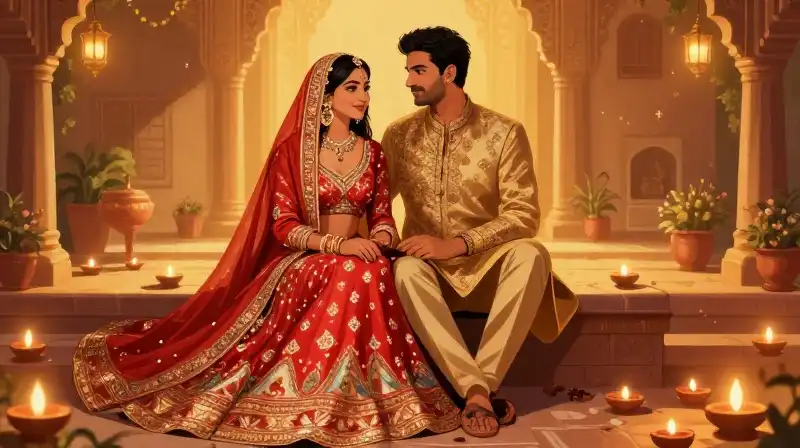
>For men, the festive tradition centers around garments that communicate both regal elegance and festive richness. The most iconic attire includes traditional *kurta* sets and the highly ceremonial *sherwani*. These choices are typically selected in bold, vibrant colors and rich, tactile textures, embodying the festive spirit 1. > >The choice of fabric and texture is a significant cultural marker. Men’s traditional festive wear often utilizes premium materials such as rich silk, plush velvet, and sturdy brocade, all selected for their special, celebratory feel 1. The traditional silhouette of the *kurta* remains a versatile and respected choice, but the elevated craftsmanship and material choice during Diwali set it apart from everyday wear. These men’s garments serve as an expression of maturity and celebration within the familial setting.
Women’s Celebratory Silhouettes: Diversity in Grace
>The attire for women is arguably the most diverse, offering a beautiful spectrum of traditional silhouettes designed for celebratory grace. The festive tradition includes wearing a wide array of traditional styles 1, reflecting regional preferences and individual taste. > >Key silhouettes include: >
>- Lehengas: Heavily embroidered, flowing skirts often paired with ornate blouses, signifying opulence and drama. >- Sarees: Elegant and versatile draperies, representing timeless tradition and refined grace. >- Anarkalis and Shararas: Often characterized by flowing, flared designs, these styles offer movement and grace suitable for social gatherings 1. >
> >In modern interpretations, many women are expertly blending these classic shapes with contemporary touches. This fusion allows the garments to remain deeply rooted in tradition while offering a fresh, modern versatility that suits the fast pace of contemporary life 1.
The Craft and Context of Festivity
>The cultural weight of Diwali attire is often found not just in the silhouette, but in the details—the material and the embellishment. Fabrics such as delicate georgette, lustrous silk, and intricate velvet are highly favored for their celebratory sheen 1. Furthermore, the integration of festive embellishments is what truly transforms clothing from simple garment to celebratory statement. > >Key decorative elements include:
>- Embroidery: Complex, hand-stitched designs that tell stories of regional artistry. >- Sequins and Zari: The application of glittering threads and tiny embellishments provides the essential “festive sparkle” required for Diwali, symbolizing the light and joy of the festival 1. >
> >In essence, the intricate craftsmanship ensures that the clothing doesn’t just cover; it enhances the atmosphere of the celebration. This labor-intensive artistry reflects the high value placed on heritage and quality within the community.
Adapting Tradition for Modern Life
>One of the most common questions regarding Diwali fashion is how to honor the tradition while remaining current. The answer lies in strategic adaptation. Modern designers are masters at taking the rich fabrics and traditional patterns—like Banarasi silks or detailed brocades—and applying them to more contemporary cuts, ensuring the attire remains culturally respectful while being relevant to a globalized audience. > >Regarding color selection, while certain hues are traditionally favored for their significance and auspicious nature, there is no single “correct” color prescribed across all communities. The rule is often less about a specific hue and more about the level of vibrancy and richness, which aligns with the spirit of the festival. Ultimately, the most important factor is the wearer’s personal comfort and confidence as they embrace the festive spirit 1.
Conclusion: The Meaning Behind the Mirror
>The selection of traditional attire for Diwali is a profoundly meaningful practice. It is a tangible way for a community to express their identity, celebrate their heritage, and welcome a new cycle of life. The transition into rich silks, vibrant brocades, and meticulously detailed embroidery is not merely a fashion trend; it is a ritualized declaration of hope, joy, and cultural continuity. By engaging with these traditions, the individual joins a continuous thread of history, reflecting the resilience and deep connection people maintain with their ancestral celebrations.
References
Footnotes
Frequently Asked Questions
What is the traditional clothing of Diwali?
Traditional attire for men includes the iconic kurta sets and the highly ceremonial sherwani, while women wear diverse silhouettes such as lehengas, sarees, anarkalis, and shararas. These garments are typically selected from rich materials like silk, velvet, and brocade, featuring intricate embroidery and festive embellishments.
What do non-Indians wear to a Diwali party?
The attire for Diwali celebrates a mix of traditional silhouettes, such as lehengas, sarees, and kurtas, which are often adapted by modern designers to blend classic heritage with contemporary cuts for a globalized audience. The clothing is typically characterized by vibrant colors and rich fabrics like silk, velvet, and brocade, embellished with intricate embroidery, sequins, and Zari.
Which color should be worn on Diwali?
There is no single correct color prescribed for Diwali across all communities. The focus is less on a specific hue and more on the level of vibrancy and richness of the attire to align with the festival’s spirit.
Related Articles