Big Mythical Creatures: The Cosmic Scale of Global Lore

Introduction
The study of folklore often categorizes mythical creatures by their terrifying appearance or physical power. However, when we examine figures of truly cosmic scale—the legendary megafauna and colossal gods found across global traditions—we find something far deeper than just impressive size. These massive beings are not merely beasts of prodigious bulk; they are powerful cultural tools. In the traditions of various communities, the “giant” serves a fundamental purpose, acting as a living embodiment of cosmic boundaries, moral judgment, or spiritual transcendence. They are markers of world-making narratives, telling us how a society understands its place in an infinite universe.
To understand these creatures is to understand the scale of the belief system itself. They represent forces so large they threaten the very stability of the known world, whether that world is defined by the rolling seas of Scandinavian lore or the philosophical concept of ultimate reality in Hindu thought. This exploration delves into the narrative functions of these colossal entities, examining how their immense form translates into the meaning and moral framework of the cultures that preserve them.
The Universal Role of Megafauna in Storytelling
The motif of the immensely large creature is not limited to any single culture. Across diverse traditions—including those in Australia, Greece, and Native American storytelling—the archetype of megafauna serves a critical function. It is widely recognized as a powerful ‘mytheme,’ meaning it acts as a core, recurring, and deeply significant element that shapes the entire framework of a culture’s narratives 1. These creatures embody the untamed nature of the environment, the unknown, or the prime forces that precede human civilization. They are the raw, overwhelming power of existence given form.
Scale as a Spiritual Measure
While physical size is often the immediate descriptor, the notion of scale in mythology is not always literal. In the Hindu tradition, for example, the concept of Brahman is not a physical entity but represents the ultimate, all-encompassing reality—the fundamental root of existence itself 1. Here, the measure is not inches or miles, but spiritual scope. Similarly, certain enlightened figures, such as Buddha, are understood to be ‘spiritually large’ because their existence signifies a oneness with the entire universe, a monumental spiritual presence that surpasses physical dimensions 1.
Cosmic Boundaries and World-Defining Entities
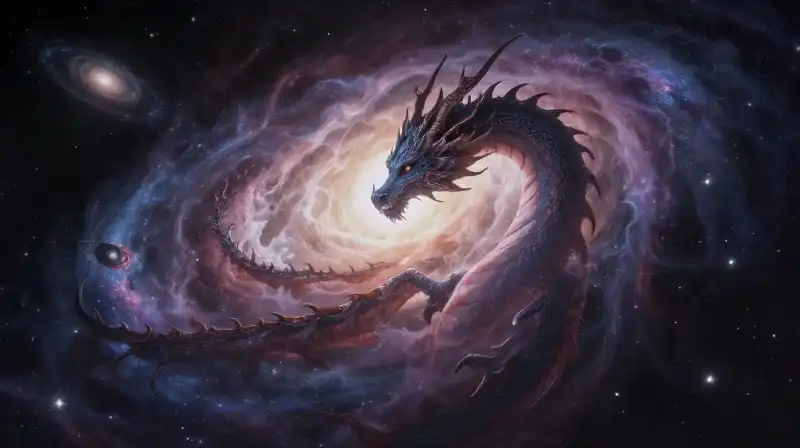
Perhaps the most profound use of colossal beings is to define the edges of existence. These entities function as living borders, marking where the known world ends and the incomprehensible begins. In Norse mythology, the serpentine figure Jörmungandr is famously depicted as a giant snake coiled around the Earth, a visual manifestation of the limits of the world 1. Similarly, the Mesoamerican myth of Cipactli, whose body is described as encompassing the entire world or the land, gives a physical form to the totality of the cosmos 1.
In the ancient Greek worldview, this concept of monumental scale is found in figures like Typhon, who is mythologically described as being so vast that his head is said to reach the stars 1. These figures establish the immense scope of the Greek world and its inherent dangers. Other ancient traditions, such as Jewish mythology, introduce beings like Behemoth, Leviathan, and Ziz, which represent immense, often untamable power and primal presence within religious narratives 1. They are forces that structure the divine order.
Moral Weight and Cultural Judgment
In some cultural contexts, the function of a gigantic creature shifts from defining the cosmos to enforcing social or moral laws. In Japanese folklore, for instance, the Oni serve as critical agents of cultural judgment. These massive figures are not simply monstrous; they are designed to embody intense, violent punishment, enacting severe consequences upon those who commit grave transgressions 1. This role suggests a system of divine or cultural oversight, where the sheer size of the punisher reflects the severity of the crime.
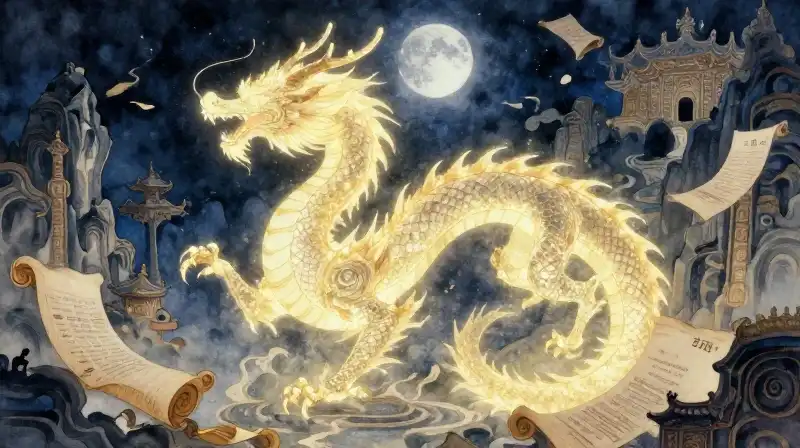
The morality ascribed to such gigantic forms often varies sharply across cultures. For instance, while the monstrous nature of the Oni is tied to judgment, dragons are frequently portrayed with much more favorable or complex characteristics within various East Asian traditions, suggesting a vastly different relationship between humanity and immense power 1.
Regional Manifestations of Primal Fear
Beyond the philosophical or moral roles, massive creatures often materialize from the most immediate, tangible threats to human life—such as the sea or the hunt. Coastal fears across Scandinavian traditions are perfectly captured by the Kraken. This cephalopod-like sea monster is known specifically for its immense size and its ability to subvert human control by dragging ships down into the abyss 1. This creature is a representation of oceanic indifference and terrifying power.
In terrestrial contexts, other creatures define cultural limitations. Echidna in Greek mythology is an example of a primal, terrifying origin story, identified as the mother of all monsters and the consort of Typhon, symbolizing deep, chaotic beginnings 1. Similarly, the giant wolf Amarok, found in Inuit tradition, holds significance not primarily because of its physical bulk, but because of its cultural representation of solitary nature and its crucial role in the survival of hunting practices 1.
The Living Significance of Colossal Lore
The study of big mythical creatures moves us away from the simple inventory of monsters and into the lived experience of cultural belief. Whether it is the Kraken representing the terrifying unpredictability of the ocean, or Jörmungandr defining the boundaries of a mythical landscape, these stories articulate a community’s relationship to overwhelming forces. The scale of the creature matches the scale of the concept it embodies—whether that concept is cosmic, spiritual, ethical, or environmental.
Ultimately, these legends serve as complex psychological and social maps. They allow communities to grapple with the infinite: the incomprehensible size of the universe, the weight of moral consequence, and the raw, untamable power of nature. They are not just “big mythical creatures”; they are deeply meaningful narratives that define the parameters of existence for the people who cherish their stories.
References
Footnotes
Related Articles