Jörð: Understanding the Norse Earth Goddess and Her Mythical Role

Introduction
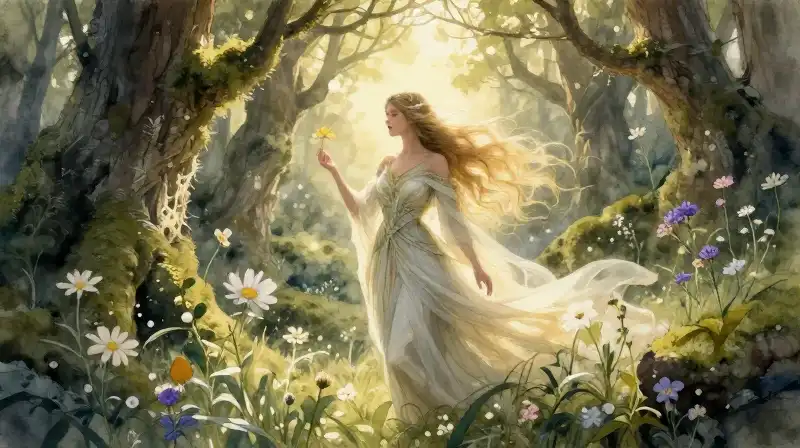
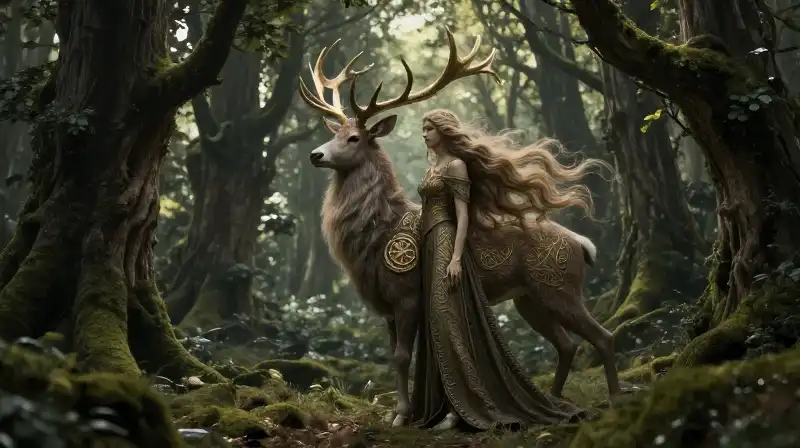
To truly understand the Norse mythological landscape is to recognize that the divine is often deeply rooted in the terrestrial. At the heart of this grounding stands Jörð (Jǫrð), the Old Norse term for “earth” or “land.” More than just a powerful deity, Jörð functions as the quintessential Earth-goddess, a figure who embodies the primordial, fertile, and foundational forces of existence within Norse cosmology. For readers seeking to understand the nuances of this tradition, it is vital to move beyond the simple definition of “mother of Thor” and explore Jörð as a profound cultural archetype—a living bridge between the wild forces of nature and the ordered community of the gods.
While the specific narratives surrounding Jörð vary across ancient manuscripts, her role as the foundational force that connects the sky and the soil remains central to the worldview. Whether viewed as a distinct divine personification or as the living manifestation of the earth itself, Jörð represents the enduring power of the land that sustains all life, placing her at the very foundation of the Norse concept of existence.
The Archetype of the Earth-Mother
The discussion surrounding Jörð often falls into a scholarly debate: is she a standard *Ásynja* (goddess), or is she best categorized as a powerful giantess? Scholars have wrestled with whether her portrayal reflects a specific mythological figure or a general, fundamental concept taken for granted by Old Norse society 1. Some modern interpretations suggest the latter, viewing the repeated references to “Earth” as Thor’s mother as a way of acknowledging the ambient and pervasive power of the terrestrial domain 1.
This conceptual framework places Jörð within a wider, ancient Indo-European tradition. Her character aligns with the “hieros gamos,” or sacred divine marriage, a cosmic union where the Earth Goddess and the Sky God ensure the fertility of the land and maintain the overall order of the universe 1. This concept of the union of opposing forces—the celestial and the terrestrial—is a recurring theme in Indo-European cosmology 1.
Myth and Poetic Identity
In the literary landscape of the *Poetic Edda* and skaldic poetry, Jörð’s identity is often expressed through powerful metaphors that speak to her primal origins. She is referenced poetically as “Ymir’s flesh,” “the mother of Thor,” or even “the daughter of Night,” cementing her role as a source of immense, sometimes untamed, life 1. This personification of the earth is a key part of an animistic worldview, where various gods and figures are seen as embodying different, interconnected aspects of nature 1.
The prose account found in the *Gylfaginning* confirms her status, listing Jörð among the *ásynjur* 1. Yet, the specific details of her parentage are subject to scholarly uncertainty, depending on which manuscript of the *Gylfaginning* is being referenced 1. This variation mirrors the fluid and evolving nature of oral traditions, demonstrating that Jörð’s identity often shifted to suit the needs of the narrative and the poet.
Synonyms and Regional Echoes
The complexity of the earth-deity figure is further highlighted by the multiple names attributed to her. In various Eddic texts, alternative names such as Fjörgyn and Hlóðyn are recorded as synonyms for Jörð, indicating the versatility of this mythological concept within the Norse cultural imagination 1.
This Norse reverence for the Earth-Mother is not unique to the Viking Age. There are strong parallels in other Germanic traditions, such as the figure of Nerthus, who was known as Mother Earth. This figure was observed by the Roman historian Tacitus to be identified with the Roman concept of *Terra Mater* 1. Furthermore, Old English traditions featured practices that mirrored the invocation of this terrestrial power. In those rituals, offerings like milk, honey, and flour were poured onto the soil at the moment the plow made its first furrow, invoking the concept of *erþan modor* (“mother of earth”) 1.
Jörð in a Broader Context of Nature Worship
Understanding Jörð requires acknowledging her place alongside other nature-associated figures within the Norse pantheon. Deities like Freyr and Njörðr are also tied to the domains of fertility and nature, contributing to a cultural framework where nature itself is treated as a powerful, sentient entity. This deep respect for the terrestrial domain is a hallmark of the Norse worldview 1.
It is important to distinguish the concept of Jörð from later, popularized figures. Northern European traditions featured the “Mother Earth” figure of Nerthus during the Iron Age, predating the later popularization of figures like Freya in the Viking Age 1. These regional variations showcase how the deep reverence for Mother Earth has persisted across various eras and cultures in Northern Europe.
Addressing the Cultural Question of the Goddess
A common query regarding the pantheon asks, “Who is the Norse goddess of Earth?” The most direct answer is Jörð. However, a deeper look reveals that the concept of the “Earth Goddess” is an archetype shared across the globe—from the Indo-European reverence for femininity and fertility connected to the land 1 to figures like Nerthus and the local Old English *erþan modor*. Jörð represents the convergence of these traditions within the Norse framework.
When considering the wider cultural context of the tradition, the earth-deity archetype serves as a profound statement on the connection between gender, fertility, and the terrestrial domain. These figures are not merely mythological characters; they represent a foundational belief in the vital, living nature of the soil itself.
Synthesis: The Living Significance of Jörð
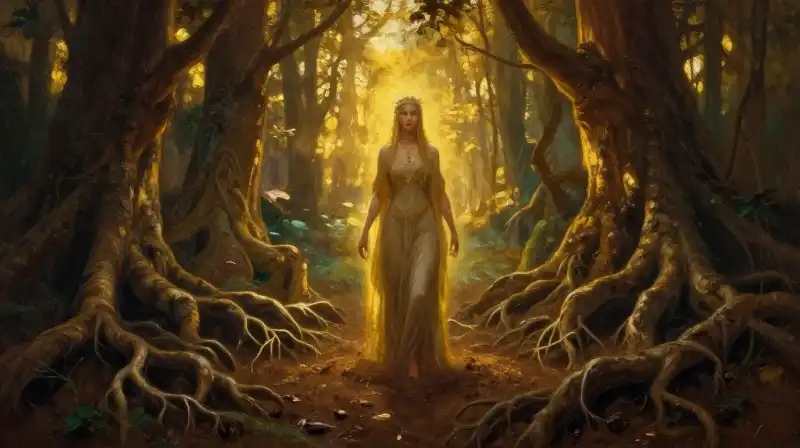
Jörð is far more than a name in a mythology book; she is a living concept of grounded connection. She encapsulates the enduring human relationship with the earth—the source of sustenance, the backdrop of creation, and the foundation of the divine. By understanding Jörð through her poetic synonyms (like Fjörgyn), her cross-cultural parallels (like Nerthus), and her archetypal role as the embodiment of the primordial land, a reader moves beyond surface definition. They begin to see a vital thread running through the ancient traditions—a profound, respectful acknowledgment of the earth’s power and the cyclical nature of life upon it.
This tradition encourages a reverence for the terrestrial domain, reminding those who study or engage with it that the stories we share are deeply connected to how communities across history have lived together, created, and honored the land that holds them.
References
Footnotes
Frequently Asked Questions
Who is the Norse goddesses of Earth?
The most direct answer to the Norse goddess of Earth is Jörð (Jǫrð), who functions as the quintessential Earth-goddess in Norse cosmology. She is also referenced poetically as the mother of Thor and is recorded under alternative names such as Fjörgyn and Hlóðyn.
What did the Vikings call Jesus?
The article does not mention what the Vikings called Jesus.
Related Articles