The Greek Gods of the Sky: Uranus, Zeus, and Celestial Mythology

Introduction
For the ancient Greeks, the sky was far more than a backdrop for the day; it was the primary domain of power and the physical structure of the cosmos. The celestial realm was a complex tapestry of primordial entities, powerful Olympian rulers, and subtle atmospheric forces that governed everything from the planting of crops to the thunder of conflict. To understand the Greek tradition of the sky is to grasp a worldview where the physical elements and the spiritual authority were inextricably linked, a concept that continues to influence discussions of landscape, authority, and natural law.
The Primordial Sky: From Gaia to Ouranos
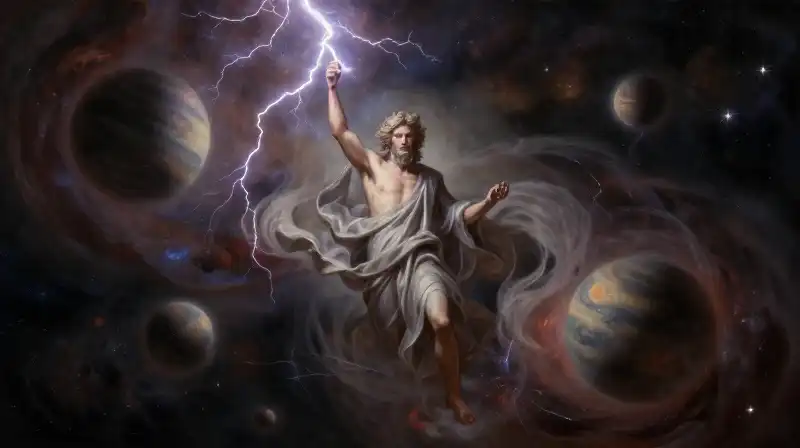
The beginning of the celestial narrative is one of immense, elemental force. The Greek tradition posits a structured hierarchy originating from Gaia, the Earth 1. From this primal entity arose Uranus, not merely a god, but the personification of the solid dome of heaven itself 1. As the first entity to emerge from the Earth, Uranus held the initial, foundational power over the visible heavens. However, this early stability gave way to profound shifts in cosmic authority. The narrative of Uranus’ castration by his son Cronus serves as a critical cosmological pivot 1. This event explains the transition of supreme power from the older generation of gods to the Titans and subsequently to the Olympians. Within this framework, the sky was not merely a static ceiling but a dynamic stage for the struggle between generations, a physical representation of the birth and establishment of divine order. Furthermore, scholarly investigation into the origins of the name Uranus suggests possible ties to Indo-European roots that translate to “rain-maker” or “lord of rain” 1, highlighting the profound importance of the sky as the source of both life-giving moisture and raw atmospheric power.
The Layered Heavens: Aether and the Olympian Authority
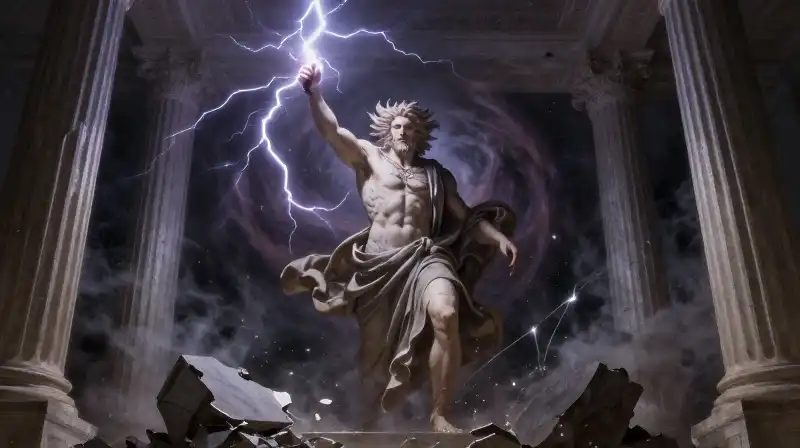
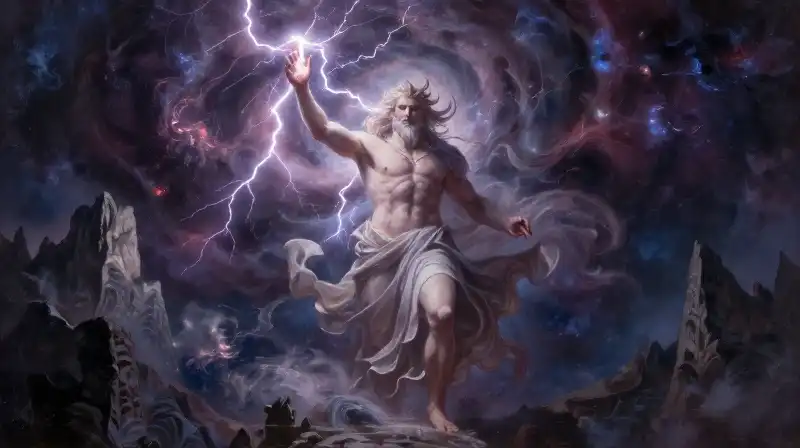
Beyond the fundamental dome of Uranus exists the more refined atmospheric space between the Earth and the celestial sphere. This zone is often attributed to Aether, viewed as a primeval god of the shining light and bright mist that characterizes the upper atmosphere 1. If Uranus represents the physical structure, Aether represents the luminous essence and clarity of the heavens. As the cosmic order solidified, the role of the sky coalesced around Zeus. While Zeus is the undisputed King of the Gods, his role as the definitive ruler of the heavens is tied directly to his control over the volatile elements 1. His power encompasses the atmosphere itself—clouds, rain, and the brilliant discharge of lightning. In the Greek tradition, the sky is not just a passive feature; it is an active, controlled environment, where the ruling deities manage the life-giving forces and the terrifying chaos of nature.
The Living Forces of Air and Light
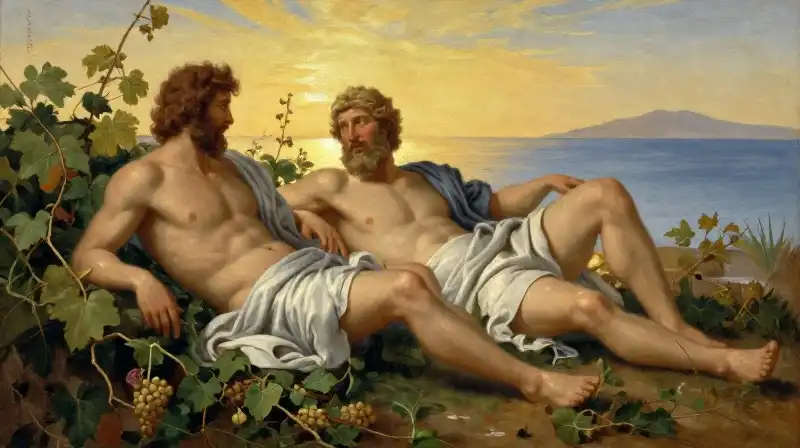
The complex systems that maintain the sky go beyond single deities like Zeus. Atmospheric phenomena are represented by various groups and specific figures that embody the cyclical, living nature of the heavens. The Anemi, for instance, comprise the gods of the four directional winds—including figures such as Boreas (the North Wind) and Zephyros (the West Wind)—and act as the herald of the four seasons 1. They are not merely breezes, but powerful, structured manifestations of atmospheric movement. The sky’s cycle is maintained by figures who embody motion and transition. Helios, the brilliant god of the sun, drives a fiery chariot across the expanse of the sky. This journey is mirrored by the Hesperides, whose golden apples symbolized the beauty and finality of the sunset 1. These cyclical figures underscore that the sky was understood as a constantly moving, rhythmic system, rather than an unchanging, immutable celestial ceiling.
Human Perceptions and Literary Interpretations
The way the Greeks perceived and told stories about the sky varied significantly depending on the narrative and the regional tradition. One of the most striking examples of these variations is the figure of Atlas (1, 2). In certain traditional interpretations, Atlas is a Titan condemned to hold the sky aloft; in others, his role is reframed as the keeper of heaven’s pillars, a distinction that speaks to the versatility of his symbolic burden. From a more human perspective, the sky is often interpreted through the lens of nature itself. Figures such as Nephelai, the nymphs of the clouds, and Aura, the personification of breezes, represent how humans integrated their experience of the sky into their society 1. These nymphs bring a sense of anthropomorphism to the air, suggesting that even the most ephemeral atmospheric forces possessed a quiet, human-like presence.
Conclusion: The Sky as a Mirror of Order
The Greek celestial mythology reveals a profound cultural understanding of how nature operates. The transition from the primordial dome of Uranus to the disciplined reign of Zeus highlights a fundamental narrative arc: the movement from raw, untamed chaos toward an ordered, governed cosmos. Whether depicted as a physical structure held by Atlas, a luminous mist shaped by Aether, or a dynamic system controlled by the Olympians, the sky served as the ultimate container for Greek philosophical and social beliefs regarding authority and balance. To the Greek cultural tradition, the sky was not merely where the weather came from—it was the seat of justice, the clock of seasons, and the definitive proof of the established divine order.
References
Footnotes
Related Articles