Persephone: Understanding the Greek Goddess of Spring and Renewal

Introduction
In the ancient world, the fundamental rhythm of life was dictated by the turning of the seasons. For the communities of classical Greece, where survival depended directly on the yield of the soil, the concept of renewal was not merely a poetic idea—it was a vital, often perilous, reality. Persephone, recognized as a central figure in this spiritual landscape, serves as more than just a mythological figure; she is a profound symbol of transition, life’s cyclical nature, and the deep, often complex relationship between the living world and the subterranean powers of the earth.
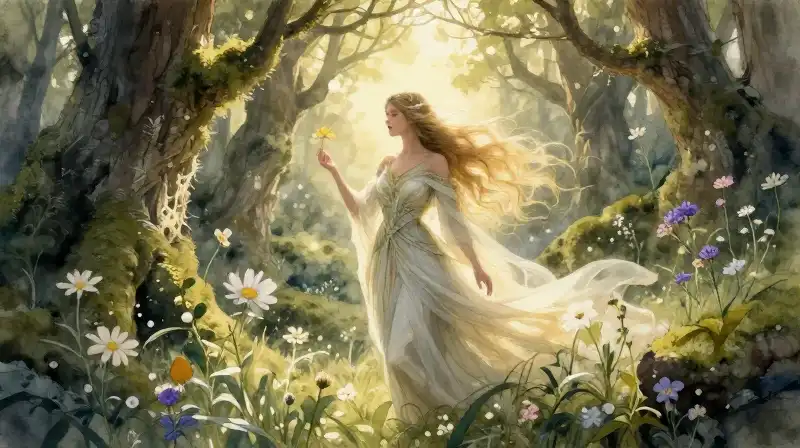
Known by various names and roles, Persephone embodies a duality: she is the radiant queen of spring and vegetation, but she is equally understood as the ruler of the Underworld. Her narrative functions primarily to explain the seasonal cycle—the necessary passage from the dormancy of winter back into the vibrant growth of life. To understand Persephone is to understand the ancient Greek approach to agriculture, death, and the promise of rebirth.
The Cycle of Abundance and Absence
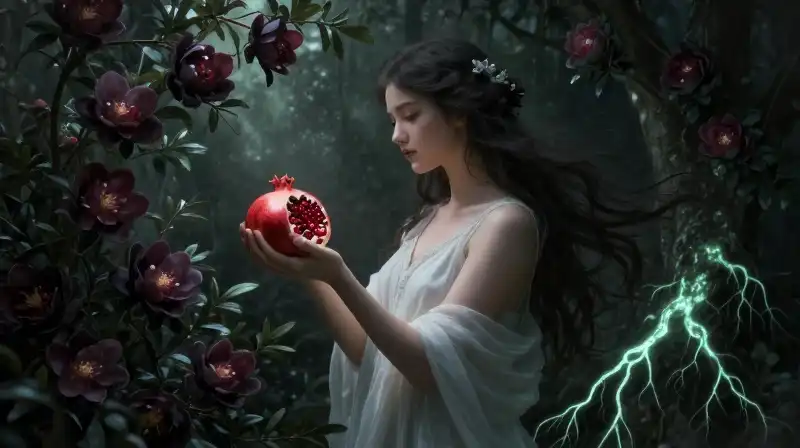
The traditional narrative posits a poignant story of separation and return. When Persephone, daughter of the earth goddess Demeter, is captured or moves to the realms of the Underworld, her mother’s profound grief causes the earth to wither, signaling the arrival and persistence of winter. Conversely, her journey back to the surface and her seasonal presence on earth is what restores fertility and triggers the bloom of growth 1.
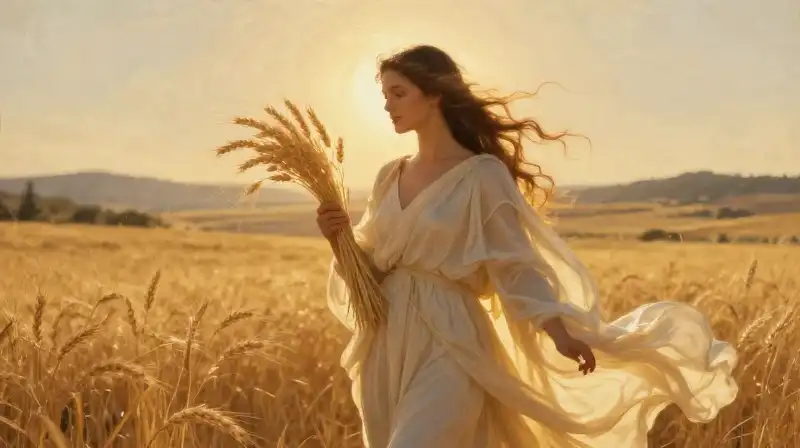
This cyclical journey between the subterranean realm and the surface world is a powerful mythological framework. It is not simply a story about a girl moving between places; it is a primary explanation for the perennial change of seasons 1. Persephone acts as the bridge between life and death, showing that growth requires a period of necessary decay and dormancy. Furthermore, in her capacity as a vegetation deity, she is intrinsically linked to the sustenance provided by grain crops, emphasizing her crucial role in agricultural prosperity 1.
Beyond the Fields: The Spiritual Life of the Mysteries
The significance of Persephone in ancient Greek society extended far beyond a simple agricultural metaphor; she was a key component of sophisticated spiritual practices. She was a central figure in the Eleusinian Mysteries, a religious ritual deeply rooted in the agrarian life of the communities that observed it 1.
The Mysteries offered initiates a spiritual journey—a promise of regeneration and a blessed afterlife, mirroring the cyclical death and rebirth celebrated in Persephone’s myth 1. Participating in these rites meant embracing the understanding that life, though subject to the harsh winters and the inevitable darkness of the Underworld, always offers a chance for renewal. This practice connected the mundane labor of farming directly to the transcendent hope of spiritual rebirth, reinforcing the community’s belief in enduring life forces.
Nuances of Divinity: Chthonic Roots and Seasonal Context
Scholarly analysis reveals that the identity of Persephone is far more complex than the simple definition of “goddess of spring” suggests. While modern interpretation often focuses on her role as a bringer of spring, many scholars suggest her primary ancient function was chthonic—meaning she was first and foremost connected to the deep, earthly, and often shadowed aspects of the Underworld 1.
The identification of Persephone with spring, then, is viewed by some scholars as a beautiful but later allegorical function derived from the reliable pattern of agricultural cycles. In fact, seasonal deities were not monolithic; various figures in the pantheon also governed different phases of the year, including Eiar, Theros, Phthinoporon, and Kheimon 1. This fluidity in the categorization of divine roles is also evident in how her name evolved, with historical variants including Korē, Persephassa, and Persephatta, reflecting regional or dialectal differences across ancient Greece 1.
Persephone and Elemental Life
Her relationship with the earth also had a powerful elemental dimension. Some interpretations link her even to the elemental life of the world, as seen in the philosophical texts of Empedocles, who used a variant of her name, Nestis, to refer to a deity who moistens mortal springs with tears 1. This suggests that her power over the surface was tied not just to fertility, but to the vital, moist energy of the earth itself.
Furthermore, the concept of a “god of” in Greek lore is rarely rigid. Ancient mythology frequently employed overlapping and fluid categories, sometimes involving deities with multiple, seemingly contradictory roles 1. Persephone’s identity is a perfect example of this fluidity: she is both the queen of the dead and the harbinger of growth. She is the nexus of the entire cycle.
Answering Questions: Love, Renewal, and Youth
For a reader seeking to understand her modern resonance, it is useful to contrast her with other deities. While the search often connects her to spring, her role is less about the romantic love celebrated by Aphrodite and more about the essential, regenerative love of the earth itself. Persephone embodies the renewal of the land, which is deeply tied to youth, life, and the maturation of crops. Her return symbolizes a promise of fertility and vitality, tying her directly to the concepts of youth and blooming life, though she is a goddess of cyclical power, not pure, romantic passion.
Ultimately, while Persephone is perhaps most celebrated as the goddess of spring and vegetation, her enduring power lies in her capacity to manage the absolute opposites: life and death, abundance and dormancy. She teaches that the promise of vibrant growth is only secured through the acceptance of the season of rest.
Synthesis of Meaning and Cultural Significance
To genuinely engage with the tradition of Persephone is to move past the idea of a simple “goddess of spring.” It is to appreciate a complex, nuanced system of beliefs designed to help communities navigate the hardships of the agrarian year. Her myth serves as a powerful cultural mechanism, validating the labor of the farmer, the hope of the initiate, and the enduring cycle of the universe. She reminds us that transformation—whether it be the change of a season or the beginning of a new life—is a necessary, cyclical return to balance after a period of necessary withdrawal and darkness.
References
Footnotes
Frequently Asked Questions
Is there a Greek goddess of spring?
Persephone is recognized in the ancient world as the radiant queen of spring and vegetation, although scholarly analysis notes that her identification with spring is viewed by some as a beautiful but later allegorical function.
Who is the goddess of love and spring?
Persephone is celebrated as the goddess of spring and vegetation. While people often connect her to spring, her concept of love is less about romantic passion and more about the essential, regenerative love of the earth itself.
Related Articles