Bia and Kratos: The Greek Embodiment of Physical Force and Power

Introduction
The study of ancient Greek myths reveals not just a collection of stories, but a profound cultural meditation on authority, power, and the forces that shape civil society. Among the pantheon of powerful figures, Bia and Kratos stand out as the embodiment of raw, physical force and irresistible might. Unlike deities whose power manifests through wisdom or artistry, these primordial agents are the divine enforcers of order. They represent the necessary “work” required to establish and maintain a new cosmic order—a concept fundamental to understanding the Greek perspective on justice and the mechanics of civilization.
The Divine Mechanics of Order
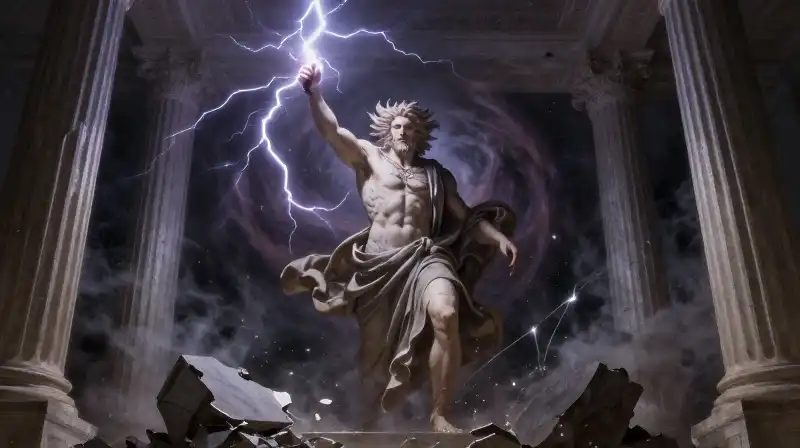
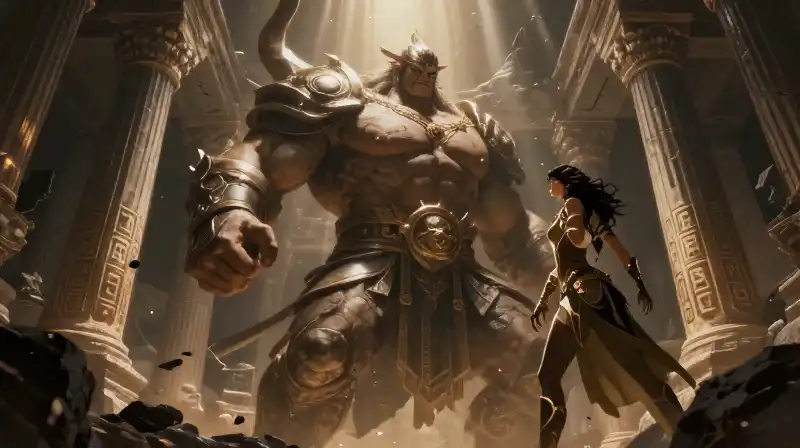
In the framework of classical Greek mythology, Bia and Kratos are not simply characters; they are functions. They belong to a circle of divine figures who operate within Zeus’s regime 1, serving as the ultimate agents of the king’s will. Their primary role was to enforce the cosmic hierarchy and uphold the decrees established after the tumultuous Titanomachy (2, 3). The binding of figures like Prometheus serves as a prime example of their operational power. Through acts of compulsion and sheer might, they functioned as the “guards of Zeus” 1, ensuring that the new order survived its violent birth. According to sources tracing classical literature, these deities embodied the necessary, often brutal, tyrannical aspects of authority—the force required to build a stable regime from chaos (2, 3). They represent the inescapable physical reality of entrenched power.
The Duality of Power: Force versus Foundational Influence
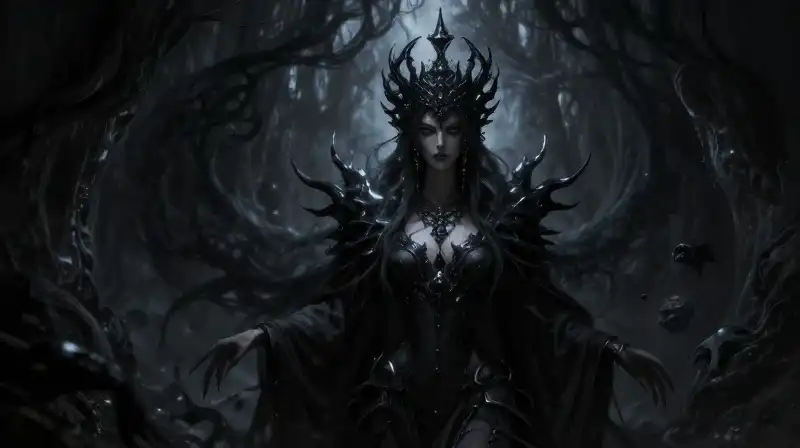
While Bia is universally defined by her attribute of physical might, the concept of power within Greek tradition is far more nuanced than raw strength alone. Scholarship notes a significant debate regarding the nature of powerful female deities, suggesting that while Bia’s power is rooted in compulsion and brute strength, other forms of power hold equal cultural weight 1. Consider the contrasting figures of Hestia and Nyx. Hestia, the goddess of the hearth, is cited as a “silent powerhouse” in the Olympian pantheon 1. Her strength lies not in combat or coercion, but in her foundational role as a peacemaker and the keeper of the community’s heart. In cultural practice, the widespread presence of hearth shrines demonstrates the communal value of her power—the stable, continuous, and influential power over daily life 1. Conversely, Nyx, the primordial goddess of the night, represents a different kind of immensity: foundational power that predates the established Olympian regime 1. Thus, while Bia and Kratos represent the coercive power of *authority* (the force of the state), Hestia and Nyx embody the power of *existence* and *essence*—influence and primordial depth.
Echoes in Roman Tradition
The ideas embodied by Bia and Kratos possessed a longevity and resonance that allowed them to survive transitions into Roman mythology. The concepts of physical force and compelling power associated with the Greek deities were eventually mapped onto Roman figures. In later Roman mythography, Bia and Kratos are seen as corresponding to the concepts of Vis (Force) and Potestas (Power) 1. This evolution shows how the cultural need to articulate the mechanics of ultimate authority persisted across different civilizations, even as the specific names and literary contexts changed.
Navigating the Concept of Strength in Greek Culture
Understanding Bia and Kratos provides insight into a multifaceted cultural view of strength. While they are characterized by a decisive, often harsh application of law and force 1, the overall cultural understanding of what constitutes strength in the Greek tradition extends far beyond mere physical imposition. Strength in this tradition encompasses several dimensions:
- The Force of Structure: Represented by Bia and Kratos, this is the mandatory, compelling power needed to enforce law and build societal frameworks (2, 3).
- The Strength of Stability: Represented by Hestia, this is the subtle, protective power that maintains the integrity and peace of the home and community 1.
- The Strength of Primacy: Represented by Nyx, this is the immense, foundational power that undergirds all other forms of existence 1.
The cultural debate between the brute force represented by Bia and the strategic influence represented by figures like Hestia or Aphrodite suggests that power is viewed as a spectrum rather than a single attribute.
Conclusion: The Weight of Authority
Bia and Kratos, defined by their compulsion and physical might, remain powerful symbols within the context of classical Greek myth. They are the narrative representation of the difficult, sometimes brutal, reality that new orders require uncompromising enforcement. However, to grasp the tradition fully is to recognize that force is only one part of a complex theological and philosophical landscape. Ultimately, the stories of Bia and Kratos serve not just as definitions of power, but as a cultural commentary on the immense effort and sometimes violent necessity of maintaining order—whether through the physical might of a divine enforcer or the quiet, enduring influence of the hearth.
References
Footnotes
Related Articles