Dark Greek Goddesses: Archetypes of Power and the Underworld

Introduction
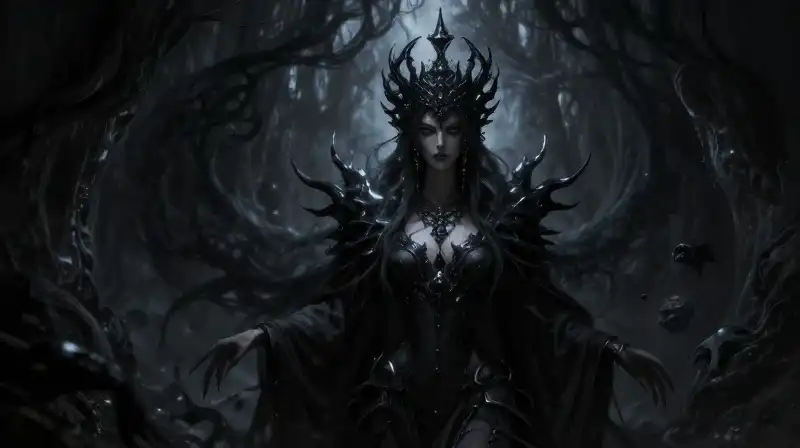
In the rich tapestry of global folklore, some figures are defined not by their brightness, but by the necessary truths hidden in the shadows. “Dark goddesses” represent a powerful archetype—archetypes that sit at the boundaries of life, death, law, and change. For the readers interested in the traditions that shape worldviews, these figures offer more than ancient myths; they offer profound insights into the human experience of transition, vengeance, and the vital, often difficult, work of healing. In Ancient Greece, this realm of the “dark” was not one of mere chaos, but a structured, powerful domain known as the *chthonic*—the world of the Underworld. Within this system, figures like Hecate, Nyx, and Melinoë were vital architects of transitions, embodying the complex duality of existence. Rather than seeing them as purely malevolent entities, contemporary scholars and spiritual practitioners interpret these goddesses as potent forces of transformation, guiding souls and demanding a rigorous respect for the cycles of existence.
The Geography of Liminality
To understand the influence of these deities, one must first grasp the geography of their domain. The Greek Underworld was not a simple pit, but a complex, multi-layered environment defined by profound boundaries. It was a place where the living and the deceased met, a realm of “liminality.” This transition is physically represented by the rivers, most notably Acheron, the river of pain, and the Styx, whose dark waters were famously used to compel sacred oaths 1. Crucially, this realm was governed by the concept of profound forgetting. The goddess Lethe, personified as the river of oblivion, served to ensure that the souls of the dead moved forward, having forgotten the specifics of their former earthly lives 1. This cultural mechanism reflects a deeply human necessity to move past the weight of the past.
Guardians of the Gate: Hecate and the Transition
Among the most significant figures embodying this shadowed power is Hecate. She holds a multifaceted role, recognized not just as a spirit of the deceased but as a goddess of magic, necromancy, and the realm of ghosts (1, 2). For those who hold this tradition, Hecate acts as a powerful boundary-crosser, directly connecting the living world to the realm of the dead through her iconography, often depicted emerging with a train of torch-bearing Lampades and demonic Lamiae 1. Hecate’s modern interpretation is frequently centered on her complex duality. Some observers view her as a “mixed bag” of elements, simultaneously embodying light, dark, and potent justice, depending on the intent of the seeker or devotee 1. This complexity is echoed in the contemporary understanding of “dark goddesses,” which often represent the necessary shadow aspects of the human psyche, offering guidance toward deep transformation rather than pure chaos 1.
The Dual Sovereignty of Persephone
While Hecate controls the boundaries of the realm, Persephone functions as a powerful symbolic bridge between life and death. According to 3, she is a liminal deity: Queen of the Underworld who symbolizes the seasonal bringer of spring. Her cyclical journey—from the warmth of the surface to the depths of Hades—is a metaphor for the cycles of decay and rebirth that govern all life. Her story speaks to the tradition’s understanding that death is not an end, but a necessary phase of a larger cycle. The underworld was further structured by figures dedicated to divine judgment. The Erinyes, goddesses of vengeance and retribution, were summoned from Hades to punish moral transgressions 1. These entities embody the cultural mandate that every transgression eventually demands reckoning, a stern but necessary component of maintaining cosmic order.
Spirits of the Threshold: Melinoë and the Night
Deep in the shadows, the functions of guidance and fear are handled by specialized figures. Melinoë, an underworld Daemon, is notable for her function in haunting the earth and guiding lost spirits. Her visual representation, characterized by one side stark white and the other pitch-black, is a powerful cultural marker of her inherent duality, existing precisely where light and darkness meet 1. Another related figure is Nyx, the primordial goddess of the night. She is linked to the deepest parts of the underworld and its dark mists, grounding the entire concept of the underworld in a foundational, mysterious cosmic energy (1, 3).
Echoes in Other Cultures: Universal Archetypes
The theme of the powerful, complex female ruler of the underworld is not unique to the Greek tradition, suggesting that the archetype itself is universal. In Mesopotamian mythology, Ereshkigal is specifically identified as the ruler of the underworld and sister to Inanna/Ishtar 1. Furthermore, the figure of Lilith, found across diverse texts including Mesopotamian and Jewish folklore, is associated with themes of rebellion, independence, and complex sexuality, aligning with the archetype of the powerful, disruptive female (2, 3).
The Search for Depth: What Do These Goddesses Mean Today?
When asking “Who is the darkest Greek goddess?” the answer shifts from a simple identification of a character to a philosophical question about the nature of power. For many contemporary spiritual communities, the interest in dark goddesses stems from a rejection of purely “light” narratives. Instead, they embrace the understanding that wholeness requires acknowledging the shadow—the parts of the psyche that are suppressed, fearful, or repressed. These archetypes serve as reminders that power is not unidirectional. They are not merely symbols of doom but are tools for introspection, encouraging practitioners to confront their own fears, embrace their own messy complexity, and find the source of true, transformative strength. This perspective turns ancient myths into living guides for personal healing and self-understanding.
Synthesis of Power and Context
The “dark goddesses” of the Greek Underworld are not merely villains in ancient storytelling; they are vital custodians of reality, holding the boundaries of transition and the balance of justice. They exist in the “Living Culture” of myth and modern ritual because they acknowledge the true nature of human experience: that life is defined by cycles, by loss, and by the transformation that only occurs when one dares to look into the deepest shadows. Understanding them requires more than reading a definition; it requires an appreciation for the duality inherent in human and cosmic existence—the idea that destruction and potent beneficial power often occupy the same space.
References
Footnotes
Frequently Asked Questions
Who is the darkest Greek goddess?
The article suggests that the question is philosophical, viewing dark goddesses as archetypes that represent the shadow aspects of the human psyche. Melinoë is specifically described as an underworld Daemon whose visual representation is characterized by one side stark white and the other pitch-black.
Related Articles