Urd and the Norns: Understanding Fate in Norse Mythology

Introduction
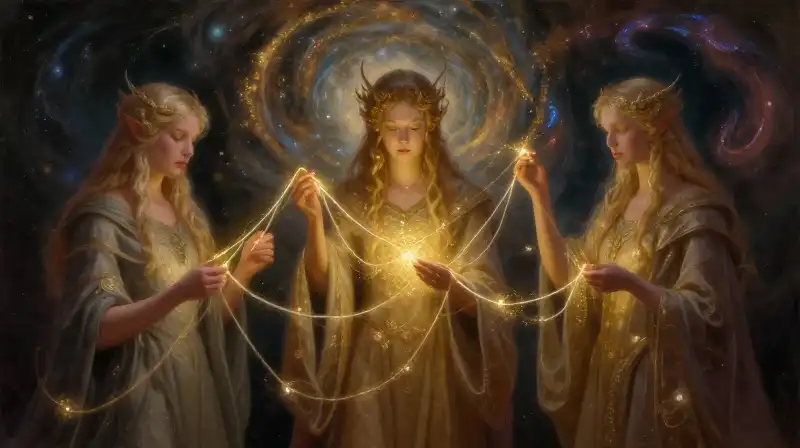
In the vibrant folklore and complex cosmology of the Norse tradition, the concept of fate—or *urðr*—is not merely a passive force; it is the fundamental engine that drives existence and shapes the ultimate destiny of every being, from humble mortal to all-powerful god. To a reader seeking to understand the heart of this cultural heritage, it is important to know that fate is viewed as the primary determinant of all trajectories, a force so pervasive that it structures the very fabric of the cosmos 1. Rather than a single, monolithic divine decree, fate is managed and spun by a trio of powerful female entities known as the Norns. These figures occupy a unique and vital place in the Norse worldview, serving not as subjects of destiny, but as the masters who actively weave life’s threads.
The Guardians of the Thread: Location and Function
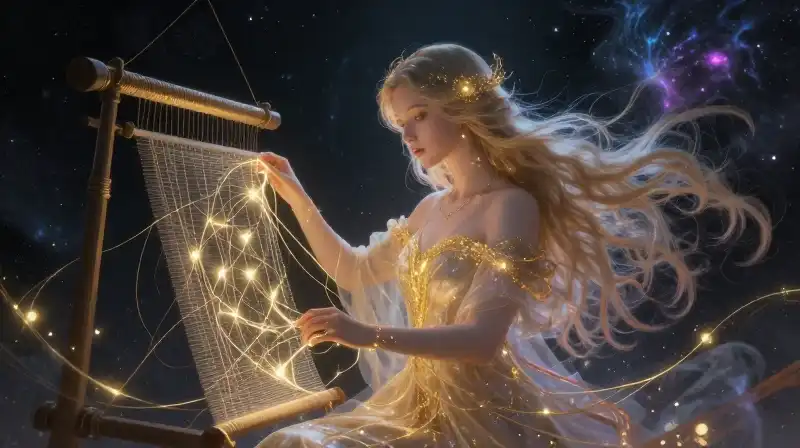
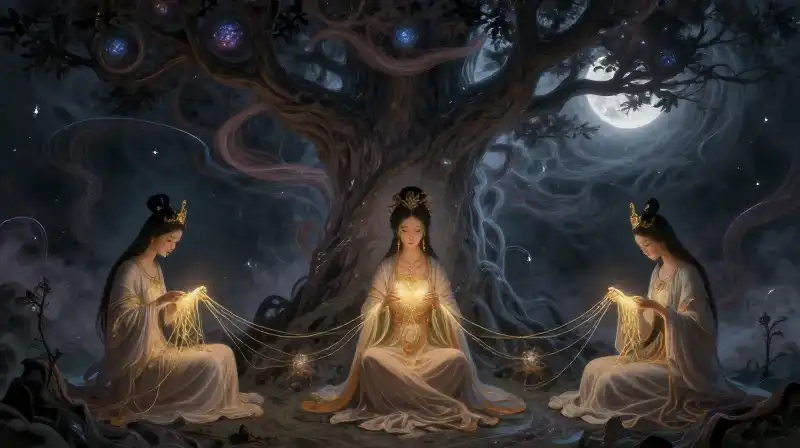
The Norns—Urðr, Verðandi, and Skuld—are described as the architects of destiny, residing in the mythical stronghold of Ásgarðr. Their sacred workshop is the well known as Urðarbrunnr, situated deep beneath the roots of Yggdrasil, the mighty world ash tree (1, 2). This location symbolizes the intersection of the physical and the primordial, representing the very source of life and the beginning of all time. The functions of the Norns are meticulous and ancient. They are responsible for establishing fundamental laws of life and measuring the destiny of every human and god (1, 2). Their process is far from a simple judgment delivered in a cosmic moment; it is a continuous, measured process that begins even before a child draws their first breath (1, 2). According to traditional accounts, they operate by spinning threads of life, cutting marks into figures (likely symbolic of human suffering or milestones), and measuring these lives against the fixed timeline of existence (1, 2). This suggests a deep, intimate, and perhaps inescapable connection between the Norns and the individual journey.
The Philosophy of Inexorability and Arbitrary Will
A common misunderstanding among outsiders is that the Norns represent a morally guided, benevolent cosmic order. However, the Norse worldview presents fate as something profoundly different—it is an arbitrary, senseless, and profoundly inexorable force. The Norns are portrayed not as cruel, but as operating outside the realm of human morality; they exist purely to govern destiny according to their own timeless will, devoid of specific moral intent or judgment 1. The concept of destiny is also linguistically complex, having deep roots in related cultures through terms like *Urðr* (Old Norse), *Wyrd* (Old English), and Proto-Germanic roots like *Wurðiz* (3, 1). This interconnectedness highlights that the concept of predetermined destiny was a common thematic thread across Germanic peoples. Yet, the nature of this fate—fixed and unalterable—imparts a powerful element of inherent tragedy to the entire Norse worldview 1. This fatalism is the underlying principle that ensures the eventual collapse of the cosmos during the great cycle of Ragnarok 1.
The Heroic Response: Fighting the Fates
If fate is predetermined, why does Norse culture place such a high value on courage, honor, and fierce struggle? This tension—between the absolute power of the Norns and the valor of the mortal—is perhaps the most compelling aspect of the tradition. While scholarly interpretations suggest that fighting against fate is ultimately futile, akin to rowing a boat against a fierce wind 1, the Viking cultural response to this inexorable destiny was not one of passivity or despair. Instead, the culture found its highest honor in the *manner* in which one met their doom. The existential crisis of knowing one’s life is fixed transforms the purpose of life from achieving eternal happiness to achieving the most glorious possible death 1. The prophecies recorded in texts like the *Poetic Edda*, such as *Völuspá*, describe the Norns pronouncements that serve as the foundational truths for life. The human response, therefore, is to embrace the struggle itself. The value is placed on the heroic fight, not on the outcome of that fight (3, 1, 2).
Synthesis: Understanding the Living Meaning
To grasp *urðr* is to understand a powerful philosophical paradox: the universe is fixed by forces beyond human control, yet human life is defined by the defiant, heroic spirit. The Norns and the concept of fate in Norse heritage provide a cultural framework for acknowledging vast, overwhelming cosmic forces—such as the unpredictable nature of life, historical inevitability, or personal adversity—while simultaneously elevating the human will and its expression of courage. For the contemporary audience, understanding this tradition is not about accepting a morbid predestination, but about recognizing that the dignity and significance of one’s life are measured by the nobility with which they face the unseen forces that govern their existence.
References
Footnotes
How to Weave and Measure Destiny according to the Norns
Establish Fundamental Laws
The Norns are responsible for establishing fundamental laws of life and measuring the destiny of every individual, whether human or god.
Spin Threads of Life
Initiate the process by spinning the individual threads of life, which is a continuous and measured operation that begins even before a child's birth.
Incorporate Milestones and Suffering
Make symbolic cuts into the life threads to represent specific milestones or moments of human suffering.
Measure Against Fixed Timeline
Measure the resulting life threads against the fixed timeline of existence to determine the ultimate destiny of the being.
Related Articles