What Are Folk Creatures? Global Myths and Legends Explained

Introduction
Folk creatures are far more than just imaginative beasts found in old stories; they are complex cultural mirrors. They are the narrative architecture used by communities to process their relationship with the unknown, define the boundaries of their own societies, and explain the mysterious forces of the natural world. In the context of global folklore, a folk creature is a supernatural entity that has emerged from collective imagination, often serving as a living symbol of a community’s deepest fears, highest aspirations, and unique worldview. These figures—ranging from ancient, cosmic symbols to modern cryptids—are not merely characters; they are repositories of shared cultural meaning.
The Boundary: Monsters, Wilderness, and Civilizing Forces
One of the primary functions of legendary creatures is to articulate the border between the ordered world of human society and the untamed wilderness. These figures, often monstrous, serve as powerful warnings about the limits of human knowledge and control. The archetype of the giant, animal-based monster is particularly potent across global traditions. The Wendigo, for instance, remains a stark staple in North American folklore 1, embodying not just a physical beast, but a powerful cultural critique of insatiable hunger or the dangers of consuming one’s own humanity. Similarly, in Iroquoian and Algonquian traditions, the concept of the Stiff-Legged Bear encapsulates this encounter with the wild 1. These creatures are not just threats; they are forces that exist outside the neat parameters of human civilization. Even in the modern context, cryptids like Sasquatch and Bigfoot fulfill a similar narrative function, representing the vast, inaccessible mystery of the wilderness in North America (1, 2).
The Fluid Self: Transformation and Shapeshifting
Across countless cultures, the ability to transform is a fundamental motif, symbolizing the fluidity of identity or the seamless connection between the divine and the earthly. Transformation narratives allow cultures to explore the instability of existence and the complexity of identity. This theme is vividly demonstrated by the concept of the shapeshifter. In Tlingit traditions, the Kushtaka, described as a “land otter man,” illustrates a specific local belief in the fluidity between human and animal forms 1. Globally, the narrative of the nymph Callisto being turned into a bear by the Greek goddess Hera demonstrates how divine power dictates the physical fate of mortals 1. A parallel thread runs through the divine sphere, where the transition between forms often signifies spiritual change. The Greek myth of the demigod Cerambus transforming into a wood-gnawing beetle illustrates how mythical beings can embody a shift from celestial or heroic form into a mundane, natural state 1.
Cosmic Roles: Guardians, Symbols, and Celestial Paths
Beyond the fears of the wild, many folk creatures exist to maintain the cosmic order. These creatures often bridge the terrestrial and the celestial, acting as navigators or guardians of cosmic cycles. In Ancient Egyptian tradition, the Khepri beetle serves as a profound symbolic representative of the sun, symbolizing the act of creation as the beetle pushes the sun across the sky 1. This emphasis on cyclical, transformative natural processes is mirrored in Norse mythology, where the Víðópnir, a rooster, is positioned atop the world tree, Yggdrasil, witnessing the flow of time and destiny 1. In the lore of the Abenaki, Wuchowsen is revered as one of four wind spirits, traditionally depicted as a giant eagle residing atop a mountain 1. Such creatures suggest a reverence for specific geographic markers (mountains, winds) as vessels for divine or elemental power, connecting local geography directly to the mythical order.
East Asia’s Pantheon of Tricksters and Divinity
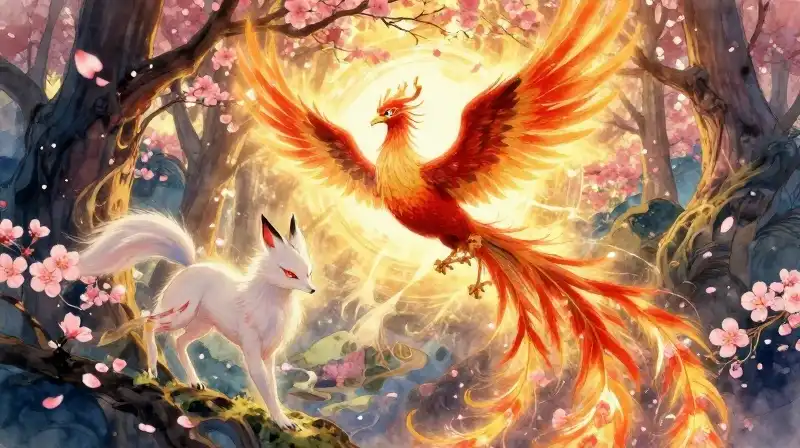
East Asian folklore possesses an exceptionally rich tapestry of mythical fauna, particularly concerning the fox spirit. The concept of the fox spirit is widespread, serving as a vessel for complex morality—ranging from divine trickster to lethal predator. The Kumiho of Korean tradition, the Kitsune of Japan, and the Huli jing of Chinese folklore all operate within this broad conceptual space 1. Each maintains regional distinctions, but they collectively represent the cultural fascination with beings that possess both profound beauty and unpredictable cunning. On a grander scale, the Sky Fox in Chinese mythology is described as a celestial, golden-furred, nine-tailed spirit with a history spanning a thousand years 1, underscoring a tradition where power and age are physically manifested in form. Conversely, Japanese folklore contains creatures like the Ōmukade—a giant man-eating centipede—which possess specific, often bizarre, vulnerabilities, such as being susceptible to human saliva 1. These detailed vulnerabilities prevent the creatures from becoming pure monsters, grounding them within the narrative structure of a challenge or a specific cultural law.
When Myth Meets the Human Face: Composite Creatures and Divine Archetypes
Another powerful function of folk creatures is to embody complex human concepts through hybrid forms. Composite creatures—those with attributes of multiple beings—often represent inherent tensions or unresolved dualities within a culture. The Minotaur of Greek myth, combining the head of a bull with a human’s body, is a prime example 1. This figure was a potent symbol of civilized order struggling against untamed, primal force, serving as a powerful narrative tool for exploring themes of civilization versus the savage id. Similarly, the Alectryon, a rooster tasked with announcing the arrival of Helios 1, represents the fusion of a mundane creature with a critical cosmological function—bridging the human timeline with the eternal movement of the sun.
Addressing the Query: What Are Some Folklore Creatures?
When exploring the vast landscape of mythical entities, the types of folklore creatures generally fall into categories based on their relationship to human society:
- The Elemental/Cosmic: Beings like the Wuchowsen (wind spirit) or the Khepri beetle, which represent universal forces and maintain natural cycles 1.
- The Shape-Shifter: Figures such as the Kushtaka or the mythological transformations of Callisto, which explore the boundaries of identity and form.
- The Regional Guardian/Monster: Specific threats tied to local geography, such as the Wendigo or the Stiff-Legged Bear, which inform local environmental beliefs (1, 2).
- The Celestial/Trickster: Highly developed beings like the nine-tailed foxes (Kumiho, Kitsune), who embody cultural shifts in morality and power 1.
The Living Legend: Why These Creatures Matter Today
Ultimately, the enduring appeal and significance of these folk creatures lie in their function as cultural preservation mechanisms. As technology and modernity displace traditional communal structures, the stories of the monstrous and the magical remain vital. They provide a shared vocabulary for discussing fears, ecology, and spirituality. Whether it is the mythological representation of a powerful predator, like the Hyena or various feline forms documented in creature collections 1, or the ancient solar symbol of the Khepri, these creatures ground a culture in its own history. They remind communities that the world is not only the rational, scientific reality we observe, but also a layered existence of symbols, spirits, and stories. They are the enduring evidence of human imagination shaping the landscape of belief.
References
Footnotes
Frequently Asked Questions
What are some folklore creatures?
Some folklore creatures include the regional monsters like the Wendigo and Stiff-Legged Bear, the celestial tricksters such as the Kitsune, and the elemental Wuchowsen. Other examples range from the shape-shifter Kushtaka to the composite beast Minotaur, illustrating the creatures diverse roles in myths.
Related Articles