Famous Egyptian Gods: An Overview of the Ancient Pantheon

Introduction
The ancient Egyptian religious system is often simplified by academic texts into a rigid pantheon of names, but to understand this tradition is to grasp a spiritual landscape defined by cycles, balance, and local devotion. The “gods” of Egypt were not a singular, monolithic team of deities, but a decentralized, dynamic web of figures who governed every facet of life—from the rising of the sun and the annual flooding of the Nile to the passage of a soul into the afterlife. For the people who lived along the Nile, these deities were active participants in their world, and the meaning of a specific god often changed depending on their community or region (1, 2). This exploration moves past the definitive list to look at the philosophical underpinnings of this complex heritage and how these forces shaped a civilization.
Ma’at: The Essential Concept of Cosmic Order
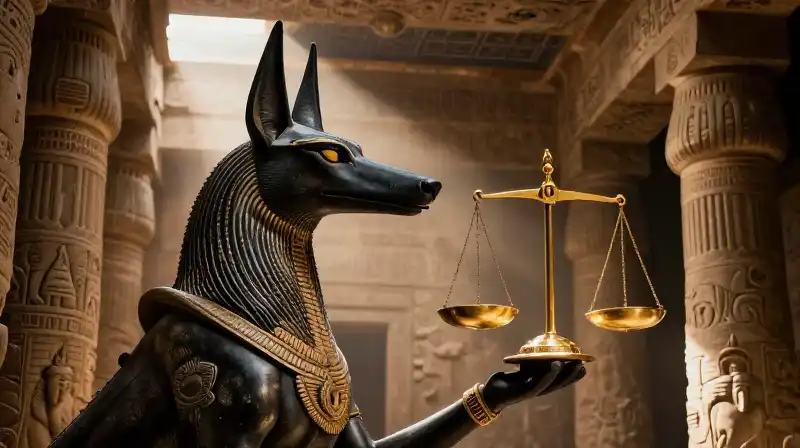
At the heart of the Egyptian worldview lies the concept of Ma’at. More than just a “goddess,” Ma’at represents the fundamental principle of social order, cosmic balance, and truth. It is the glue that held the universe together, dictating that creation, life, and death operated according to a sacred, predictable harmony. The actions of the gods were inherently tied to the maintenance of Ma’at; they ensured that the sun rose, the crops grew, and that the natural rhythms of existence unfolded correctly. While scholars continue to debate the precise hierarchy of the deities who enforced this order, Ma’at remains the foundational cultural concept, shaping how Egyptians viewed their society, their governance, and their relationship with the divine 3.
The Roles of the Divine: Creation, Protection, and Judgment
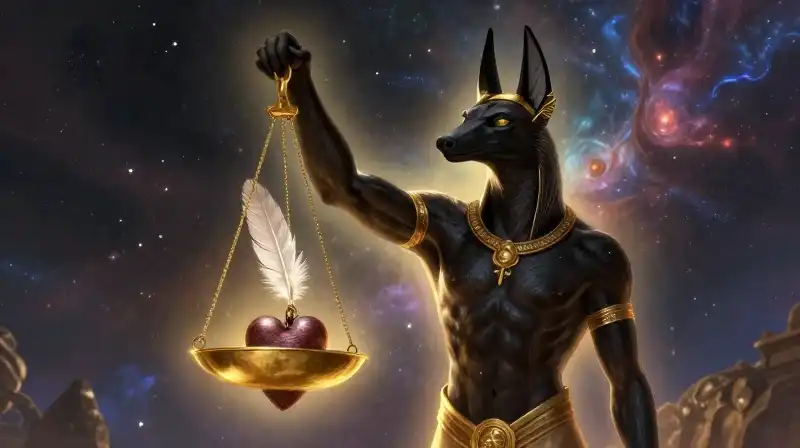
The roles assigned to the various Egyptian deities covered a vast range of human concerns. The pantheon managed the great mysteries of existence. Figures were central to the creation narrative, establishing the conditions necessary for life to begin. They were crucial protectors of the community, guarding the borders and offering strength. Perhaps their most profound function was guiding souls through the transition to the next life. Deities often embodied dual roles; for instance, the Sun god Ra represented life and the daily cycle of rebirth, while figures like Anubis represented death, judgment, and the preservation of the soul 3. In communities, the popularity of a specific god was often tied to local concerns. While universal figures like Osiris or Ra commanded widespread reverence, many minor deities and theogods associated with specific local towns, particular plants, or animals held immense significance within their immediate communities (3, 1).
Key Figures in the Living Tradition
While a definitive list is nearly impossible due to the decentralized nature of the ancient faith 3, several deities consistently appear in discussions of Egyptian culture and are pivotal to understanding the broader tradition.
Isis, one of the most recognizable figures, is revered for her legendary devotion and her enduring cult, which has been practiced for over 3,000 years. Her name literally translates to “throne,” suggesting her ultimate status and power within the spiritual realm 3. Other powerful figures include Amun-Ra, who became central to later Egyptian worship, and Ra himself, the solar god whose cycles governed the calendar and life force. Osiris, the god of the afterlife and the resurrected cycle, holds a place of significance in funerary practices. Anubis, known for his connection to death and the solemn act of weighing the heart, provided the community with a tangible connection to the journey of the soul (3, 1).
The nature of the gods is also defined by scholarly debate. Researchers point to significant complexities in the relationships between figures such as Sekhmet, the fierce warrior and sun goddess, and Bastet, the beloved cat goddess. Some scholars suggest they may represent facets of the same protector archetype, while others maintain their distinct identities, reflecting the nuanced ways in which these figures were understood by the populace 3.
The Shifting Landscape of Worship
The understanding of the Egyptian pantheon is not a static one; it has been fluid and subject to profound change over millennia. The prominence of certain gods fluctuated dramatically across different eras. Different organizational frameworks, such as the Triad, Ennead, or Ogdoad, were used to categorize the pantheon, though these scholarly groupings often do not reflect which gods were most beloved or frequently worshipped by the general population 3. The religious focus could shift dramatically, as seen in historical periods where the worship of a specific deity took precedence. For example, the intense focus on the Aten during the reign of Akhenaten marks a significant deviation from the established cult of major figures like Osiris or Amun-Ra, demonstrating the tradition’s susceptibility to shifts in political and theological power (Competitor Snippet). This evolution underscores a key point: the spiritual life of Ancient Egypt was not a set of immutable rules, but a reflection of the prevailing social and political forces.
Decoding the Mythology: Caution and Context
When approaching Egyptian mythology, it is crucial to distinguish between academic cataloging and the actual cultural experience. The way modern scholars discuss these beliefs is often complicated by external influences. Researchers have observed that the common understanding of Egyptian mythology may be significantly filtered through later colonial, imperial, and patriarchal interpretations, which do not fully capture the decentralized and holistic nature of the original spiritual tradition 3. To genuinely understand this heritage, it is necessary to look past the simple lists and definitions. Instead of asking “Who are the main gods?”, a more productive question is, “How did the concept of cosmic balance (Ma’at) translate into the daily life and communal beliefs of the people?” The tradition of the gods, therefore, serves as a window into the sophisticated attempts of ancient communities to find order in a vast and sometimes chaotic universe. It is a living testament to human ingenuity in the pursuit of meaning, where the divine and the domestic were inextricably linked in a vibrant tapestry of local and universal reverence.
References
Footnotes
Related Articles