1031 words
5 minutes
Odin and Santa: Tracing the Roots of Northern Myth and Legend

Elena Rivera Folklore & Heritage Editor
Published: 2026-09-29
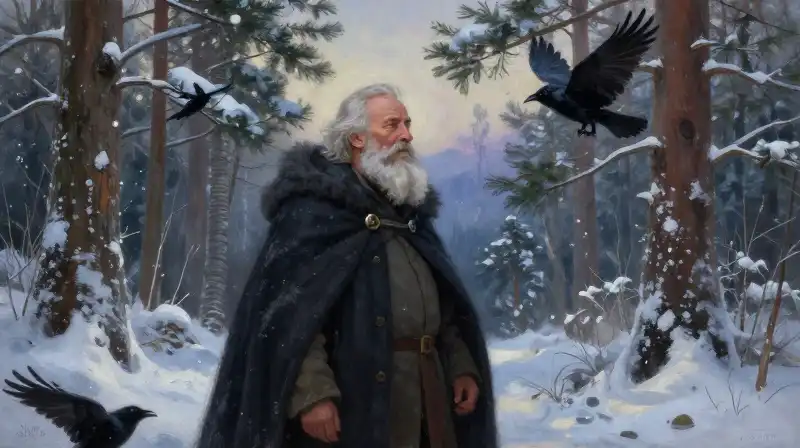
Introduction The image of Santa Claus—a jolly, bearded figure in red, traveling the skies on a sleigh—is a global icon of modern childhood. Yet, the lineage of this figure is far more complex than a simple origin story. It is not the result of a single legend, but rather a deep and vibrant cultural synthesis. The contemporary figure of Santa is widely accepted as an amalgamation of diverse figures and traditions spanning centuries and continents, drawing influences from figures like St. Nicholas of Myra, the Dutch Sinterklaas, and various Northern European Solstice deities (1, 2). At the heart of scholarly debate lies the connection between this modern icon and the ancient Norse deity, Odin. While some proponents argue for a profound influence through comparative lore, others maintain that the link is an unprovable modern interpretation, born from the powerful resonance of northern winter myths (1, 2). Tracing the roots of Northern Myth and Legend is not merely an exercise in historical taxonomy; it is an exploration of how human tradition adapts, blends, and lives on through the stories we tell and the rituals we practice.
The Ancient Crucible of the Midwinter Feasts To understand the layers of Santa, one must first look back to the ancient pre-Christian observance of Yule. These midwinter celebrations, observed by ancient Germanic peoples, significantly predate the Christian holiday of Christmas. These early feasting traditions were not reserved for one night; historical practice often saw midwinter feasts lasting as long as twelve days 1. In this ancestral world, the natural rhythm of the solstice dictated the spiritual focus. In pre-Christian Norse practice, Odin held a central and powerful role within these midwinter sacrifice feasts. Snorri Sturluson’s 13th-century accounts reveal the complex nature of these blót feasts, which involved communal feasting, sacrifice, and the ceremonial blessing of mead 1. During these gatherings, Odin’s goblet was notably emptied first, signifying a wish for “victory and power to his king” before offerings were made to other deities like Niord and Freyja 1.
The Mystery of the Supernatural Gift-Giver The concept of a supernatural being associated with the winter months is deeply rooted in these old practices. This figure often manifests through the myth of the Wild Hunt. The Wild Hunt was a powerful procession that traversed the winter sky, traditionally led by Odin. This supernatural journey reportedly served to bring gifts to those in the community deemed deserving (2, 3). This ancient imagery—a powerful, swift figure gliding through the darkest time of the year—provides a cultural foundation for the later myth of the benevolent gift-bringer. However, it is important to distinguish this raw, mythological concept from the modern, domesticated figure of Santa. The original figures were not inherently jolly or portly; the ancient Saint Nicholas, for example, was depicted as a bishop deeply associated with charity to the poor, a stark contrast to the commercial depiction of Santa seen today (1, 2).
A Convergence of Cultures: The Amalgamation of Tradition The journey from the fierce, mythical Wild Hunt leader to the jolly Claus is a story of cultural blending. As historical narratives evolved and absorbed new religious influences, elements of these traditions merged. The figure of St. Nicholas, with his focus on giving, provided a strong Christian anchor to the idea of gift-giving. This tradition then blended with regional figures, such as the Swedish Tomten. The Tomten himself appears to be a unique blend of various northern European December figures and influences from St. Nicholas 1. The modern Santa Claus, therefore, is a result of historical amalgamation, a figure cemented by powerful cultural myths and formalized by commercial depictions during the 19th and 20th centuries 1. Factors like the introduction of reindeer—a development widely noted by historians as occurring much later than the original myths—further shape the modern narrative 1. Practices like caroling (or wassailing) also speak to this deep continuity; these traditions have roots in Anglo-Saxon and Old Norse customs, where peasants would visit feudal lords to request gifts and treats in exchange for songs 1.
Clarifying the Myth: The Odin vs. Santa Debate The enduring debate over Odin’s influence on Santa is a prime example of how popular culture interprets historical ambiguity. While the similarities between the powerful, gift-associated figures of the Norse past and the modern Santa are undeniable, scholarly discussion emphasizes critical nuance. Some historians caution that while we can draw parallels between the Wild Hunt and Santa’s celestial journey, projecting contemporary customs backward into the Viking Age is speculative and often lacks rigorous historical sourcing 1. The original religious rituals of the Viking Age were complex and often involved serious sacrifice and ceremonial blessing, as documented in Snorri Sturluson’s accounts, which stand in contrast to the lighthearted, universally accepted myth of Santa today 1. To answer common inquiries regarding the pagan roots of this tradition, the understanding is as follows:
- Is there a pagan version of Santa? Yes. The ancient Solstice figures and the mythological concept of the Wild Hunt, led by deities like Odin, represent the ancient, pagan foundation of the gift-giver in Northern folklore.
- Did Vikings have a Santa Claus? Not the specific, modern, jolly figure. However, the *spirit* of the powerful, supernatural winter figure who brings gifts to the deserving was deeply embedded in their mythology (2, 3).
The Living Tradition: Regional Variants and Modern Meaning The significance of this history is not purely academic; it lives in the regional celebrations today. For example, the Swedish Tomten remains a vital part of winter culture, embodying the blend of ancient Solstice reverence and the benevolent spirit of the gift-giver 1. By understanding the deep currents of Northern Myth, we move beyond simply defining a character. We recognize the profound ways that people celebrate, create, and live together around the concept of midwinter. The Santa narrative, in its modern form, functions as a final, deeply human stage in a long tradition—a cultural memory that synthesizes the fierce power of ancient gods with the enduring human desire for wonder and benevolence during the darkest time of year. The tradition matters because it demonstrates the remarkable capacity of culture to adapt, retaining the primal echoes of midwinter sacrifice and celestial procession while creating a new, unifying symbol for joy.
References
Footnotes
Frequently Asked Questions
Is there a pagan version of Santa?
Yes, ancient Solstice figures and the mythological concept of the Wild Hunt, led by deities like Odin, represent the ancient, pagan foundation of the gift-giver in Northern folklore.
Is Krampus Norse pagan?
The provided article does not mention Krampus, so it is not possible to determine from the text whether this figure is Norse pagan.
Did Vikings have a Santa Claus?
Vikings did not have the specific, modern, jolly figure of Santa Claus. However, the spirit of the powerful, supernatural winter figure who brought gifts to those in the community was deeply embedded in their mythology, such as the Wild Hunt led by Odin.
Written by Elena Rivera
Folklore & Heritage Editor
Folklore and heritage editor passionate about the myths, rituals, and traditions that connect generations across cultures.
View all articles by Elena →
Related Articles
The Original Jack-O-Lantern: Tracing its History and Roots
Trace the folklore of the original jack-o-lantern, from protective turnips in Ireland to the shift driven by migration and the legend of Stingy Jack.
996 words
|
5 minutes
Asgards All-Father: Exploring the Myth and Legacy of Odin
Uncover the legacy of Odin, All-Father of Asgard. Examine his deep pursuit of knowledge and the sacrifices he made to ensure the stability of the Nine Realms.
852 words
|
4 minutes
Woden and Odin: Tracing the Germanic Roots of the Norse Deity
Trace the complex journey from Woden to Odin. Discover the deep linguistic and cultural roots of the Germanic lord of frenzy and how he evolved into the multifaceted Norse deity.
1066 words
|
5 minutes