Egyptian Mythology: A Complex Look at the Gods and Goddesses

Introduction
To approach the ancient Egyptian religious traditions, or the pantheon of its gods and goddesses, is not to encounter a single, unified theological system, but rather a vast, evolving tapestry of local beliefs and cosmic narratives. The British Museum has documented that these traditions are widely varied, lacking the singular, coherent doctrine found in later world religions 1. Instead, they represent a “complicated hodgepodge of cults and sects” that resonated differently across Upper and Lower Egypt. For the reader seeking to understand this heritage, the key is to move beyond a simple definition of deities and instead recognize the profound regionalism and the sheer complexity of how the people lived, created, and worshipped in a world governed by cyclical change and divine will.
The Regional Landscapes of Divinity
The Egyptian gods were not monolithic; their roles and powers shifted dramatically depending on the city or kingdom where they were revered. This regional specialization is vital to understanding the cultural ecosystem of the time. Whether you are seeking specific Egyptian gods and goddesses or interested in their family trees, you must first acknowledge the local “hotspots” of worship.
Heliopolis and the Dawn of Creation
In the city of Heliopolis, the narrative often centered on the Ennead—a powerful group of nine deities that established one of the earliest cosmologies. Led by Atum, the origin story moves from creation to the formation of Shu and Tefnut. These figures then begat Geb and Nut, who finally brought forth the most recognizable figures of the Nile Valley: Osiris, Set, Isis, and Nephthys 1. This school of thought provided a foundational model for how the universe came into being from primordial existence.
The Power Centers: Memphis and Thebes
As Egyptian civilization grew in power, so did the importance of central cities, each claiming a unique divine patronage. Memphis was traditionally anchored by the belief in Ptah as the supreme creator deity. This concept evolved over time, particularly into the Late Period, when Ptah merged with other figures to become Ptah-Sokar-Osiris, a god deeply connected to the realm of the dead 1. Meanwhile, the capital of Upper Egypt, Thebes, became the spiritual heart of the nation, centered around the magnificent god Amun. Amun’s cosmology was distinct, conceptualizing him as a being so subtle and powerful that he existed concealed even from the other gods themselves 1.
Diverse Schools and the Primal Waters
Further refinement in belief is seen in the Hermopolis school, which focused on the Ogdoad—a “group of eight.” These figures represented various male and female pairs of deities who lived in the primal waters, serving as aspects of the universe prior to the act of creation 1. This demonstrates that Egyptian religion was not governed by a single holy book or one single theological school, but by a spectrum of sophisticated, competing, and often overlapping ideas.
The Dynamics of Change: Syncretism and Evolution
Perhaps the most defining characteristic of Egyptian mythology was its profound ability to merge, or syncretize, different divinities. This was a continuous process of divine absorption and unification, driven by cultural power and popular demand. One of the most important figures in this evolution was Re, the sun god. Following the Fourth Dynasty, Re gained widespread reverence, leading to the creation of hybrid, combined deities. Figures such as Atum-Re and Amun-Re emerged, showcasing how individual gods were not fixed entities but flexible representations of cosmic forces that adapted to new cultural and political needs 1.
This flexibility extended to the pantheon’s structure. While some traditions focused on creation, others highlighted specific functions. For instance, in the city of Elephantine, the worship of Khnum, the ram-headed deity, was crucial. Khnum was believed to be the creator of humanity from clay, though this was a highly specific act that reportedly occurred only after receiving instructions from Amenhotep 1.
Navigating the Pantheon: The Complexity of the Records
When examining the actual historical records—such as those from the British Museum—scholars find that compiling a definitive, complete list of every deity is incredibly difficult 1. This is because many ancient texts refer to gods by name without providing explicit descriptions of their roles or even their full names. The nature of Egyptian identity was often found in its symbols and its placement within a specific theological narrative, rather than in a concise dictionary entry 1. Furthermore, the pantheon was often classified by attributes: the distinction between major and minor deities, and the representation of their gender or form, whether male, female, or hermaphroditic 1.
Addressing Core Cultural Questions
For a reader seeking clarity on the depth of this tradition, a few common questions arise:
- How many Egyptian gods are there? The answer is unknown and varies by context. The historical records make a definitive count impossible because of the fluid nature of the pantheon and the difficulty in categorizing names 1.
- What is a “family tree” of Egyptian gods? The concept is not a rigid genealogy. Rather, deities were often linked through creation myths, where a prime creator figure (like Atum or Ptah) would generate various aspects of existence, which then led to the formation of pairs and families like those in the Heliopolitan Ennead 1.
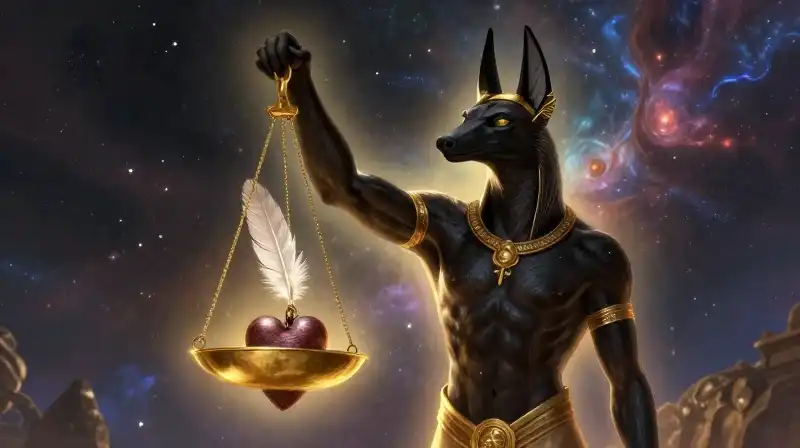
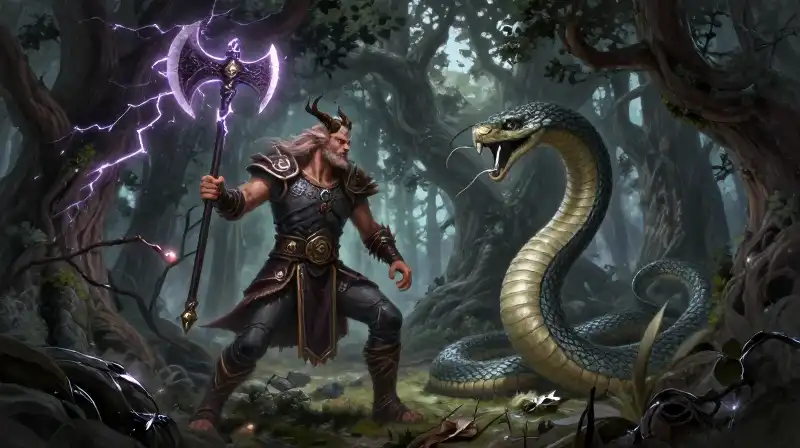
- What did they value most? The entire system revolved around maintaining *Ma’at*—the concept of cosmic order and balance. The rituals, the gods, and the funerary traditions were all designed to ensure that the world remained orderly in the face of chaotic forces like the serpent Apep.
Synthesis: Understanding the Living Legacy
The Egyptian traditions demonstrate that religious belief is never a closed system; it is a living, breathing cultural record of a people’s ingenuity, adaptability, and desire to understand the chaotic power of the natural world. When studying the Egyptian gods and goddesses, one is not merely studying myths; one is studying how a culture survived—how it reconciled local traditions with national unity, and how it utilized the divine to explain the fundamental forces of life, death, and creation. The true “living culture” of this tradition resides in its ongoing influence on art, architecture, and the persistent fascination with the enduring quest for divine order in an ancient, magnificent world.
References
Footnotes
Related Articles