Osiris: The Egyptian Lord of the Underworld and God of Afterlife

Introduction
In the sprawling tapestry of ancient Egyptian spirituality, few figures hold as profound and enduring significance as Osiris. He is not merely the god of death, but the ultimate embodiment of cycles—the endless flow of life, the inevitability of decay, and the unwavering hope of rebirth. To understand Osiris is to understand the core of Egyptian cosmology: the belief that stability and renewal are inseparable from death. This profound concept allowed his influence to extend from the fertile banks of the Nile to the deepest recesses of the underworld, making him a sovereign deity who represented continuity itself 1.
For the ancient Egyptians, Osiris was the ruler who granted all life, symbolizing the fundamental rhythm of the natural world. Just as the annual flooding of the Nile brought forth life, so did Osiris govern the cycle of death and regeneration. This sense of cyclical renewal is central to the tradition, moving beyond a simple fear of the afterlife and framing it instead as a continuation of the natural cosmic order. Culturally, this myth provided a vital framework for hope, suggesting that even after the final dissolution, life and existence could be resurrected.
The Narrative of Death and the Promise of Resurrection
The most foundational element of the Osiris tradition is the narrative of his own transformation. The myth recounts Osiris’s betrayal and brutal dismemberment by his jealous brother, Set 1. This event—the violent interruption of his existence—was not merely a story of tragedy; it was the establishment of the definitive concept of resurrection within Egyptian mythology. His subsequent recovery and reconstitution by Isis cemented the idea that death was not the end, but a painful phase leading toward rebirth.
This mythological framework also explains the profound link between the underworld and fertility. Osiris was frequently depicted with black skin, an artistic choice that intentionally referenced the rich, dark, life-giving mud of the Nile floodplain 1. This iconography connected his dominion over the dead directly to the agricultural power of the living world. Even the pharaoh, by associating himself with the Osiris cult, was viewed as achieving this eternal existence, thereby linking political stability with spiritual eternity 1.
Osiris as the Arbiter of the Duat
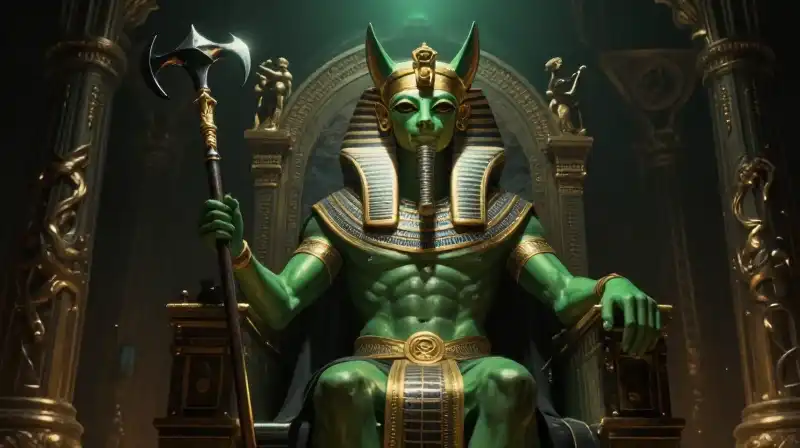
The Egyptian understanding of the afterlife, known as the Duat, required a strict process of judgment, and Osiris was the primary figure presiding over this monumental task 1. His role was that of the supreme judge of the underworld, holding the title “Lord of Silence” and Khenti-Amentiu, or “Foremost of the Westerners” 1. These titles speak to his sovereign authority and his place as the ultimate destination of all departed souls.
The most crucial moment of this judgment was the “Weighing of the Heart” ceremony. Souls, having navigated the treacherous passages of the Duat, stood before Osiris to determine their ultimate fate. He had to decide if the individual was worthy of paradise, the Field of Reeds, which represented eternal bliss 1. This function placed immense weight on his identity not just as a divine ruler, but as the ultimate keeper of justice and morality. The judgment process, overseen by him, ensured that continuity in the afterlife was earned through moral conduct in life 1.
Complementary Powers: The Guidance of Anubis
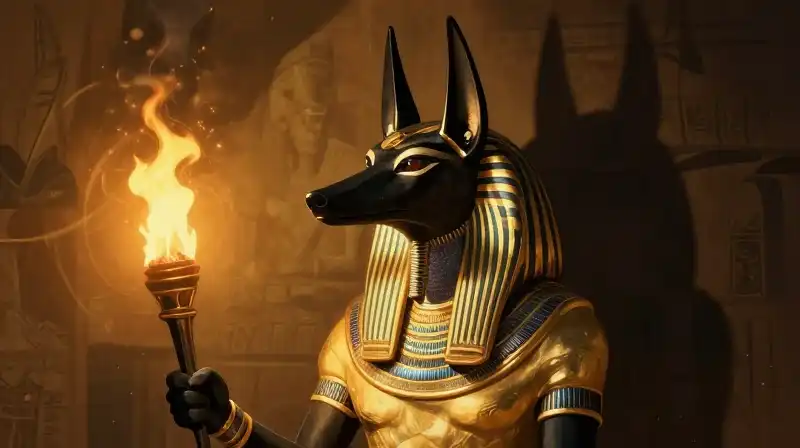
While Osiris held the supreme judicial authority, he did not operate in isolation. His journey through the afterlife was meticulously managed by complementary deities, chief among them Anubis. The relationship between the two gods is defined by distinct yet essential functions 1. Osiris was the ultimate arbiter, the king of the underworld; Anubis was the psychopomp—the guide and protector of the deceased 1.
Anubis was critical in the early stages of the funerary rites, focusing on the physical preparation of the body and navigating the initial journey through the Duat 1. His presence was essential to ensure the soul was properly presented before Osiris for the final trial. In this dynamic, Anubis provided the necessary ritual and guidance, allowing Osiris to focus on the moral and existential verdict, illustrating how complex traditions rely on specialized divine roles to maintain order 1.
Iconography, Syncretism, and Regional Manifestations
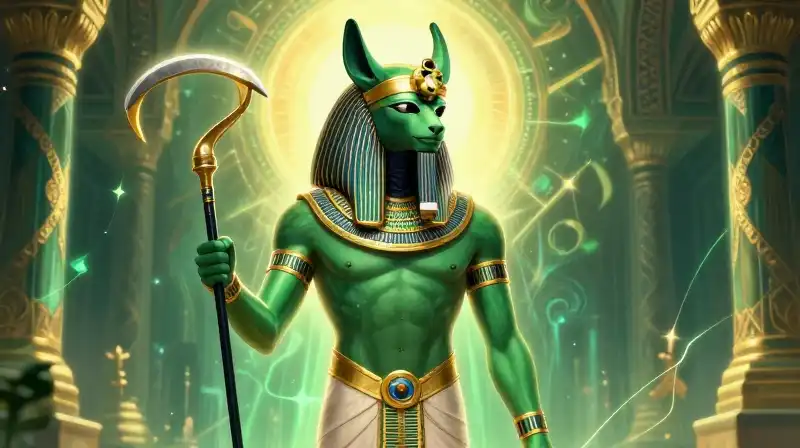
The traditional depiction of Osiris is rich with symbolic meaning. He is almost always shown wearing the distinctive Atef crown, along with the crook and the flail 1. These implements signify both his role as a sovereign ruler and the ancient concept of the “shepherd god” 1. The crook symbolized kingship and protection, while the flail represented his power and dominion.
Furthermore, the concept of the divine can shift through syncretism. Scholars note connections between the creation god Ptah and Osiris, leading to the complex concept of Ptah-Seker-Osiris, the “king of the underworld” 1. The diversity of his forms also reflects regional importance. For instance, within the Delta region, a specific manifestation of Osiris’s power was worshipped as Banebdjedet, a local expression of his enduring soul and influence 1. The original etymology of the name Osiris itself remains debated among scholars, with transliterations like Asar or Usire existing, though none are universally accepted 1.
The Meaning of Continuity: Understanding Osiris Today
In its cultural context, the worship of Osiris offers far more than a description of the dead; it is a statement on the persistent power of life, even through destruction. The tradition addresses fundamental human concerns about loss, justice, and the meaning of the journey after physical life ceases. The idea that a being could undergo betrayal and yet achieve perpetual rebirth provided profound psychological and cultural resilience to the people who believed in him.
For a modern reader, the enduring power of the Osiris narrative lies in its perfect balance: it acknowledges the inevitability of entropy and suffering (the betrayal by Set) but always balances it with an absolute, regulated path to redemption and eternal life (the judgment by Osiris). Osiris represents the belief that life has inherent meaning, provided one lives by the standards of justice and morality, even when facing the ultimate transition. This tradition assures its participants that their individual journey is not random, but part of a vast, ordered, and regenerative cosmic whole.
References
Footnotes
How to Undergo the Judgment of the Duat
Navigate the Duat
Navigate the treacherous passages of the Duat, the Egyptian understanding of the afterlife.
Receive Guidance
Wait for Anubis, the psychopomp, to guide and prepare the body and soul.
Present for Trial
Stand before Osiris, the supreme judge of the underworld.
The Weighing of the Heart
Under the 'Weighing of the Heart' ceremony, allow Osiris to determine if you are worthy of the Field of Reeds based on your moral conduct.
Related Articles