Asgard: Understanding the Home of the Gods in Nordic Mythology

Introduction
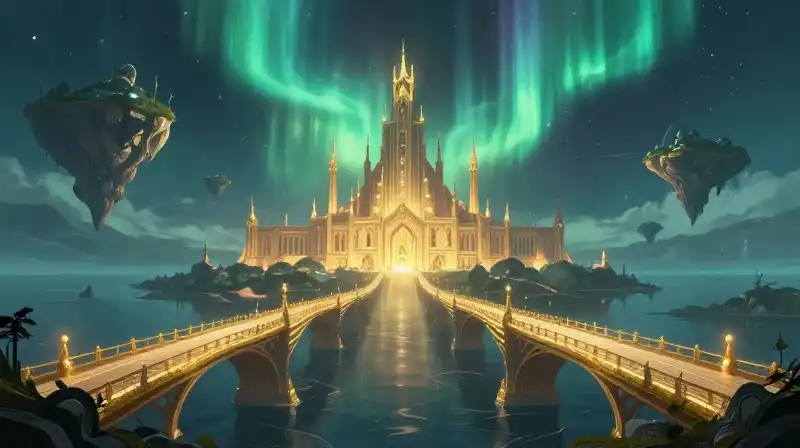
Asgard is more than simply a fortified stronghold in the imagination of Norse folklore; it is a monumental concept that serves as the spiritual and political heartbeat of Nordic mythology. Far from being merely a backdrop, this legendary realm—meaning the “Enclosure of the Æsir”—functions as the definitive home for the Aesir, the pantheon of gods and powerful beings who embody the forces of war, wisdom, and cosmic order. To understand Asgard is to understand the tension between divine splendor and impending doom, a central theme that weaves through the cultural narrative of the Nine Realms. It is not easily pinned to a single point on a map. As sources suggest, Asgard can be viewed as a literal high enclosure situated at the crown of the World Tree, Yggdrasil, or as a location that is inherently non-geographical 1. This fluid nature reflects the tradition’s depth: whether it is conceived as a celestial peak or a primordial center of existence, Asgard serves as the ultimate sanctuary and the operational command center from which the gods watch over the mortal world.
The Anatomy of Divine Power and Hierarchy
At the heart of Asgard lies a meticulously structured society. It is not a loose gathering of deities but a highly organized political entity, complete with a distinct hierarchy. According to traditional descriptions, the inhabitants of Asgard, the Aesir, operate as a society defined by royalty, military prowess, and a distinguished warrior class 1. The ruler of this powerful enclosure is Odin, known by his title as the All-Father (1, 2). Odin himself is often depicted not just as a powerful ruler, but as an insatiable seeker of lore, a trait that becomes a central focus in historical narratives concerning the Asgardian governance 1. Below the All-Father, the city is filled with legendary structures that signify its importance—the Great Lodge, the majestic hall Valhalla, and the capital city of Gladsheim, which anchors the divine presence 1. The entire atmosphere of Asgard is described using the metaphor of gold, both inside and out, representing the pinnacle of construction and spiritual splendor in the cosmic order 1.
The Role of Asgard in the Cycle of Midgard and Afterlife
Asgard plays a critical role as the interface between the mortal world (Midgard) and the divine realm. In myth, the rainbow bridge, Bifröst, acts as the primary conduit connecting Midgard to this golden enclosure (1, 2). This pathway is profoundly important for the fallen warriors. In the traditional understanding of Nordic beliefs, Asgard serves as the ultimate destination for the bravest of warriors who die in battle. They are guided across Bifröst to join the Einherjar, an esteemed group of soldiers who gather in Valhalla, preparing for the final battle. Therefore, Asgard is not just a political capital; it is the grand afterlife and the ultimate military reserve 1. The warrior Thor, for instance, is revered in poetry as the “Defender of Ásgard,” symbolizing the mortal-god bond and the constant protection offered from within the enclosure 1.
From Mythology to Regional Lore: Finding Asgard on the Map
While many modern interpretations treat Asgard as a purely conceptual, ethereal city, older regional folklore and historical sagas present a more varied, terrestrial view. One of the major scholarly discussions relates to how Snorri in his work, *Gylfaginning*, described Asgard being built at the world’s center, a theory that some scholars have used to attempt identification of the city with historical locations like Troy 1. However, regional narratives offer even more divergence. In certain “euhemeristic” accounts, where mythology is linked to historical geography, Asgard has been posited as a geographical location in Asia 1. Specifically, the historical saga known as the *Ynglinga Saga* attempts to place the city within a physical framework, locating it in Asia east of a river called Tana-kvísl 1. These variations demonstrate how the same powerful tradition is interpreted through different cultural lenses—from the purely metaphysical to the regionally historical.
The Inevitable Fate: Asgard and the Cycle of Ragnarök
The eternal grandeur of Asgard is not static; it is deeply intertwined with the cycle of creation and destruction that defines the entire cosmos. The fate of the gods and their home is bound inexorably to the epic myth of Ragnarök. Asgard is not immune to the coming twilight of the gods. According to the prophecies, the magnificent stronghold is destined to face its ultimate downfall at the hands of the Jötnar (giants). This impending doom gives the entire existence of the Aesir, and by extension the culture that upholds their tradition, a profound sense of epic urgency. The knowledge of Asgard’s decline serves as a reminder that even in realms of golden splendor and eternal power, change and ultimate renewal are constant themes 1.
Contemporary Understanding of the Traditions
To genuinely understand the tradition of Asgard, it requires moving beyond the identification of it as merely “the house of gods.” It is a complex cultural model—a representation of supreme organization, divine hierarchy, and the inevitable struggle between order and chaos. For those seeking to understand the nature of the Asgardian tradition, the key lies in recognizing the multifaceted nature of the Enclosure: it is a political center, a spiritual destination, a military headquarters, and a symbolic representation of the peak of human (and divine) achievement. By viewing Asgard through the lens of the Aesir’s values—honor, knowledge, and resilience—one grasps not just a myth, but the foundational cultural framework of a rich and demanding worldview. It is a home built of both unparalleled splendor and the certainty of change.
References
Footnotes
Frequently Asked Questions
Who were the gods of Asgard?
The gods of Asgard are the Aesir, described as a pantheon of gods and powerful beings. Among these beings, Odin serves as the ruler known as the All-Father, and the warrior Thor is revered as the Defender of Ásgard.
Related Articles