Naglfar: The Epic Myth of the Nail-Ship of Ragnarök

Introduction
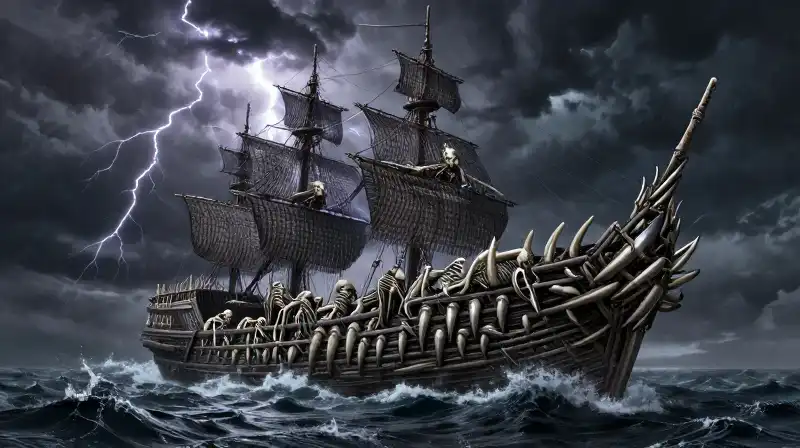
The Naglfar, sometimes referred to as Naglfari, stands as one of the most haunting and evocative vessels in the vast tapestry of Norse mythology. Far from a mundane boat, it is a profound cultural icon, a chilling manifestation of mortality, and a central component of the prophecy known as Ragnarök—the twilight of the gods. Defined literally in Old Norse as the “nail farer” (1, 3), the Naglfar is not merely a ship; it is a collective monument to the deceased. It is prophesied to sail upon the great cosmic oceans to Vígríðr, ferrying the monstrous armies destined to challenge the Aesir and Vanir in the final, apocalyptic battle 1. For those seeking to understand Norse traditions, the Naglfar moves beyond a simple piece of folklore. It serves as a potent symbol of the ultimate consequence of life and death, linking the fate of the gods to the material remains of humankind. Its construction—entirely from the fingernails and toenails of the departed (1, 2, 3)—places it firmly within the realm of the terrifying and the transformative. This article explores the myth of the Nail-ship, delving into its cultural warnings, its role in the Norse cosmos, and the enduring symbolic power it holds.
The Vessel of Cosmic Conflict
In the Norse cosmology preserved in the Prose Edda, the Naglfar is described as the largest ship in existence, belonging to the fiery giant Muspell 1. Its purpose is absolute and destructive: to carry the forces of chaos toward the gates of Ragnarök. While the Prose Edda depicts the Naglfar as a monumental entity, other mythological works, such as the description of the more expertly crafted ship Skíðblaðnir, highlight the Naglfar’s primary nature as a force of destiny rather than one of superior craftsmanship 1. The arrival of the Naglfar marks a critical turning point in the events leading up to the final battle. According to the prophecies, its voyage begins only after the very landscape has been violently shaken by the precursors to Ragnarök, and specifically, following the enraged assault of the great Midgard Serpent, Jörmungandr (1, 3). Guided by the mighty jötunn Hrym, this ship steers the forces of destruction into the fray, cementing its status as an unavoidable element of the cosmic drama.
A Cautionary Tale: The Materiality of the Dead
The most culturally grounded detail of the Naglfar myth is not its impressive size or its destructive destination, but a profound societal warning embedded within the Prophecy in the Prose Edda (1, 3). This warning serves as a moral and spiritual admonition to the living. The text explicitly warns against the improper handling of the deceased: individuals are advised not to bury the dead with untrimmed nails, as these remains would provide the necessary material to construct the Naglfar (1, 3). This warning reveals a fascinating aspect of ancient Germanic thought—that the disposal of the human body, specifically its biological remnants, is not a private matter, but an event with cosmic ramifications. The myth links the sanctity of the dead to the stability of the universe. The untrimmed nail is viewed as more than just organic matter; it is the building block of a vessel that carries the forces of destruction, symbolizing the catastrophic consequences of neglecting proper ritual or respecting the material boundaries between the living and the departed.
Etymology and Scholarly Inquiry
The name Naglfar, or Naglfari, is the literal translation for the “nail farer.” However, the nuances of this term have long fascinated scholars, who have engaged in active debate regarding its precise etymology 1. One prevailing view maintains the standard translation, linking the name directly to the fingernails of the dead. Yet, others propose that the root of the name might actually be a linguistic variant of the Old Norse word for “corpse,” *nár* 1. This debate underscores a common characteristic of ancient mythology: the language used to describe cosmic events often blurs the line between the literal and the metaphorical. Whether the name signifies “Nail-farer” or “Corpse-farer,” the image remains powerfully consistent. Furthermore, while the “Nail-ship” imagery is deeply specific to the Germanic world, the broader theme—that the improper disposal of biological materials, such as hair and nails, can threaten universal well-being—shows cultural resonance that extends to the wider Indo-European period 1.
The Naglfar in Cultural Context and Practice
The Naglfar is not isolated to the literary Eddas. The myth holds relevance across different mediums and even physical regions of the Norse-influenced world. It is firmly attested within the major literary works of the tradition, appearing both in the Völuspá poem of the Poetic Edda and various sections of the Prose Edda 1. Regional scholarly interpretation has also found the Naglfar’s symbolic weight in material culture. For example, some interpretations of the Tullstorp Runestone in Scania, Sweden, suggest a depiction of the Naglfar sailing beneath the figure of Fenrir (1, 3). While these archaeological connections remain subject to scholarly interpretation, they demonstrate how the powerful iconography of the Naglfar has seeped from pure mythological text into the material landscape, becoming a permanent, enduring element of the Norse cultural memory.
Beyond the Definition: What the Naglfar Means
To understand the Naglfar is not simply to know what materials it is made of. It is to grasp a profound worldview where the physical presence of death—from the nail on a finger to the body itself—has cosmic implications. The myth functions as an elaborate, dramatic mechanism to illustrate the fragile balance of the universe and the inevitable arrival of universal reckoning. In the context of “Living Culture,” the Naglfar teaches us about the power of ritual and the weight of lineage. It reminds the reader that the traditions of their ancestors were not just stories, but systems designed to manage the perceived dangers of existence. Whether it is the careful burial of the dead, the alignment of seasonal festivals, or the crafting of sacred objects, the practices were intended to prevent the trivial from becoming the terrible. The Naglfar is the ultimate “what if”—a beautifully crafted, horrifying reminder that even the smallest detritus of life, when neglected, can contribute to the great ships of fate.
References
Footnotes
Frequently Asked Questions
What is Naglfar in Norse mythology?
Naglfar, meaning nail farer, is a monumental vessel constructed entirely from the fingernails and toenails of the departed in Norse mythology. It is prophesied to sail toward the apocalyptic battle of Ragnarök, carrying the monstrous armies destined to challenge the Aesir and Vanir.
Related Articles