Ancient Irish Gods: Roles, Mythology, and Key Figures

Introduction
The ancient traditions of the Celts, particularly those preserved in Irish mythology, offer a profound glimpse into a worldview where the boundary between the human world and the spiritual was porous. These stories are far more than historical footnotes or simple lists of characters; they are cultural blueprints that describe how a people understood existence, conflict, prosperity, and the natural world around them. For a reader seeking to genuinely understand this heritage, the focus shifts from cataloging a pantheon to examining the deeply rooted roles these deities played in shaping community belief and identity. These figures—from the skilled artisan to the harbinger of fate—reflect the core values of the ancient Irish people, often centered around the fertility of the land and the prowess of human endeavor.
The Foundation: The Tuatha Dé Danann
At the heart of Irish mythology lies the *Tuatha Dé Danann*, a lineage of divine peoples who serve as the central figures of this cultural tradition. The name itself offers a foundational clue, translating to “the peoples of the goddess Danu” 1. Danu, the mother goddess, represents a source of life and origin for this powerful clan 1. This group of deities was known for their advanced arts and their powerful influence. However, as Christianity spread, the interpretation of these figures shifted dramatically. Christian writers viewed the Tuatha Dé Danann through a lens of religious opposition, describing them variously as deified ancestors or as fallen angels and demons, illustrating the potent clash between pre-Christian cultural foundations and emerging religious traditions (2, 1).
Divine Archetypes: Skill, Prosperity, and the Wild
The deities of this pantheon are often defined by their mastery of specific human skills or their intimate relationship with the landscape. These gods are frequently viewed not just as abstract powers, but as embodiments of excellence.
The God of Mastery: Dagda and Lugh One of the most significant figures is Dagda, who is often characterized as a leader and a god of prosperity and life 1. While often referred to as “The Good God,” this title pertains specifically to his exceptional skill and excellence rather than a simple moral goodness 1. Nearby stands Lugh, the embodiment of perfect versatility. He is celebrated as a master of many disciplines, his very name, Samildánach, translates to ‘equally skilled in many arts,’ underscoring the value placed on comprehensive talent and multifaceted skill (1, 3). These figures model the ideal of the highly competent and resourceful member of the community.
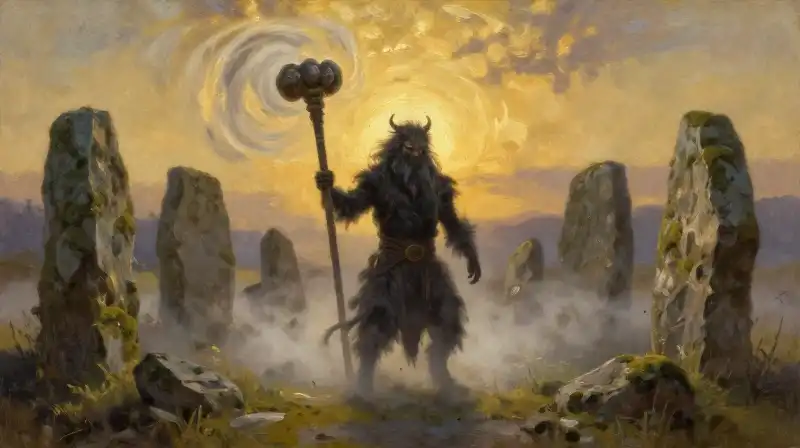
The Wild and the Craft The connection to the untamed environment is visible through figures like Cernunnos, the Horned One, who is revered as the ‘lord of wild things,’ symbolized by antlers, stags, and the cornucopia 1. In contrast, other deities represent the refined, creative power of human skill. Goibniu holds the sacred and essential role of the divine blacksmith, capable of crafting weapons that never fail and a magical mead that ensures eternal youth for the gods 1. Oghma further reinforces the cultural value placed on intellectual and artistic pursuit, being the god of language, poetry, and knowledge, and historically credited as the inventor of the Ogham alphabet 1.
Powers of Conflict, Fate, and Change
Not all deities in this tradition are associated with peace or creative productivity. Many are powerful forces of change, embodying the cycles of war, death, and natural power.
The Power of the Triple Goddesses Several powerful figures illustrate the multifaceted nature of woman in this tradition. Brigid’s influence is remarkably broad, spanning fire, healing, agriculture, prophecy, poetry, and blacksmithing (1, 3). She is often interpreted through the lens of a triple goddess, representing the interconnected roles of poet, healer, and smith. Complementary to her are the powerful war and fate goddesses. The Morrigan is perhaps the most complex figure, a deity of war, death, and fate who may manifest as a single powerful entity or as a triad of sisters (Badb, Macha, and Nemain). She is frequently depicted as a crow or raven, serving as a potent foreteller of a warrior’s fate (3, 1). Macha herself is traditionally a goddess associated with war, life, and death, closely linked to the Morrigan and often associated with horses (1, 3).
The Nature of Environmental Divinity The culture also held sacred local figures tied directly to the natural geography. Boann, for example, is the goddess of the River Boyne, embodying fertility, healing, and cattle, and legends attribute the river’s physical course to her will 1. Furthermore, Manannán mac Lir, a god of magic and the sea, holds cultural significance for having partitioned the mythical *sidhe* mounds—sacred mounds—among the Tuatha Dé Danann before withdrawing to the ocean 1. This demonstrates a deep connection between human myth and the physical environment, showing how nature itself was considered a dwelling for the divine.
Contextualizing the Pantheon and Local Belief
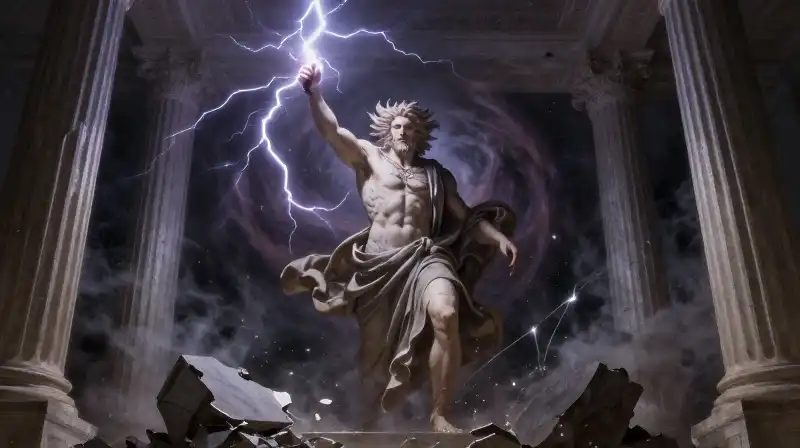
A critical element often overlooked when viewing these gods through a modern, Western lens is the decentralized nature of ancient Celtic belief. Unlike pantheons that focus on a single supreme ruler (a concept that might lead one to ask, “Who is the Celtic version of Zeus?”), the Celtic worldview was often highly localized. According to 2, the general and local deities of the Celts varied significantly; a god might be known globally for providing universal luck and protection, or may be revered locally for their guardianship of a specific natural feature, such as a mountain or a river. This variety means that the gods functioned as mirrors of local needs and regional ecological features, rather than as a single, unified cosmic hierarchy.
The Living Tradition: Beyond the Scroll
While the myths provide the narrative framework, the enduring power of these traditions lies in their representation of universal human struggles and strengths. The stories of the Tuatha Dé Danann—the masters of skill and the bearers of change—continue to be explored by modern cultural practitioners and scholars as powerful expressions of heritage. These traditions are not simply relics of the past; they inform contemporary cultural conversations regarding craft, the sanctity of the land, and the complex relationship between societal progress and natural boundaries. By studying the figures—from the artisan Goibniu to the fate-determining Morrigan—we gain a nuanced appreciation for a culture that deeply valued both the perfect execution of human skill and the unpredictable power of the wild. The myths, therefore, act as cultural maps, guiding us toward an understanding of what ancient Irish and Celtic communities considered fundamental to a meaningful life.
References
Footnotes
Frequently Asked Questions
Who are the 12 pagan gods in order?
The provided article mentions various deities, including Danu, Dagda, Lugh, Cernunnos, Goibniu, Oghma, Brigid, The Morrigan, Badb, Macha, Boann, and Manannán mac Lir, but it does not provide them in a specific list of 12 in order.
Who is the most famous Irish god?
The article does not identify one specific most famous god, as ancient Celtic belief was often highly decentralized and deities were frequently revered locally for their guardianship or specific roles. However, Danu is identified as the foundational mother goddess from whom the powerful Tuatha Dé Danann lineage derived its name.
Who is the Celtic version of Zeus?
According to the article, the Celtic worldview was often highly localized and did not typically focus on a single supreme ruler.
Are Irish Celtic or Norse?
The provided article discusses ancient Celtic traditions and Irish mythology, but it does not mention the Norse or compare the two heritages.
Related Articles