What is Día de los Muertos? Traditions, History, and Meaning

Introduction
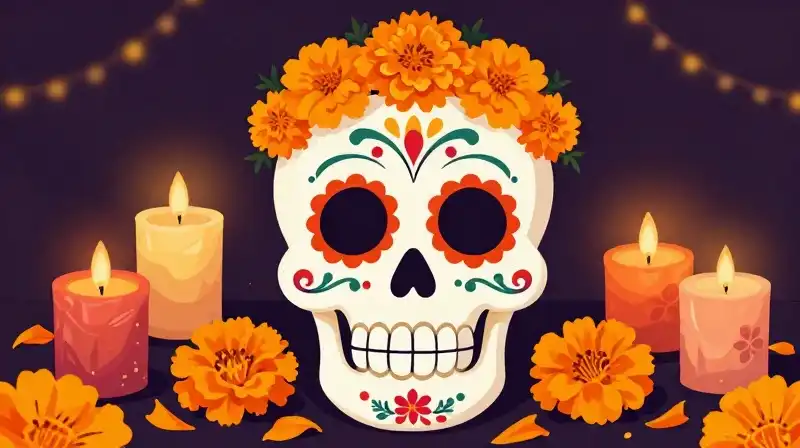
The concept of the Day of the Dead, or *Día de los Muertos*, defies the conventional Western notion of mourning. While many cultures treat the remembrance of the deceased with somber silence and profound sorrow, this Mexican tradition transforms loss into a vibrant, communal celebration. Fundamentally, Día de los Muertos is a joyous reunion—a temporal bridge where the boundary between the living and the departed thins, allowing families to welcome their ancestors back to earth for a few fleeting days. Far from being a simple holiday, it is a living cultural practice that grounds the community in the cyclical nature of life and death, celebrating life by recognizing its ultimate destination.
The Architecture of Remembrance: Ofrendas and Welcome
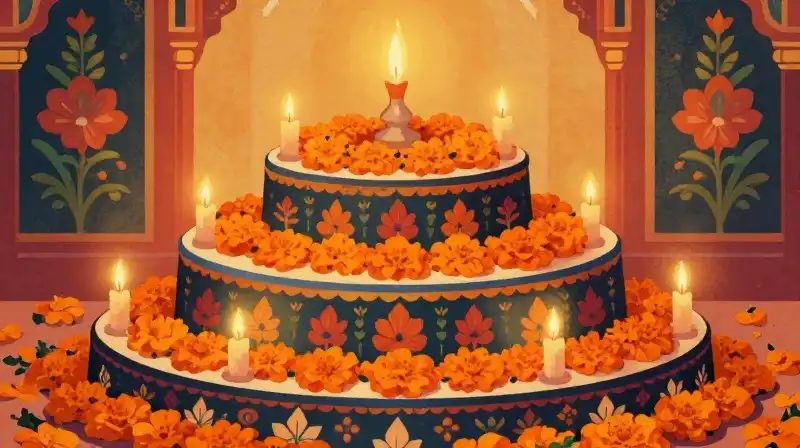
The heart of the Day of the Dead observance is the *ofrenda*, or the altar. These aren’t merely decorative displays; they are meticulously crafted portals intended to guide visiting spirits home. An *ofrenda* is a richly personalized tribute, a spiritual map constructed to ensure the deceased feel welcomed. These altars are typically built in homes and are layered with symbols that communicate respect, remembrance, and love. The physical components of the altar are deeply symbolic. Fragrant cempasúchil, or marigold flowers, are used to create colorful pathways, believed to lead the spirits back from the underworld. The offerings themselves are highly personal, including the favorite foods, drinks, and possessions of the deceased. This practice reflects a profound belief: that memory is the strongest tether between generations, and by providing for the spirit, the family affirms the bond they shared.
The Rhythm of the Celebration: From Pan de Muerto to Calaveras Literarias
The celebration extends far beyond the altar, encompassing a festive atmosphere designed to acknowledge death as a natural, albeit inevitable, phase of life. While the holiday is broadly observed on November 1 and 2, regional traditions can vary slightly depending on the locality. One of the most beloved culinary contributions is *pan de muerto*, a sweet, often anise-flavored bread. It is a staple that represents the joy and warmth of the holiday. Another festive element is the sharing of *calaveras literarias*—light-hearted, often irreverent verses or poems written about friends and family members. This playful engagement with death serves as a cultural mechanism for coping, transforming potentially heavy subjects into a shared community joke. In a public and social dimension, cemeteries transform from places of quiet reflection into vibrant spaces for life. Family gatherings, singing, and conversations with ancestors occur within these sacred grounds, turning the graves into outdoor rooms for community connection and storytelling.
Unraveling the History: Myth, Movement, and Modern Identity
The origins of Día de los Muertos are subjects of ongoing scholarly debate, reflecting its deep entanglement with the various cultures that shaped it. There is vigorous academic discussion regarding the holiday’s source, with some scholars proposing that its foundations lie in Indigenous Mesoamerican rituals combined with the Catholic observances of All Souls’ Day 1. However, historical complexity suggests a layered evolution. Counter-claims point to the influence of European traditions, including elements similar to the *Danse macabre*, on the modern festivity 1. Furthermore, some historians view the contemporary emphasis on specific native iconography and the formalized structure of the celebration as a “Cardenist invention”—a cultural movement designed to foster a distinct Mexican national identity and challenge the influence of the Church 1. These overlapping histories mean the holiday is not a singular, pure origin point, but a rich synthesis of Indigenous beliefs, colonial practices, and modern cultural nationalism.
The Language of Death: Symbols and Meaning
The iconography of the Day of the Dead is strikingly vibrant, utilizing symbols to convey a nuanced philosophical outlook:
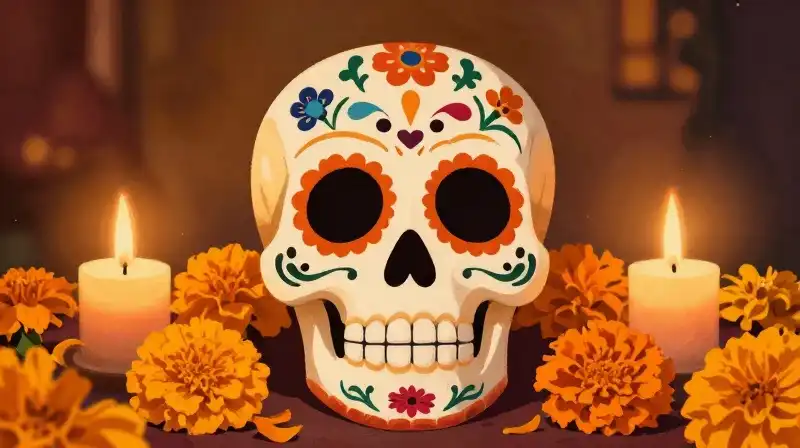
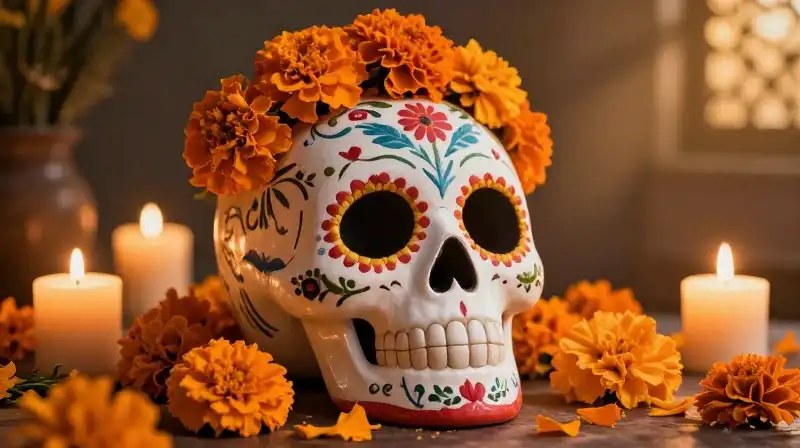
- Skeletons: Skeletons are ubiquitous, yet they are often depicted not in a state of terror, but in whimsical, lively poses. This serves a reminder that death is not a frightening endpoint, but a natural, accepted, and integrated part of the human lifecycle 1.
- La Calavera Catrina: This iconic figure, a beautifully dressed skeletal figure, was popularized by lithographer José Guadalupe Posada. While tied to the modern cultural narrative, her original artistic intentions and her role in the cultural psyche continue to be debated 1.
- The Joy of the Gathering: Above all, the tradition emphasizes reunion. The fundamental purpose of Día de los Muertos is to reunify the physical world with the ancestral realm through love, remembrance, and festivity, contrasting sharply with standard mourning rites (2, 3).
Clarifying the Context: Addressing Common Queries
For many navigating the cultural landscape, confusion often arises regarding the terminology.
Dia or Dio de los Muertos?
The correct name is Día de los Muertos. While phonetic spelling may lead to variations like “Dio,” the accurate Spanish term is *Día*, meaning ‘day.’ This distinction is important for recognizing the cultural and linguistic specificity of the tradition.
What is the real purpose of the observance?
The purpose transcends a simple commemorative date. The real purpose is the affirmation of kinship across time. It is a tangible, ritualistic act of inviting loved ones back into the living community, affirming that they are never truly gone as long as they are remembered through food, stories, and shared presence.
Living Culture in the Modern Era
Today, Día de los Muertos holds significant global stature, having been recognized by UNESCO in 2008 as Intangible Cultural Heritage of Humanity 1. However, this international recognition has brought both widespread visibility and challenges regarding commercialism. For those seeking to genuinely understand the tradition, the most valuable approach is to look past the “exotic” visual spectacle. Focus instead on the underlying spirit: the warmth of the *ofrenda*, the shared melancholy mixed with laughter, and the collective agreement that death is simply life, fully realized. It is a practice that asks participants to engage with their history, their community, and their own inevitable mortality with profound tenderness and joy.
References
Footnotes
Frequently Asked Questions
Is it dia or dio de los muertos?
The correct name is Día de los Muertos. While phonetic spellings may lead to variations like Dio, the accurate Spanish term is Día, meaning day.
What is the meaning of Dios de los muertos?
Día de los Muertos is a joyous reunion and a temporal bridge that allows families to welcome their ancestors back to earth while the boundary between the living and the departed thins. Fundamentally, the tradition is about affirming kinship across time by reunifying the physical world with the ancestral realm through love, remembrance, and festivity.
What is the real purpose of Día de los Muertos?
The real purpose of the observance is the affirmation of kinship across time. It is a ritualistic act of inviting loved ones back into the living community, ensuring that they are never truly gone as long as they are remembered through shared presence, food, and stories.
Related Articles