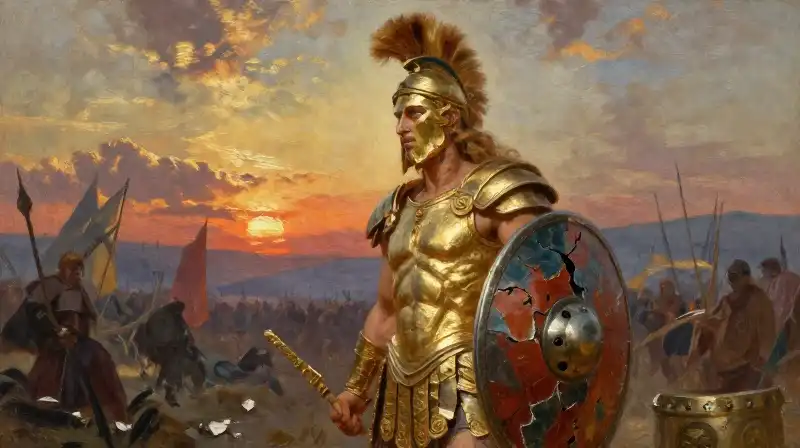
Zeus and Crete: Exploring the Myth of the Dikteon Cave


Introduction
For millennia, the rich tapestry of Greek mythology has intertwined divine birth with geographical landscape. When considering the origins of Zeus, the supreme deity of the Greek pantheon, the question of where he was born leads travelers to Crete—a powerful island inextricably linked to some of the most profound narratives in the Mediterranean. While Zeus’s lineage and location are subjects of varied ancient accounts, the region, particularly the eastern reaches of Crete, hosts sacred sites that have served as powerful cultural anchors. This connection is most vividly expressed through the lore surrounding Mount Aegaeon and the Dikteon Cave. The belief that the birthplace of the god resides within the rugged terrain of Crete is not merely a mythological footnote; it represents a living tradition that fuses deep cultural heritage with the tangible beauty and history of the landscape. It offers readers a window into how ancient belief systems used the Earth itself to validate their greatest stories.
The Divine Birth: Mythology and Varied Origins
In the vast sea of Greek myth, the specific place of Zeus’s birth is debated among ancient writers. According to sources, while some accounts pinpoint Lydia or Arcadia as his birthplace, others focus more closely on Crete 1. For the purposes of the most significant local traditions, the narrative centers around the birth of Zeus within a sacred cave on Mount Aegaeon, a location strongly associated with Crete 1. According to one prominent local source 1, this cave is known as the Dikteon Cave, and it is revered specifically in Greek mythology as the place where Zeus was born. The myth describes the dramatic circumstances of his birth: his mother, Rhea, sought refuge in the mountains to have the child secretly, escaping the predatory gaze of his father, Cronos 1. Hesiod’s *Theogony* provides a detailed description of this event, stating that Rhea traveled to Lyctus in Crete to give birth to Zeus while handing the newborn to Gaia for nurturing 1.
The Geography of Zeus: Crete as a Mythological Stage
When the question arises, “Is Crete the birthplace of Zeus?”, the answer rests in the weight of these ancient traditions and their subsequent preservation as cultural narratives. While Zeus was eventually associated with the wider Greek world and later Mount Olympus, his formative mythological connections are rooted in the diverse landscape of Crete. The island functions as a complete stage for his myth. Beyond the birthplace narratives, the island’s mythology also links Zeus to the island of Dia, an island that legend says was formed after he defeated a giant lizard 1. This broad mythological scope suggests that Crete was not simply a backdrop, but a key element in the divine drama of his early life and formative actions.
Tracing the Physical Legend: The Dikteon Cave Experience
For the modern visitor, the mythology associated with the Dikteon Cave in Eastern Crete has a profound physical presence. More than just a site of legend, the cave is a natural wonder and a historical landmark 1. The cave is located in the Lasithi Plateau, and while it holds immense mythological significance, its primary function today is that of a unique geographical feature. To access the heart of the myth, visitors must undertake a rewarding yet steep hike to the cave’s interior 1. The cave is celebrated not just for its sacred mythology but for its stunning natural formations, including intricate stalagmites and stalactites. The cultural significance of the area extends to the surrounding geography, notably the nearby Windmills of Lasithi, which are often seen in conjunction with the cave’s profound natural beauty 1.
From Birth to Power: The Infancy of the Thunderer
The narrative of Zeus’s birth is merely the beginning of his story; his infancy is equally rich with cultural detail 1. The early years of the supreme deity were not spent in isolation. One tradition recounts that Zeus was raised by nymphs and sustained by the milk of the she-goat Amalthea 1. Furthermore, his early protection and guidance are attributed to the Kouretes, a legendary group of heroic guardians, cementing his identity as a figure destined for great strength and power from his earliest days 1.
The Broader Minoan Tapestry: Minos and the Labyrinth
To fully appreciate the cultural weight of Crete, one must look beyond Zeus’s birth and consider the powerful Minoan traditions that define the island’s heart. The mythological weight given to the Labyrinth and the magnificent Palace of King Minos 1 places Crete firmly in the sphere of powerful, ancient dynastic stories. These narratives—which include figures like Pasiphae and the origins of the Minotaur—are integral to the cultural understanding of the island.
Synthesis and Enduring Cultural Significance
The myth of Zeus and the Dikteon Cave is far more than an ancient story of a powerful god’s origin. It is a powerful example of how cultures anchor their highest beliefs in specific places, imbuing the physical earth with meaning. For those who value the living culture of the Greek islands, the Dikteon Cave is a convergence point—a place where geological formations meet profound religious narrative. When approaching this tradition, it is useful to view it both as an ancient mythological record and as a modern cultural heritage site. Understanding the nuance between the varied accounts of his birth and the tangible reality of the Dikteon Cave allows the visitor to genuinely connect with the layered history of Crete, appreciating not just the definition of a myth, but the enduring spirit of the community that sustains it.
References
Footnotes
Frequently Asked Questions
Was Zeus from Crete?
Local traditions and significant mythological narratives strongly link the birthplace of Zeus to Crete, specifically citing the Dikteon Cave on Mount Aegaeon. Although some ancient accounts mention alternative locations such as Lydia or Arcadia, his formative mythological connections are rooted in the islands landscape.
Is Crete the birthplace of Zeus?
While the specific location of Zeus’s birth is debated among ancient writers, many myths focus on Crete, with the narrative centering on his birth in Dikteon Cave on Mount Aegaeon. For example, Hesiod’s Theogony details that Zeus was born in Lyctus in Crete.
Related Articles