The True Origin of Halloween: From All Hallows Eve to Samhain

Introduction
There is a specific alchemy that occurs around the cusp of autumn in many cultures: a moment when the boundaries between the worlds seem to thin, giving space for ancient stories and communal rituals to resurface. Modern Halloween is a vibrant expression of this liminal time, yet its roots are not singular. It is a complex cultural weaving, drawing threads from the linguistic origins of the English language, the liturgical calendar of the Western Church, and the deep, seasonal rhythms of ancient Celtic society. To understand Halloween is to trace a path from the harvest to the hallow, from the pastoral fields of Ireland to the streets of contemporary towns.
The Name’s Evolution: From ‘Hallow’ to ‘Halloween’
The term “Halloween” is itself a map of the tradition’s history. It is a contraction of “All Hallows’ Eve” or “Allhallows Even,” marking the evening leading up to the Christian celebration of All Saints’ Day (1, 2, 3). The core of the word, “hallow,” is an adaptation of the Old English adjective “hālig,” meaning “holy,” which historically served as a synonym for “saint” (1, 2). The name, therefore, initially signified “Saints’ eve” within the Christian calendar 1. The specific, modern form of “Halloween” is the result of linguistic evolution, particularly in the Scots dialect. The contraction of the term “even” (meaning ‘eve’ or ‘evening’) into forms like *e’en* or *een* gave birth to “Halloween” (1, 2). While the Christian calendar provides the nomenclature, it is the cultural practice—the underlying meaning of the eve—that reveals the tradition’s deeper heritage.
The Celtic Roots of Samhain
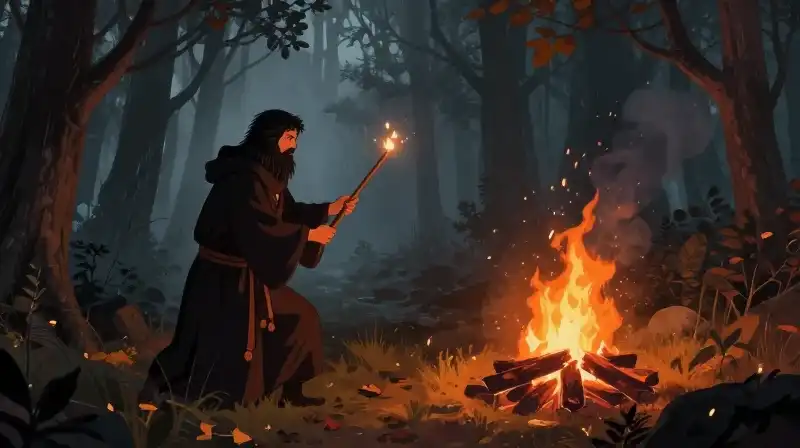
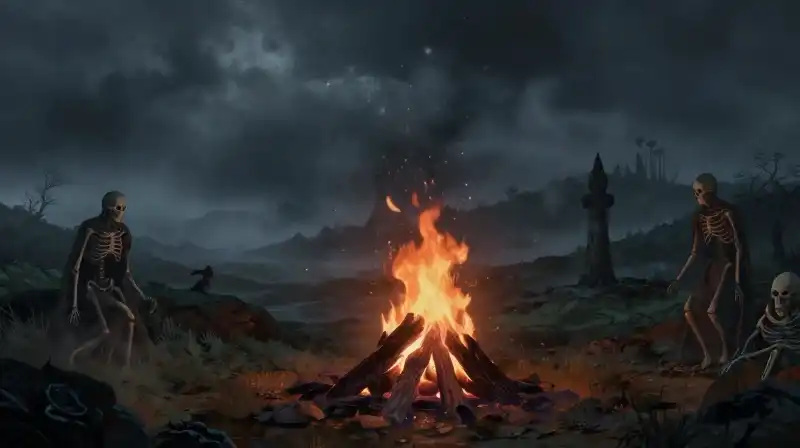
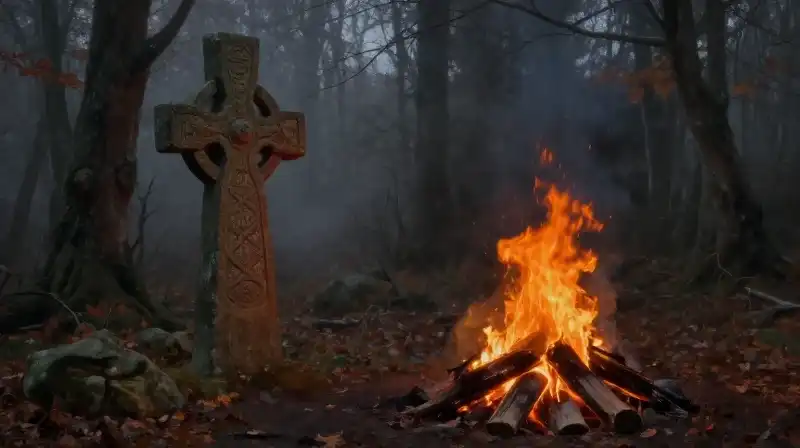
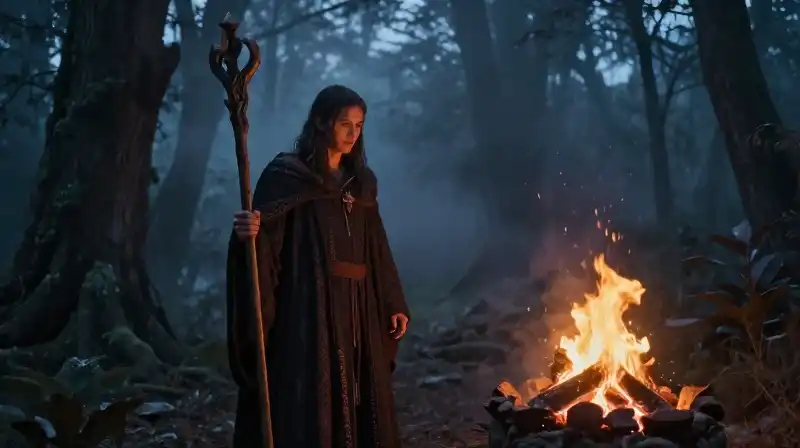
While the Christian name points toward saints and holy days, the fundamental cultural framework of the celebration is rooted in Samhain. This ancient festival was a key date in the calendar of the Celts, celebrated around November 1, marking the end of the harvest and the start of winter (2, 3). From the perspective of the ancient communities, Samhain was not merely a season-change; it was a period of transition where the veil between the mortal world and the realm of the dead was believed to grow porous (2, 3). Samhain held a powerful social significance. It was a time when the balance of the community and the ancestors was crucial, necessitating specific rituals to manage the spiritual transition and honor those who had passed 1. Scholars continue to debate the precise relationship between the two traditions: some historical perspectives suggest that the Christian Church sought to assimilate existing pagan traditions, while others argue that Halloween developed largely as an independent Christian vigil around the turn of the liturgical calendar 1. Regardless of the scholarly consensus, Samhain established the core theme of the observance—the interaction between the living, the dead, and the unknown.
A Tapestry of Practices: Spirits, Spirits, and Lantern Light
The customs we associate with Halloween are often seen as modern adaptations of these deeper rituals, but they have distinct roots in both the pagan and medieval Christian traditions. The tradition of utilizing illuminated objects to protect one’s dwelling or ward off malign spirits is a long-standing element. Early forms of these protective lanterns involved carrying hollowed-out turnips, which served a ritualistic purpose during the practice of “souling” (1, 2). This practice involved poor people or children visiting homes and collecting “soul cakes” in exchange for prayers offered on behalf of the dead (1, 2). The evolution of this custom into the modern jack-o’-lantern, using pumpkins, is a later change, yet the original intent to use light against darkness remains a constant thread (1, 2). The practice of wearing masks and costumes also holds dual significance. One theory links it back to Samhain, where dressing as spirits or monsters was a necessary means for individuals to avoid recognition by possibly vengeful or roaming spirits during the thinning of the veil (1, 2). Similarly, in medieval Europe, some parishioners dressed as various saints during Allhallowtide, particularly in areas where physical relics were scarce (1, 2).
Comparing Traditions and Understanding the “Living” Context
While Halloween is a hallmark of Western Christianity and Celtic heritage, it is important to recognize that traditions honoring the dead and the ancestral realm exist across vast cultural landscapes. For example, the Mexican tradition of “Day of the Dead” offers a powerful contrast 1. Whereas Day of the Dead focuses on the celebration, remembrance, and active presence of deceased family members and maintains a distinct festive tone, its origins are deeply rooted in the Indigenous Aztec and Toltec cultures, far predating the established Western Christian observance of Allhallowtide 1. This comparison highlights that the concept of living alongside ancestral memory is a universal human practice, though its ritual forms and the spiritual context—be it a Christian liturgical commemoration or an Indigenous celebration of familial continuity—are uniquely defined by region and history 1.
Navigating the Core Questions of Modern Celebrations
Many questions surround the modern celebration, including its spiritual intent and its practical expressions.
How is Samhain related to Christianity?
The connection is one of historical juxtaposition and subsequent cultural adaptation. As the Western Church established All Saints’ Day, it set the date around the same period that Samhain was celebrated. The overlap allowed elements of the old, harvest-based, and death-oriented cultural practices to be absorbed into the newly defined Christian practices of honoring saints, martyrs, and the faithful departed (1, 2). The two traditions met in the year and the spiritual concept of a moment where the boundary between the world of the living and the world of the dead was fluid.
What does the tradition mean today?
The contemporary iteration of Halloween is often viewed through a lens of cultural expression, community gathering, and the reclamation of “living culture.” It functions as a time for creativity—in costume design and thematic artistry—and a playful interaction with themes of fear and light. At its core, whether one embraces the history or not, the tradition continues to embody the cyclical narrative of life, death, harvest, and the stories that define a community’s identity.
A Final Synthesis: The Weight of Memory and Light
Tracing the origins of Halloween reveals it to be less a single “origin” and more a dynamic confluence of history, language, and seasonal necessity. It moved from the solemn, ancient necessity of Samhain—a time of preparing for the winter and accounting for the departed—into the structured liturgical calendar of the Church. The elements endure: the lanterns that guide spirits, the costumes that bridge the human and the mythical, and the cakes that offer remembrance. As a living tradition, Halloween remains a profound example of how communities continue to negotiate the sacred spaces between the remembered and the imagined, turning the turning of the year into a shared cultural experience of remembrance and light.
References
Footnotes
Frequently Asked Questions
How is Samhain related to Christianity?
The relationship between Samhain and Christianity is one of historical juxtaposition and cultural adaptation, as the Western Church set All Saints Day during the same period Samhain was celebrated. This overlap allowed old harvest and death-oriented practices to be absorbed into Christian rituals for honoring saints and the faithful departed.
Related Articles