From Kitsune to Dullahan: Global Examples of Mythical Spirits

Introduction
To examine the mythical spirits across global cultures is not merely to catalogue fantastic beasts; it is to trace the deep spiritual lineage of a community’s relationship with its environment, its history, and the invisible forces that shape existence. From the fox spirits of East Asia to the ominous avian forms of indigenous American lore, the belief in transformative and otherworldly entities serves as a cultural mirror, reflecting a society’s particular understanding of danger, rebirth, and the sacred. These spirits—the shapeshifters, the ethereal wanderers, and the guardians of the underworld—are living narratives that explain the inexplicable within a community’s worldview. They are, in essence, keepers of tradition, illustrating complex philosophical and ecological tenets through the lens of the supernatural.
The Spirit as an Anchor to the Land and Ancestry
Many of the most powerful spirits are fundamentally tied to specific geographies and ecological heritages. They are not abstract concepts but entities that manifest within the specific borders of a community’s world. For certain American Aboriginal peoples, spirits like Balayang and Tjinimin function as powerful ancestors, reflecting an inherent and profound connection to their regional ecology 1. This reverence for the land is echoed in the Abenaki tradition, which features Wuchowsen—one of four wind spirits depicted as a colossal eagle dwelling atop a mountain, giving the lore a distinct, geographical anchor 1.
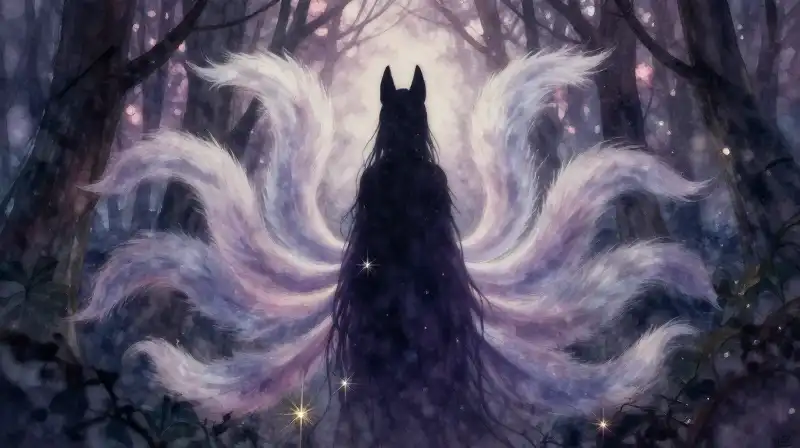
The power of these spirits often lies in their ability to mediate the relationship between the physical world and the spiritual realm. This is seen in the widespread theme of shapeshifting, found in diverse global traditions. For instance, the Chinese, Japanese, and Korean traditions include the formidable fox spirits—Huli jing, Kitsune, and Kumiho—whose powers and transformations are deeply rooted in local moral and cultural contexts 1. Even in Northern traditions, the Norse cosmos features powerful entities like Hræsvelgr, a Jötunn known for assuming the form of a massive eagle, linking spiritual power directly to natural, majestic forms 1.
The Power of Metamorphosis and Change
Transformation is perhaps the most recurring motif in spiritual lore, symbolizing change, mortality, and the fluid boundaries between human life and the supernatural. Myths involving metamorphosis often serve as powerful narratives surrounding the fragility of life itself. Classic examples, such as the nymph Melissa evolving into a bee or the tragic story of Tithonus transforming into a cicada, illustrate the intense mythological focus on the passage of time and the consequences of eternal existence 1.
The ability of spirits to assume other forms speaks to their transcendance, their detachment from fixed human identity. While this theme is global, it manifests uniquely. We see this flexibility in the Tlingit-associated “land otter man,” a figure embodying a specific regional understanding of animal-human kinship 1. Conversely, in certain European myths, creatures that embody dangerous beauty, such as the Slavic Sirin, are archetypal representations of alluring but fatal metamorphosis, possessing women’s heads and luring men to their doom 1. The transformation in mythology thus acts as a vital warning or a profound statement on human limitations.
Guardians, Warnings, and the Ethereal Plane
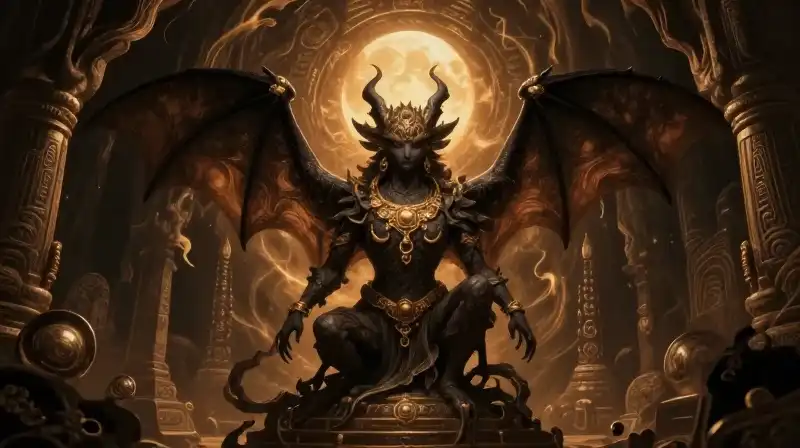
Beyond simple shapeshifting, many mythological spirits serve as potent forces that govern boundaries—between the living and the dead, or between order and chaos. These entities often possess attributes of danger and ethereal mystery. In the Mexican and Mayan pantheon, Camazotz stands as a powerful bat spirit tied intrinsically to the underworld 1. Similarly, in broader global spirit traditions, figures like the Dullahan and the Headless Horseman are categorized among the specific creatures linked to death and the ethereal plane 1.
These warnings are mirrored globally. The Australian wilderness harbors hominids like the Yowie, a unique cryptid that demands recognition from generalized threats (1, 2). The concept of various mythical beasts, like the Sphinx and Chimera, serves as a common global motif, used to compare how different cultures have externalized their concepts of deadly power and intellectual challenge 1. These spirits—whether they guard sacred sites or inhabit desolate landscapes—are the cultural shorthand for the unknown.
Divergence: Local Mythologies and Global Motifs
While the themes of spirits and transformation are widespread, it is crucial to recognize the regional specificity of these beliefs. Many globally recognized creatures are, in fact, amalgamations or generalized versions of more localized legends. This nuance is vital for genuine cultural understanding. For example, the American “Owlman” should be viewed distinctly from the more widely known concept of Mothman, indicating differing local mythological narratives and anxieties 1.
Furthermore, the concept of monstrous predatory birds, such as the Poukai, exists in certain traditions, and its origin may be linked to an extinct species 1. This demonstrates that the origins of a spirit are often tethered to local environmental records and historical observations, rather than simply literary invention. While certain figures like the Chimera and Sphinx are common motifs, their specific cultural meaning shifts depending on the narrative framework—be it a warning of chaotic nature, a test of wits, or an allegory of a specific deity 1.
The Enduring Legacy of Belief
Mythical spirits today remain more than just ancient storytelling. They represent enduring cultural mechanisms by which people process complex ideas about nature, mortality, and moral order. By examining spirits from the Tlingit to the Mayan, we understand that these stories are living cultural documents that map the spiritual topography of their communities. They remind us that the places we inhabit—the mountains, the jungles, the deep forests—are not just physical spaces, but spiritual landscapes, profoundly shaped by the beliefs and the living narratives of the people who dwell there.
References
Footnotes
Related Articles