Interesting Mythical Creatures: Origins, Symbolism, and Global Folklore

Introduction
The creatures that populate the archives of global folklore are not merely elaborate monsters or whimsical illustrations; they are the crystallized anxieties and highest aspirations of the communities that birthed them. Mythical figures serve as profound cultural touchstones, acting as mirrors that reflect human fears of the unknown, our reverence for the powerful natural world, and our deep-seated rituals concerning life, death, and order. Rather than viewing these entities as singular definitions, it is more productive to explore the cultural function they fulfill—how they shape belief systems, moral narratives, and the very understanding of human agency within a given tradition.
Myth as Social and Moral Warning
In many cultures, the most fascinating mythical beings are those whose existence serves as a narrative commentary on human conduct and the gravity of social transgression. The tragedy of the Minotaur, for instance, is not simply a monster story; it is a deep narrative concerning divine intervention and failure to honor established custom, detailed as a complex mythological sequence involving Daedalus’s invention and the royal failure to properly sacrifice a sacred bull 1. Similarly, the Werewolf archetype is consistently understood not just as a frightening transformation, but as a deeply tragic and cursed being, its narratives often highlighting the severe social and psychological consequences of a supernatural affliction 1. In East Asia, the social and relational aspects of myth are seen clearly in the Japanese creature, the Kappa. Its culture is centered around a specific behavior: the bowl of water on its head dictates its conflict-avoidance and power. According to [1], the interaction between a human and a Kappa is fundamentally tied to whether the human bows to it, demonstrating a profound cultural emphasis on the ritual of honor and politeness even toward the supernatural.
Cosmic Forces and the Cycles of Being
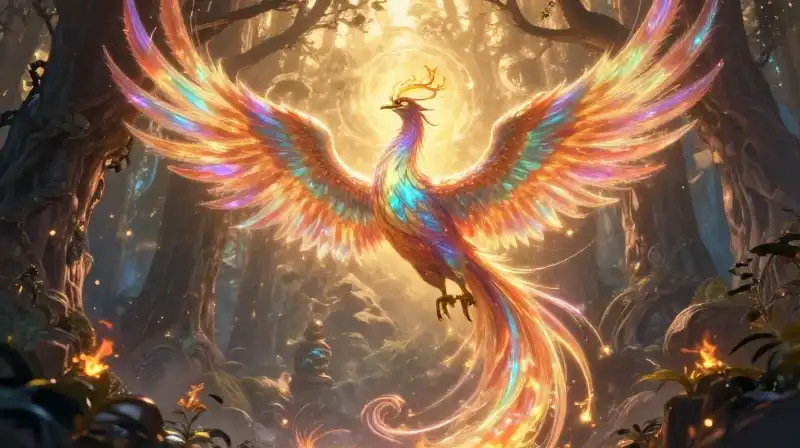
A powerful subset of mythological beings embody fundamental, often overwhelming forces of the universe—whether those are natural cycles, profound cosmological shifts, or the inexorable forces of nature. The concept of the Phoenix is one of the most universal examples of this theme, carrying powerful cultural symbolism of continuous renewal and rebirth, rising majestically from the ashes 1. On a grander, planetary scale, specific deities represent these cosmic dynamics. In Ancient Egypt, the god Khepri symbolizes the perpetual pushing of the sun, an essential act of cosmic movement. Meanwhile, the Aztec deity Ītzpāpālōtl embodies the powerful and often terrifying concept of death, uniquely combining skeletal features with butterfly motifs 1. In the Mayan tradition, the Huracán is linked to thunderbirds, suggesting an etymological and ancestral connection to the primal power of the natural world, informing the very language we use to describe storms 1.
Hybrid Forms and Ambiguous Identity
Some of the most complex creatures defy easy classification, existing as hybrids, automatons, or spirits that reflect the intricate intersection of nature and civilization. The concept of Golems, for example, introduces a unique blend of magic and automatons. These protective, animated clay statues are traditionally set to serve human masters, but they often possess the capacity to interpret their assigned rules in highly complex and unexpected ways 1. This raises an enduring cultural debate about whether they qualify as living creatures or as intricate automatons with their own unique logic. The realm of transformative and shapeshifting entities is equally rich. Across East Asia, the theme of the “fox spirit” is explored through varied regional names: Kitsune in Japan, Huli jing in China, and Kumiho in Korea. These powerful spirits generally resemble beautiful fairies, but their meanings can shift dramatically from benevolent tricksters to terrifying forces depending on the regional narrative 1.
Regional Narratives of Power and Spirit
Folklore is profoundly regional, meaning that mythological figures often tell stories about the specific geography and environment of their communities. These spirits are frequently tied to the landscape itself. The Basan, for example, is a fire-breathing chicken found in Japanese folklore, while the Sarimanok is a legendary chicken unique to the Maranao people of the Philippines 1. Other localized spirits, such as the Wuchowsen, are not universal beasts but powerful reflections of local belief. Wuchowsen, an Abenaki wind spirit, is depicted as a giant eagle residing atop a sacred mountain 1. These specific creations often ground the overarching theme of myth—the dialogue between humanity and the sublime power of nature—in a particular, local tradition.
What Myth Reveals About Global Culture
The creatures explored in global folklore act as a crucial lens for understanding cultural identity. They are proof that the collective imagination of a people often struggles with the same questions—mortality, power, fate—though they approach those questions through radically different symbolic forms. As a final caution, the interpretation of these myths requires a commitment to cultural humility. A creature like the Piasa, the “Underwater Panther,” a central entity in Eastern Native American myth, possessing a lion’s body and a rattlesnake tail, functions within its domain to devour those who venture too closely (1, 2). In these traditions, the creature serves less as entertainment and more as a sacred boundary—a narrative demarcation between the world of man and the wild world of immense power. Ultimately, understanding these entities is not about mastering a list of names, but recognizing the shared human attempt, through storytelling, to bring meaning and structure to a world that is overwhelmingly vast, beautiful, and unpredictable.
References
Footnotes
Related Articles