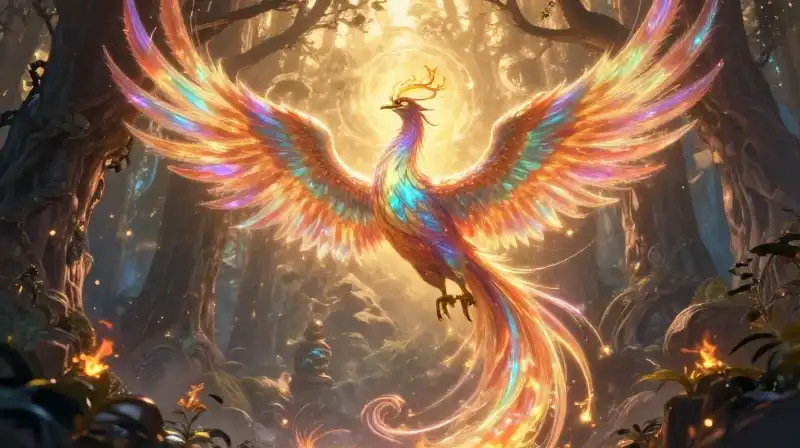
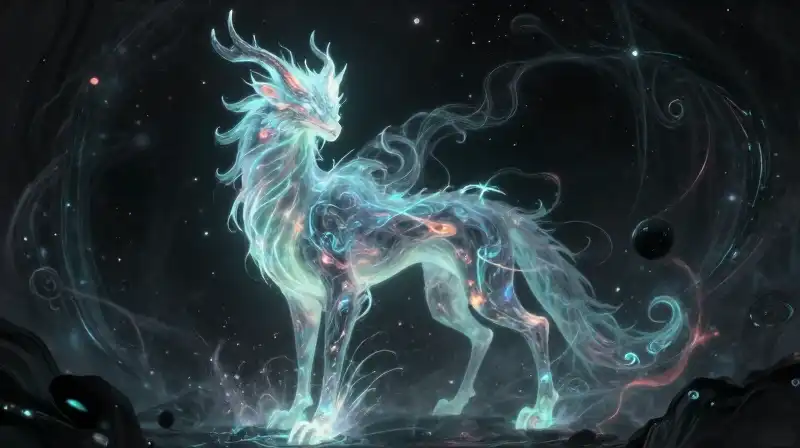
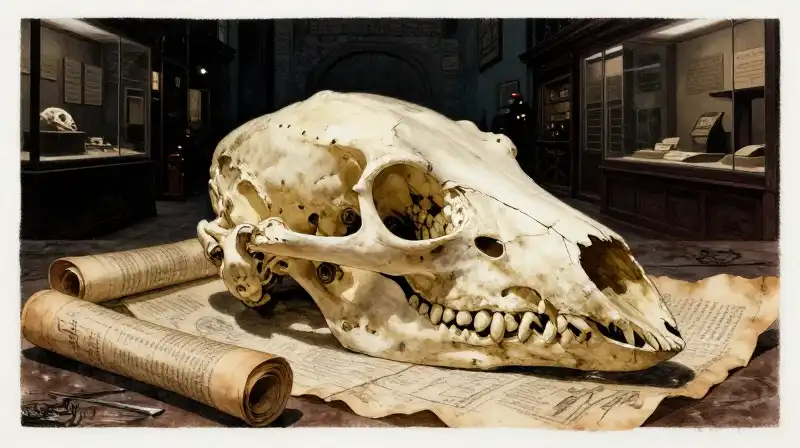
Enchanted Creatures: Myths that Reveal Human Fears and Origins

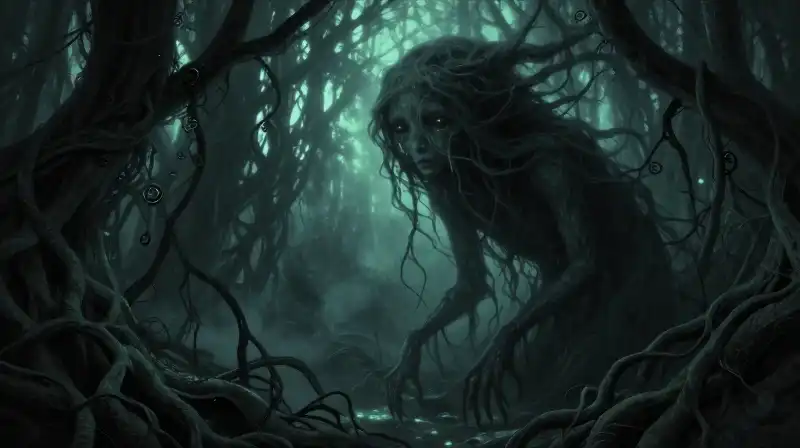
Introduction
>Enchanted creatures—the dragons, leviathans, werewolves, and monstrous hybrids that populate the depths of human imagination—are far more than simple literary inventions. They are profound cultural artifacts, serving as a powerful chronicle of humanity’s collective history, anxieties, and struggles for understanding. According to 1, the study of these fantastical beasts offers a mirror to the human psyche, reflecting our deepest collective fears and the inherent complexity of our minds. Rather than being mere ornaments of folklore, these myths are essential tools that societies have historically used to manage the extraordinary and often irrational challenges of human experience. By examining these “other-worldly natural histories,” we gain valuable insight not just into ancient traditions, but into what these narratives reveal about humanity itself.
Monsters as Cultural Mirrors: The Function of the Monstrous\h2 > >Across civilizations, the emergence of the monstrous—be it the serpentine creatures of the East or the deep-sea leviathans of Western myth—marks an emergent property of human history and social structures 1. According to the research, these mythical menageries are not simply stories told around a fire; they function as psychological devices. They allow cultures to externalize and confront the “irrational terrors” and inherent chaos of existence. When a society constructs a monster, it is often grappling with a fundamental challenge—be it the uncontrollable forces of nature, the unpredictability of the mind, or the struggle for order against anarchy. These archetypes, spanning from ancient bull-men to modern science fiction threats like Kaiju, provide a manageable framework for understanding chaos, making the incomprehensible comprehensible.
Global Archetypes: Tracing the Creature’s Origins\h2 > >The menagerie of enchanted creatures demonstrates a remarkable consistency in archetypes, even across vast geographical and temporal distances. Natalie Lawrence’s exploration highlights the pervasive nature of these figures, which function across diverse global traditions 1. Some foundational archetypes include the dragon, the werewolf, the bull-men, and the snake-women. These are not localized curiosities; they are universal cultural signatures that appear when human societies are charting new territories of knowledge or confronting new social anxieties. The sheer span of this tradition is breathtaking, covering what 1 refers to as 15,000 years of imaginative history. By tracing the lineage of a particular myth, one can trace the evolving understanding of human limitations and our creative output, dating back to the primal forms found in prehistoric cave monsters 1.
Bridging the Divide: Psychology, Science, and Myth\h2 > >The study of enchanted creatures transcends simple folklore, occupying a vital intersection of literary criticism, cultural studies, and academic inquiry 1. The book, *Enchanted Creatures: Our Monsters and Their Meanings*, integrates insights from various fields to reveal the deeper purpose of these narratives. According to the research, the monstrous creatures are a nexus where human experience meets academic analysis, providing a field to explore fundamental concepts like the struggle for control. This approach allows for a synthesis of disparate elements: the primitive narrative power of a cave monster, the structured symbolic meaning of a mythological dragon, and the modern psychological interpretations of a cyborg 1. This blend of science, mythology, and human psychology makes the exploration of mythical beasts a journey into “what they reveal about humanity” 1.
Navigating the Scope of Enchantment\h2 > >The concept of “enchanted creatures” often appears in popular culture, leading to some confusion regarding their scope and nature. When seeking to understand this tradition, it is important to differentiate between purely cultural myths and their usage in modern, often competitive, media. > >In gaming contexts, such as those in trading card games (MTG), the term “Enchanted Creature” refers to a specific game mechanic—a literal card type—and is entirely separate from the vast cultural and historical tradition of mythological creatures. For instance, the game may utilize a creature with a “fire enchantment,” but that mechanic is a modern structural design, not a continuation of a cultural belief system. To truly understand the tradition of enchanted creatures, the focus must remain on the narratives, the symbolic meaning, and the cultural function, not the specific mechanical rules of a modern game 1.
Conclusion: Uncovering the Other-Worldly Natural History\h2 > >Ultimately, the rich history of enchanted creatures is a testament to the enduring human capacity for imagination. By observing these diverse menageries—from the classical hydra to the modern Kaiju—we are observing an “other-worldly natural history” that has co-evolved with human fears and fascinations 1. These myths offer more than just entertainment; they provide a historical record of our intellectual evolution. They compel us to question our assumptions about reality, control, and our origins, reminding us that the creatures we invent are, in fact, reflections of the magnificent, complex, and often terrifying landscape of the human heart.
References
Footnotes
Frequently Asked Questions
What are some enchanted creatures?
Enchanted creatures include dragons, leviathans, werewolves, and monstrous hybrids. Other archetypes mentioned across various traditions are the bull-men, snake-women, hydra, and modern threats like Kaiju.
Is an enchantment creature 2 card types?
In gaming contexts, the term Enchanted Creature refers to a specific game mechanic and a literal card type within trading card games such as MTG.
Related Articles