Dark History of Halloween: From Samhain Ritual to Modern Myths

Introduction
The modern image of Halloween—a night of candy, costumed parties, and playful spirits—is deceptively light. To view it merely as a seasonal spectacle is to miss a tradition of profound historical weight, a complex confluence of ancient agricultural cycles, imperial pressures, and deep human beliefs regarding the veil between worlds. For over two millennia, the practices that eventually coalesced into Hallow’s Eve have served as a critical cultural marker, representing the transition from the vibrant abundance of summer to the solemn dormancy of winter. Understanding its “dark history” is not a descent into morbid curiosity, but an engagement with the powerful, often contested forces—such as the merging of pagan beliefs with religious dogma and the pressures of colonial change—that shaped a truly global observance 1.
The Celtic Crucible: Samhain and the Shifting Veil
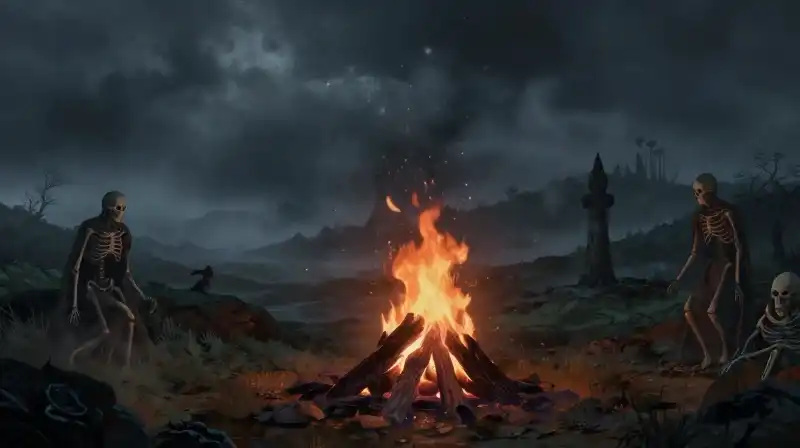
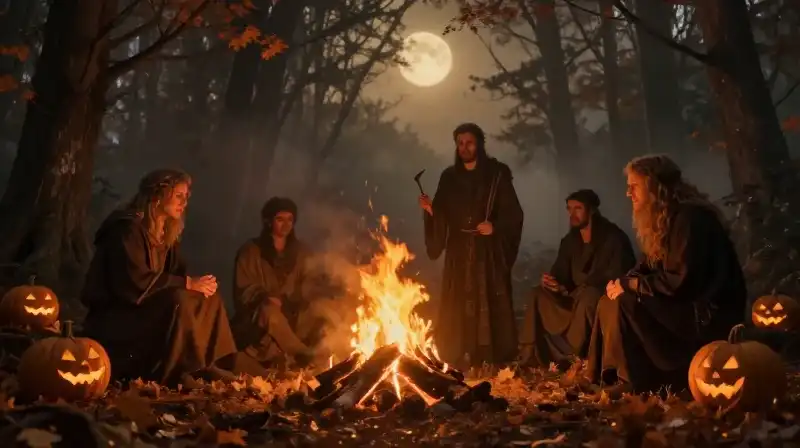
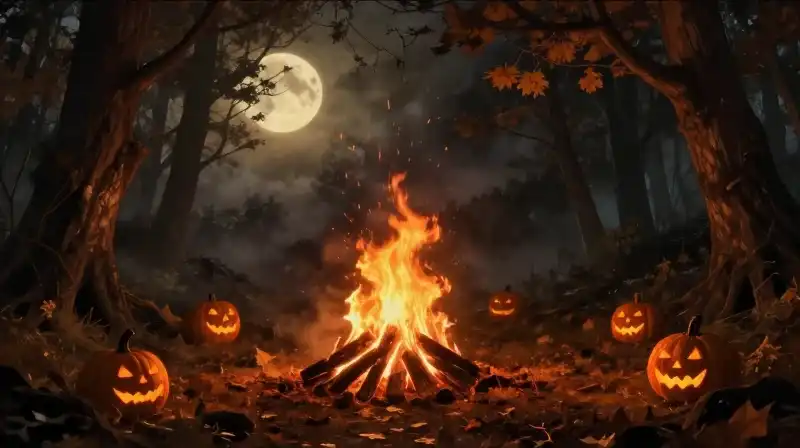
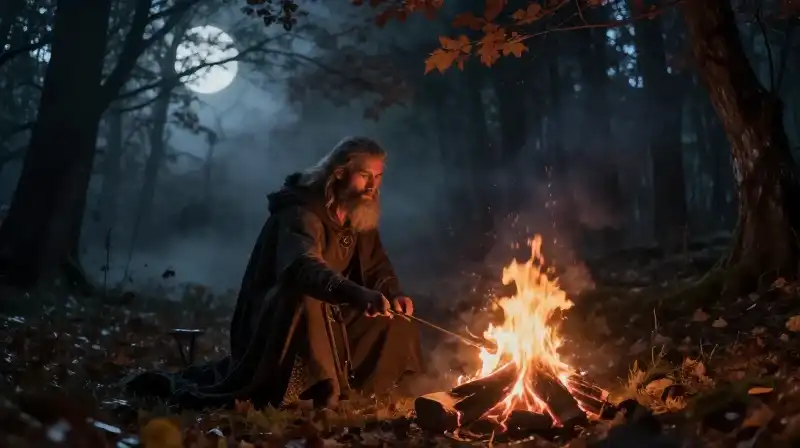
At its heart, the lineage of Halloween begins with Samhain, an ancient Celtic festival practiced in areas including Ireland, France, and the United Kingdom approximately 2,000 years ago 1. This was not merely a harvest festival, but a cosmological marker. Samhain marked the definitive end of the agricultural year and the onset of winter. The defining characteristic of Samhain was the belief that on the night of October 31st, the boundary between the living and the dead grew permeable. It was believed a portal opened, allowing the spirits of the deceased to return to earth 1. To acknowledge these returning souls, original rituals were deeply communal. Participants gathered around massive bonfires, wore specialized costumes to confuse or honor wandering spirits, and engaged in community sacrifices of crops and animals, acts that tethered the community’s fate to the forces of nature 1. Some scholarly inquiries push the timeline even further, suggesting that the human fascination with this transition has extremely deep, almost prehistoric roots. Archaeological evidence in Neolithic Ireland points to passage tombs deliberately aligned to align with the sun on the exact day of Samhain 1. Furthermore, scholars propose a highly speculative link between Samhain and the proto-Indo-European beliefs in an evening that briefly separated the human world from the realm of spirits or deities 1.
Imperial Overlays and Global Connections
As civilizations expanded and empires reshaped cultural landscapes, Samhain absorbed new layers of meaning and ritual. When the Roman Empire controlled Celtic territory, the Samhain tradition merged with existing Roman festivals. These included Feralia, a day dedicated to mourning the dead, and Pomona, a celebration honoring orchards and fertility 1. This absorption created a layered tradition, one that would be further redefined by the Christian Church. In an effort to replace indigenous pagan practices, the Catholic Church adopted Samhain, designating November 2nd as All Souls’ Day, which honors all saints and the dead 1. This shift highlights a common pattern in cultural history: indigenous rituals are often not simply destroyed, but absorbed and repurposed by dominant religious forces. The cultural threads of Samhain are visible in other global traditions that share a similar focus on the boundaries of life and death. For instance, Día de Muertos in Mexico and qāšoq-zani in Iran all feature elements like bonfires, blurring the line between the living and the dead, and the preparation of celebratory food to welcome spirits 1. Similarly, the tradition of Día de Muertos in 16th-century Mexico developed when Aztec devotion to Mictecacihuatl, the Lady of the Dead, fused with the Christian Feast of All Saints 1.
The American Evolution: Colonial Influence and Imperial Forces
The arrival of European settlers in the Americas introduced a new set of cultural conflicts into Hallow’s Eve. In the American Colonial period, the observance was highly variable. Communities influenced by the intensely puritan ideals of New England often minimized or suppressed the festivities, whereas traditions were maintained in less rigid, more Southern colonies 1. Crucially, the widespread global spread and variation of Halloween cannot be separated from the broader forces of European imperialism and subsequent forced assimilation 1. The ways in which the holiday took hold in American culture were a reflection of which cultural pressures—whether religious, colonial, or purely commercial—were dominant in a given region.
The Dark Meaning: Ritual, Sacrifice, and Historical Conflict
When people ask about the “dark meaning” of Halloween, they are asking about the weight of its origins. The tradition, in its deepest layers, is about confronting mortality and the powerful mysteries of the world. Scholarly and controversial historical research suggests that the rituals of Samhain went far beyond the simple bonfire. There are theories, though they remain highly debated, that suggest ritual sacrifices may have occurred during the Bronze Age. These hypothetical practices involved victims who might have been administered a drugged drink before being bound to standing stones 1. Furthermore, research by scholars like Sharon Paice MacLeod suggests a massive cultural shift across Europe, moving focus from the heavens (the gods) to the earth or water, a change that some theories link to the onset of climate deterioration 1. The dark aspects of the holiday, therefore, are not found solely in the playful fear of modern trick-or-treating, but in its profound history: the solemn act of confronting death, the powerful communal rituals required to navigate the spiritual dangers of the winter solstice, and the often painful history of cultural displacement and forced transformation.
Living the Tradition: Understanding the Contemporary Practice
Today, the primary living cultural significance of Halloween is its ability to serve as a bridge. It allows communities, regardless of their background, to temporarily suspend conventional rules, acknowledge the chaos of the spiritual and natural cycles, and safely explore themes of fear and transition. The modern elements—the costumes and the trick-or-treating—are cultural adaptations of ancient needs. Costumes serve the original purpose of confusing spirits and warding off perceived dangers 1. The community gathering, even if driven by commercial interests today, functions as a modern version of the communal bonfires and shared ritual that defined Samhain. Rather than being an ‘evil’ holiday, the enduring strength of Halloween lies in its persistence as a cultural mirror. It reflects humanity’s long-standing need to ritualize change, process the cyclical nature of life and death, and celebrate the intersection of the material world and the spiritual unknown.
References
Footnotes
Frequently Asked Questions
What is the dark meaning behind Halloween?
The dark meaning of Halloween centers on its profound history of confronting mortality and navigating the powerful spiritual dangers of the winter solstice. This includes the solemn communal rituals of its origins and the often painful history of cultural displacement and forced transformation.
Related Articles