Bifrost in Norse Mythology: The Burning Bridge Between Realms

Introduction
In the vast tapestry of ancient Northern European thought, few concepts resonate with as much cosmic drama as Bifröst. More than a mere architectural feature, this burning bridge functions as a critical conceptual boundary within the Norse cosmological framework. For the people who held these traditions, Bifröst was not simply a path between two places, but a shimmering demarcation between the structured order of humanity and the majestic, often volatile, realm of the gods. It remains a testament to the Norse capacity for deeply layered metaphor, illustrating themes of transition, protection, and the eternal march of time against the backdrop of cosmic forces.
This is a tradition found primarily within the Eddic texts—the poetic and prose records of Norse mythology—which serve as the critical repository of this complex lore. By examining Bifröst, we move beyond the definition of a “bridge” and delve into its spiritual significance: the way the divine realm interacts with the mortal world and the profound fragility of the universe itself. As the narratives evolve, so too does our understanding of the traditional meaning of this fiery thoroughfare.
The Thoroughfare Between Asgard and Midgard
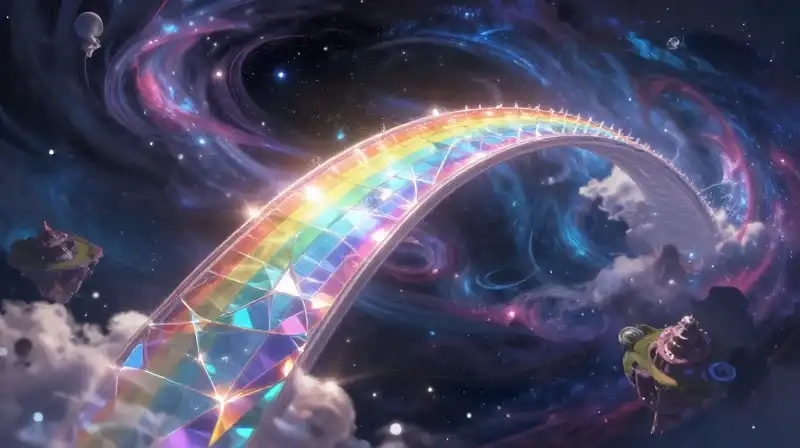
At its most literal, Bifröst (also known as Bilröst or Ásbrú in some texts) is a magnificent, fiery bridge that serves as the daily route for the Æsir, the gods. It connects Asgard, the divine realm, to Midgard, the world inhabited by humankind 1. The journey across this vibrant bridge is often associated with significant religious and social events, such as the gods riding their horses to Urðarbrunnr, a holy well where the Æsir are believed to hold court 1.
The physical description of the bridge reveals its impressive nature: it is composed of three colors and is said to possess immense, almost unbreakable strength 1. Its very nature—being perpetually burning—carries deep spiritual weight. The fire, the texts suggest, is not merely aesthetic; it is a functional barrier. It serves to keep the Jotnar and other frost and mountain giants from ascending to the heavens, thereby maintaining the established cosmic hierarchy 1.
Guardians, Features, and the Limits of the Path
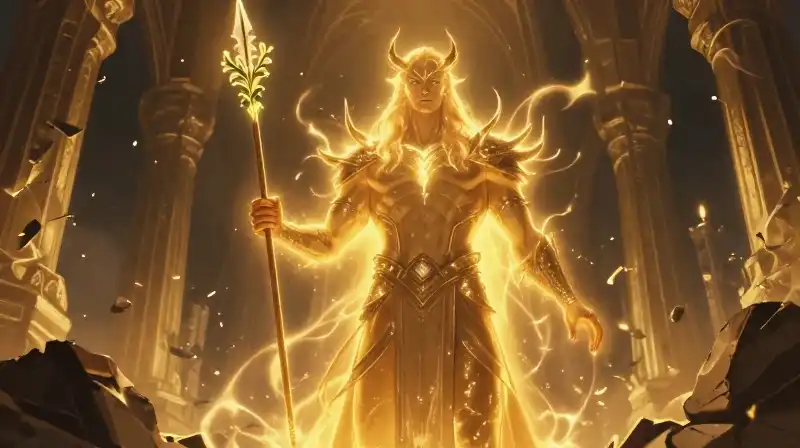
The security of this divine thoroughfare is absolute. At the heavenly end, the structure is safeguarded by the watchful eyes of the god Heimdallr, who stands at Himinbjörg, the edge of heaven 1. Furthermore, the bridge is a focal point for narrative drama. In stories involving the god Thor, the fiery nature of the structure is highlighted; when the bridge is in its burning state, Thor must navigate the boiling waters of the rivers Körmt and Örmt to traverse its intensity 1.
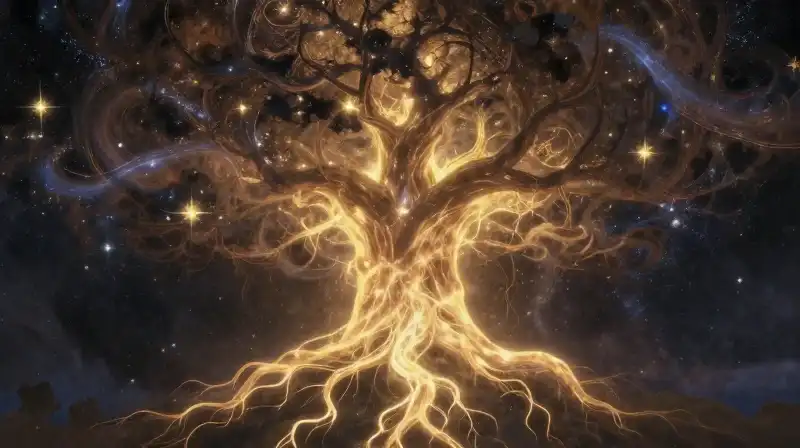
It is important to clarify the scope of the bridge within the broader cosmos. While Bifröst beautifully defines a specific, crucial connection between the two major inhabited realms, the tradition also encompasses the concept of the World Tree, Yggdrasil 1. Yggdrasil is traditionally viewed as the ultimate conduit, its roots and branches allowing for the traversal of all nine known realms. Thus, while Bifrost is the majestic highway for the Æsir, Yggdrasil represents the more fundamental, all-encompassing axis of the universe 1.
Cosmic Symbolism and Modern Interpretation
When we move beyond the text and into the realm of symbolic interpretation, the tradition takes on new layers of meaning. Many modern scholars and interpreters have debated what Bifrost truly represents. Due to its fiery, multi-colored properties, some theories suggest the bridge could be a powerful metaphor for the Milky Way or the stunning Aurora Borealis 1.
Etymological searches suggest that the original name, Bifröst, might evoke the idea of a “shimmering path” or a “fleetingly glimpsed rainbow” 1. This suggests that the bridge was initially a symbol of fleeting light, hope, and the transient nature of passage, rather than solely a structural entity. The debates surrounding its meaning—whether it symbolizes a celestial phenomenon or a “shimmering path”—reflect a tension within the tradition itself: the balance between the literal myth and its use as a profound, universal metaphor 1.
The Narrative Climax: Bifrost at Ragnarök
The life cycle of Bifrost is inextricably linked to the ultimate end of the world, Ragnarök. The bridge is designed to stand firm for the age of the gods, but it is marked for destruction. As the forces of chaos rise, the sons of Muspell attempt to cross the bridge, and in that moment of cosmic confrontation, Bifrost is shattered 1. This destined destruction is one of the most critical elements of the Norse narrative. It underscores a powerful thematic concern in the tradition: the inherent fragility of even the most powerful systems. The bridge’s shattering is not an accident; it is a necessary catalyst for the profound, cyclical change that defines Norse mythology 1.
The Living Tradition: Mythology and Belief
For a contemporary reader, it is essential to approach the lore contained in the Eddas and Sagas with a sense of cultural respect and historical nuance 1. These texts function as a complex body of spiritual and cultural understanding for Northern Europe, acting as more than just entertainment—they are a repository of a community’s spiritual worldview 1.
The relationship between the ancient Norse concept of Bifrost and Yggdrasil, for example, can be viewed through the lens of a “flexible” spiritual belief system 1. This means that the myths may or may not have been perceived as literal reality by the ancient communities. To understand Bifrost is to understand the complexity of that spiritual landscape: a world where the literal fire of a bridge and the abstract concept of a cosmic journey coexist in a sophisticated narrative 1.
Synthesis: Understanding the Cosmic Boundary
Ultimately, Bifröst serves as a potent symbol of definition. It defines the boundary of the gods’ activity within the structured universe, establishing where divine influence meets mortal existence. Its fiery nature and eventual shattering during Ragnarök give it a unique narrative power, reminding the community that even the most powerful structures are subject to cosmic change 1. To understand Bifröst is not just to know the names of the gods, but to comprehend the profound cultural grappling with order, destiny, and the beautiful, necessary fragility of all things.
References
Footnotes
Related Articles