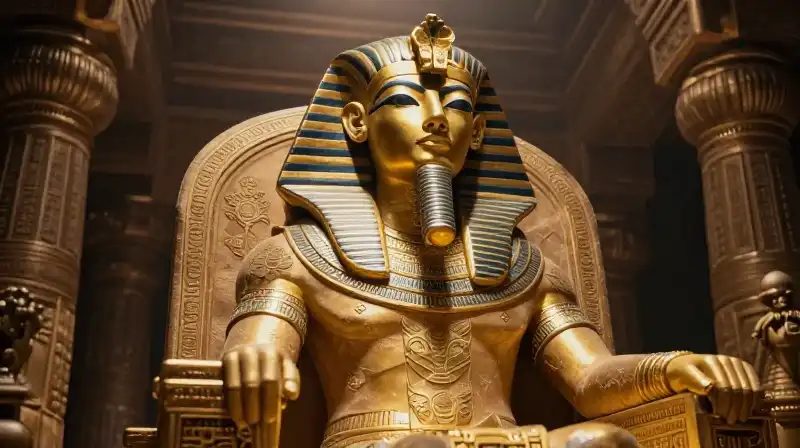
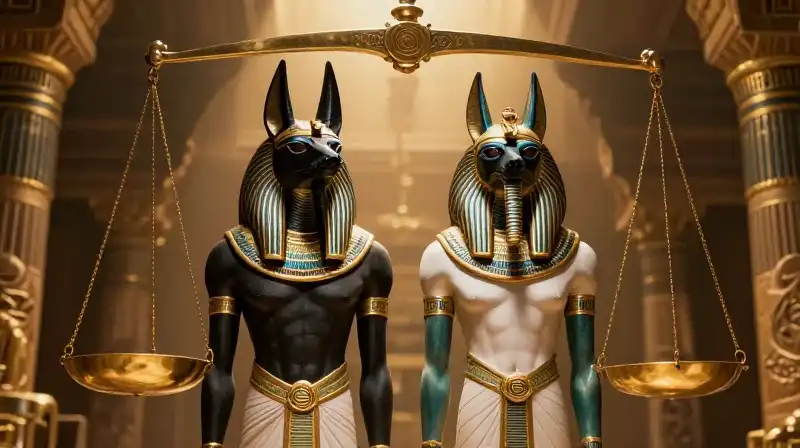
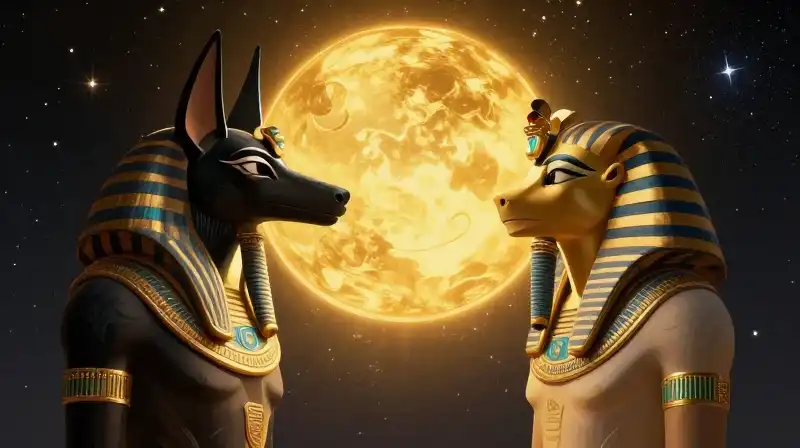
Anput: The Historical Consort and Female Counterpart to Anubis

Introduction
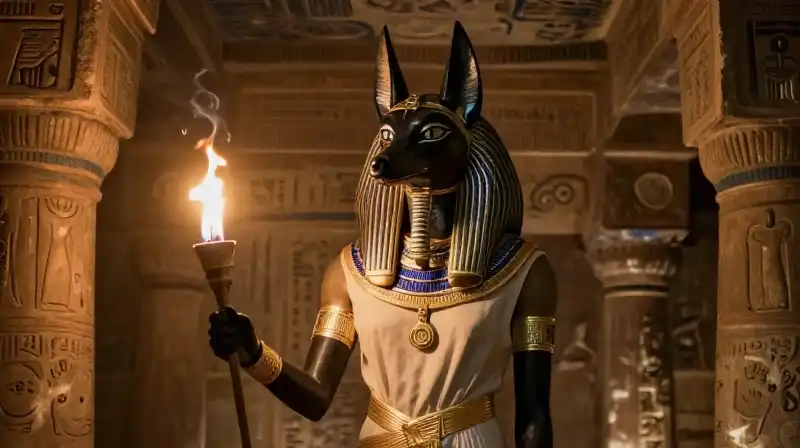
The fascination with figures from ancient Egyptian mythology often centers on the male figure of Anubis, the jackal-headed god associated with death and the afterlife. Yet, when readers explore themes of the afterlife, protection, and divine companionship, they frequently encounter the name Anput. This is not a modern artistic flourish or a gender swap of one deity for another; Anput is a distinct, historical figure within the Egyptian pantheon—a goddess who serves as the ancient female counterpart to Anubis. To understand Anput is to look beyond simple modern reinterpretations and delve into a tradition where the roles of guardians, transitions, and sacred feminine power are deeply entwined with the journey of the deceased.
The Traditional Role of Anput
Within the context of ancient Egyptian religion, Anput’s function was intrinsically linked to the rites of passage for those entering the Duat (the Underworld). She is recognized as a goddess of the dead and a powerful protector. Her most prominent mythological duty involved overseeing the crucial processes of mummification, a time-intensive and sacred ritual. According to historical records, Anput acted as a protector, specifically safeguarding Osiris as he transitioned into his eternal state as the ruler of the dead 1. Culturally, Anput is viewed as the consort of Anubis. She is traditionally depicted with a distinct headdress that features a jackal recumbent upon a feather 1. This iconographic representation established her relationship with Anubis and solidified her place in the celestial hierarchy. While Anput may not hold the same widespread notoriety in Egyptian mythology as Anubis, her significance lies in her defined historical capacity to protect the body and assist in the necessary rites that allowed the deceased to maintain their existence in the next world 1.
Distinguishing Goddess from Icon
A common point of confusion arises when modern spiritual practices or internet art feature “female Anubis.” This is a significant distinction that requires cultural clarity. In many modern interpretations, the concept of an Anubian jackal is often applied broadly, leading to the popular creation of figures that blend human-animal attributes. However, scholarly research indicates that much of the contemporary internet artwork featuring a “female Anubis” is often an artistic portrayal of an Anubian jackal itself, a fictionalized species, rather than a direct representation of the goddess Anput 1. It is crucial to differentiate between the specific religious identity of Anput and the general depiction of the jackal, which serves as the animal icon for the god 1. While modern artistic trends often play with form, the traditional religious iconography emphasizes Anput as a distinct, anthropomorphic divine entity separate from the wild species 1.
Gender Fluidity and Contemporary Kemetic Discourse
While the historical role of Anput is fixed as a specific divine figure and consort, modern discussions within certain contemporary spiritual communities, such as the Kemetic movement, often explore broader themes regarding gender. The perception of Anubis—who is historically understood to be male—can sometimes be described in community forums as possessing a “girlish” or gender-fluid energy 1. This fluidity is not necessarily a repudiation of ancient history, but rather a reflection of contemporary philosophical inquiry. Within these communities, there is an ongoing discussion concerning the relative nature of gender among the Egyptian deities 1. Some observers suggest that the traditional forms and genders of the gods may not be rigidly constrained by modern, contemporary concepts of sex or gender 1. For those encountering these traditions, this exploration can lead to an understanding of gender-neutral or gender-other vibes within ancient spiritual practices, where the potential for divine form is seen as flexible 1.
Addressing Community Questions on Anubis and Protection
When seeking clarity on the roles of the Egyptian pantheon, certain questions frequently arise that relate directly to the family and protective functions of these deities:
What was Anubis’ wife called?
According to ancient Egyptian records, Anubis’ consort was the goddess Anput 1.
Is Nephthys good or evil?
While not directly related to Anput, another figure in the funerary tradition is Nephthys. In Egyptian mythology, she is generally viewed not as “good” or “evil” in a modern sense, but rather as a complex, multifaceted entity who serves as a protective deity, a mourner, and a participant in the journey of the soul 1.
Understanding Modern Anubis and Anput
For those engaging with these ancient traditions, understanding the distinction between the historical narrative and modern spiritual interpretations is paramount. While Anput’s historical role is that of a specific protective goddess, the contemporary discourse around Anubis often reflects a desire within the spiritual community to see divinity as multifaceted, gender-fluid, or beyond Western binary limits 1. The difference between the historical Anput and modern artistic expressions—particularly those that conflate Anput with the generic jackal symbol—is a critical distinction for true cultural understanding. Anput represents a defined sacred role; the modern “female Anubis” concept is often a lens through which modern community members view the potential for fluidity in the divine.
Cultural Synthesis: The Importance of Form and Function
Anput’s existence within Egyptian tradition serves as a powerful reminder that cultural and religious interpretations are living things, evolving through time and community. She represents a specific, historical protective power over the body and the transition into the afterlife. However, the continuous discussion around her and the surrounding figures like Anubis demonstrates how modern communities seek to reconcile ancient, fixed doctrines with contemporary concepts of divinity, including the fluidity of form and gender. This continuous dialogue ensures that the tradition remains a source of deep contemplation and personal meaning for those who hold it, moving far beyond the limits of a mere definition.
References
Footnotes
Frequently Asked Questions
Is nephthys good or evil?
In Egyptian mythology, Nephthys is generally viewed not as good or evil in a modern sense, but rather as a complex, multifaceted entity. She serves as a protective deity, a mourner, and a participant in the journey of the soul.
What was Anubis' wife called?
According to ancient Egyptian records, Anubis consort was the goddess Anput.
Related Articles